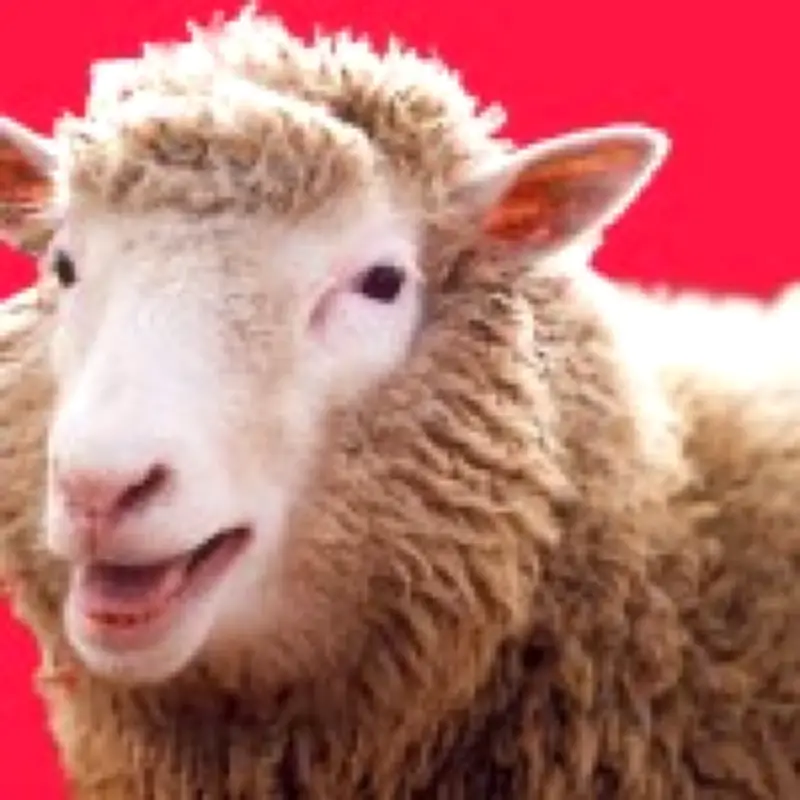
Dolly the sheep, the first mammal ever cloned from adult DNA, was born on July 5, 1996, at Edinburgh University’s Roslin Institute. The lamb, initially known only as 6LL3, became one of the most famous farm animals in history, with profound implications for medicine, culture, and ethics.
The Birth of a Scientific Icon
Led by Professors Ian Wilmut and Keith Campbell, the team cloned Dolly from a single mammary gland cell of a Finn Dorset sheep. They used a process where the nucleus from a donor egg is injected into a nucleus-free cell, creating an embryo genetically identical to the donor. Named after country legend Dolly Parton, the experiment proved that a clone could be made from adult somatic cells, not just from embryonic ones as previously believed.
Dolly was kept hidden for months until The Observer broke the story in February 1997, triggering a media frenzy. Embryologist William Ritchie, who worked at the institute at the time, recalled, 'By Monday the car park at the Roslin Institute was full of vans with dishes. People had flown in from America in 24 hours to get the story.' Ritchie witnessed Dolly's birth, saying, 'It’s a very seldom thing to see as they’re often born at night.'

Dolly's Personality and Public Fascination
Unfazed by the press blizzard, Dolly took to standing at the front of her pen to greet visitors and developed a fondness for edible gifts. 'She was a real madam – if you didn’t bring something to eat, she’d turn her back on you,' Ritchie recalled. 'If an animal ever deserved to be an icon, it was really Dolly.' Ritchie's wife, Marjorie, an animal researcher and surgeon, was also part of the pioneering team. When she developed multiple sclerosis, her husband would take her to see Dolly and the other animals.
Ethical and Scientific Reactions
While the public was captivated, the political and scientific community reacted more cautiously. Several renowned scientists doubted that Dolly had truly been cloned from an adult cell, a feat previously thought impossible. Dolly's arrival also ignited ethical debates about human cloning. Just days after the news broke, President Bill Clinton asked Congress for a ban on federal funds for human cloning, though no such attempts have since been made. However, the Roslin Institute's goal was never human clones but to study and treat disease. Cloning is no longer practiced there.
Commercial Pet Cloning
Dolly may have been the first animal cloned from an adult cell, but she was not the last. Cloning of horses for racing and polo has become well documented, while commercial cloning for bereaved pet owners has seen success, notably in South Korea with the first cloned dog, Snuppy. In the United States, foundations for commercial pet cloning were laid in 2001 at Texas A&M University, where researchers created CC (CopyCat), the first commercially cloned feline, followed by a Maine Coon named Little Nicky.
Today, Texan firm ViaGen Pets offers bereaved pet owners with $50,000 spare the chance to clone their cats and dogs, with horses priced at $85,000. The company counts Hollywood A-listers as clients, including Barbra Streisand, whose two pups Miss Violet and Miss Scarlett are clones of her Coton de Tulear dog Sammie, who died in 2017. ViaGen also cloned Paris Hilton's chihuahua Diamond Baby after it went missing in 2022, using stem cells harvested when the dog was spayed. Hilton named her new clones Diamond and Baby.
However, Ritchie warns that anyone hoping to bring their furry friends back this way probably won't get the desired result, as there's a good chance the clone won't behave or look like its host.
Dolly's Scientific Legacy
Thirty years on, Wilmut and Campbell – who have both since died – and their teams achieved something that profoundly impacted human stem cell research. Dolly's birth led Japanese biologist Shinya Yamanaka to discover that similar techniques could reverse-age adult cells back into pluripotent stem cells, a type of stem cell only found in embryos. This breakthrough won him the Nobel Prize in 2012. Stem cells are like blank slates that can differentiate into various cell types, with embryonic stem cells having the highest number of potential pathways.

Although induced pluripotent stem cells are not yet used directly to treat disease, they are the main type used in research. Yamanaka has admitted his work would never have come about if not for Dolly, who died in 2003.
Dolly's Memorial
Today, Dolly resides at the National Museum of Scotland, where museum curator Dr. Andrew Kitchener says the taxidermied sheep remains one of the Edinburgh museum's highlights. 'You see lots of people queuing up on occasion to take selfies with her – although they’ve got to be quick as her display case rotates,' he said. 'People are often asking: ‘is that really her?’' Kitchener worked with the Roslin Institute during Dolly's lifetime to plan her memorial. Unsure how long a cloned mammal might survive, he had two taxidermists on call in case Dolly died outside working hours. She did – late on a Friday afternoon, February 14, 2003, from tumors caused by a lung infection at age six.
Despite speculation that her premature death might have been due to cloning, no evidence supported this. The lung disease she contracted was common among sheep kept mostly indoors, as Dolly was. She gave birth to six healthy lambs during her life with a mountain sheep named David and suffered a bout of arthritis that was successfully treated.
After preservation, Dolly arrived at the museum to 'an absolute storm of press and media,' Kitchener said, and remains a museum celebrity. She is displayed in a glass case rotating on a turntable in the Science and Technology galleries. 'Dolly’s always going to be one of the most popular exhibits whether or not the technology continues – she was a first, and people like to see a first.'