Scientific Scrutiny of Alleged Eucharistic Transformations
Within Catholic doctrine, the sacrament of Communion represents a profound spiritual transformation where bread and wine become the body and blood of Jesus Christ, while maintaining their ordinary physical appearance. However, a series of extraordinary and highly debated incidents have emerged from churches across multiple continents, where consecrated elements allegedly manifested visible, physical changes resembling human flesh and blood.
Historical and Contemporary Cases
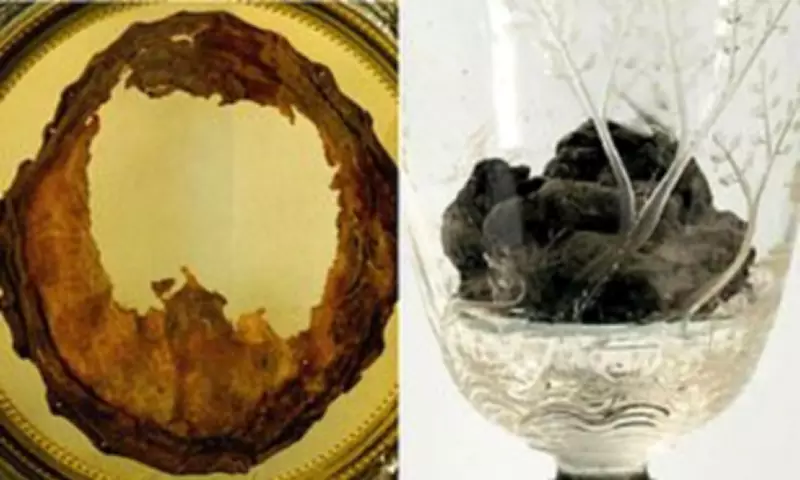
One of the earliest documented occurrences dates back to approximately 700 AD in Lanciano, Italy, where a monk reportedly witnessed bread transforming into flesh and wine into blood during the consecration ritual. According to historical accounts, these substances coagulated into discernible clumps, creating what many believers consider among the first recorded Eucharistic miracles.
More recent incidents include a 2013 event in Poland where a consecrated host, placed in water after falling during Mass, reportedly resisted dissolution and developed a red substance. Similar phenomena were reported in Mexico, Argentina, and additional Polish locations, spanning centuries and geographical boundaries.

Forensic Investigations and Findings
Between 1971 and 2014, five separate scientific investigations subjected samples from these events to rigorous forensic testing, including microscopic examination and biochemical analysis. Researchers consistently reported that the material resembled human heart muscle tissue. Where blood was detected, two investigations identified it as the rare AB blood type.
Professor Odoardo Linoli re-examined the ancient Italian relic in 1970, concluding through histological analysis that the flesh constituted human heart muscle and the clots were human blood, both of type AB. His findings were corroborated by Professor Ruggero Bertelli of the University of Siena, who confirmed the tissue appeared myocardial.
Modern Case Studies and Analysis
The first modern incident occurred in Sokolka, Poland, in October 2008, when a consecrated host developed a red substance after standard disposal in water. Pathologists from the Medical University of Bialystok independently analyzed the sample in January 2009, identifying it as heart muscle tissue.
Professor Stanislaw Sulkowski noted the unusual resistance to dissolution, stating, "If we put the Communion wafer in water, it should dissolve in a short time. In this case, however, part of the Communion, for some incomprehensible reason, did not dissolve." His colleague, Professor Maria Sobaniec-Łotowska, emphasized that natural science alone could not explain the phenomenon.
In Buenos Aires, Argentina, a discarded host from 1996 developed a red substance when placed in water. Forensic pathologist Dr. Frederick Zugibe examined a sample in 1999, identifying cardiac tissue with intact white blood cells—an unusual preservation given the storage conditions.
A similar 2013 case in Legnica, Poland, involved a host developing a red spot covering one-fifth of its surface after water immersion. Multiple laboratories ruled out bacterial or fungal contamination, with one concluding the material was human heart muscle. Cardiologist Dr. Barbara Engel stated, "For me, as for everyone who has seen this host up close, there is no doubt that it is a miracle."
In Tixtla, Mexico, a 2006 Mass witnessed a consecrated host reportedly releasing a reddish substance resembling blood. Pathologists identified structures consistent with heart muscle, fat cells, and white blood cells, with separate testing confirming human blood of the rare AB-negative type.
Scientific Skepticism and Limitations
Scientists and skeptics have emphasized that such extraordinary claims demand rigorous, reproducible evidence. Critics highlight potential conventional explanations, including contamination or misidentification of biological material. They note that many Eucharistic phenomena lack controlled conditions and have not been widely published in leading peer-reviewed journals.

The investigative teams acknowledged limitations, particularly the inability to replicate spontaneous events under laboratory conditions and questions regarding chain-of-custody protocols. They argued that traditional scientific standards, such as repeatable experiments, are difficult to apply to unpredictable occurrences.
The researchers contended that dismissing all five events as fraud would require an elaborate conspiracy orchestrated by scientific investigators and Church officials across continents spanning several decades. They suggested that stigma surrounding supernatural phenomena has discouraged broader scientific investigation, though critics maintain these limitations leave findings unverified.
Theological Context and Ongoing Debate
Communion originates from the Last Supper, where Jesus instructed his apostles, "Take and eat; this is my body. Drink… this is my blood" (Matthew 26:26–28). Ordinarily, the Eucharist maintains the appearance and behavior of ordinary bread and wine.
The Catholic Church has historically debunked other alleged miracles involving paint or contamination, maintaining careful scrutiny of such claims. The report examining these five cases highlighted striking similarities across decades and continents, including repeated identification of cardiac muscle and the rare AB blood type, alongside unexplained factors like tissue preservation and integration with the host.
This intersection of faith and science continues to provoke debate, balancing spiritual belief with empirical investigation in the examination of phenomena that challenge conventional understanding.