

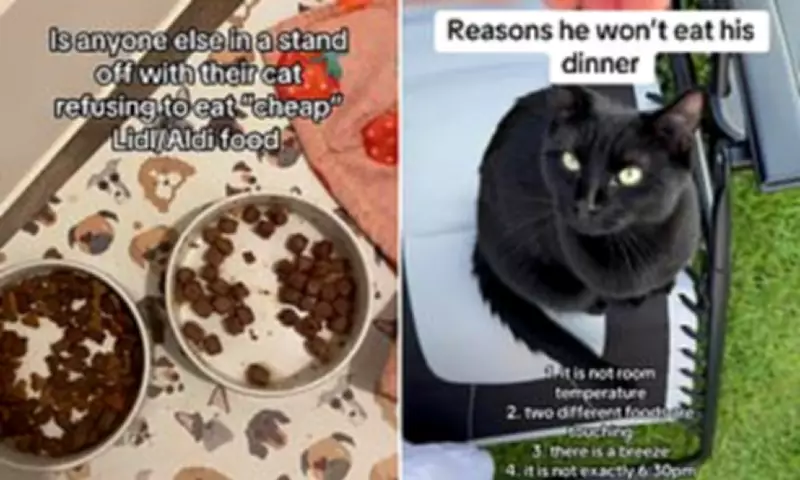
Any cat owner understands the daily challenge of persuading their feline companion to finish dinner. Unlike dogs that devour meals rapidly, cats frequently reject familiar foods or leave portions uneaten. Now, scientists have uncovered the precise reason behind this wasteful behaviour, and it is not necessarily linked to feeling full.
The Science Behind Feline Feeding Habits
Researchers from Iwate University in Japan have determined that cats often stop eating because they grow bored with the odour of their food. Lead author Professor Masao Miyazaki, an expert in feline olfaction, explained to the Daily Mail: 'Our findings suggest that cats do not stop eating simply because they are full. Instead, they gradually lose interest when repeatedly exposed to the same food odour, a process known as olfactory habituation.'
Experimental Insights Into Cat Behaviour
Professor Miyazaki's curiosity about cats' unusual feeding patterns emerged from observing his five Border Collies. 'When I feed them, they finish their meals in about one minute. Cats are very different,' he noted. 'As many cat owners know, cats often eat a little, take a break, eat again, and then walk away while leaving food behind.' This distinction is particularly intriguing given that cats and dogs share a common carnivore ancestor, indicating evolutionary divergence.

To investigate further, the team conducted feeding cycles: offering food for ten minutes, removing it for ten minutes, and repeating this six times. They weighed the bowl after each session to measure consumption. As anticipated, the amount cats ate decreased over successive cycles. However, when scientists replaced the sixth bowl with a different food type, the felines suddenly ate more, even if the alternative was less appealing.
Olfactory Habituation And Practical Solutions
In a second experiment, Professor Miyazaki used a specially designed two-level feeder. This bowl held one food type in the top compartment and a different type in a hidden chamber below, allowing cats to eat one while smelling another odour. Remarkably, merely altering the odour during eating encouraged cats to consume more. 'In other words, novelty in odour makes the food attractive again,' Professor Miyazaki stated.
The researchers attribute this behaviour to evolutionary hunting styles. Dogs descended from pack hunters that consume large meals quickly, whereas cats evolved from solitary hunters eating multiple small prey daily. This difference explains why dogs wolf down food regardless, while cats exhibit fussy feeding.
Effective Strategies To Encourage Eating
While fussy feeding typically poses no issue if nutritional needs are met, older or ill cats may develop health problems from prolonged appetite loss. Professor Miyazaki's discovery offers practical solutions to boost appetite when necessary. He advises: 'Our results suggest that introducing different foods, or even just different smells, can help maintain or restore food intake.'
Key recommendations include:
- Feed smaller amounts of varied foods rather than large meals of one type.
- Add food toppers like freeze-dried chicken or bonito flakes.
- Mix small quantities of another food into the meal.
- Use a two-level feeder with a different food in the bottom to alter odour.
For cats on prescription diets, a layered bowl allows owners to change the smell without affecting the actual diet. Professor Miyazaki emphasised: 'Understanding the role of smell in feeding could help improve feeding strategies, especially for cats with reduced appetite, such as older or sick animals.'
Broader Implications For Pet Care
This research not only clarifies a common feline quirk but also provides actionable advice for pet owners. By combating olfactory habituation through simple modifications, caregivers can ensure their cats receive adequate nutrition, particularly in vulnerable populations. The study underscores the importance of sensory stimulation in animal welfare, offering a straightforward approach to enhance mealtime engagement and health outcomes for domestic cats.






