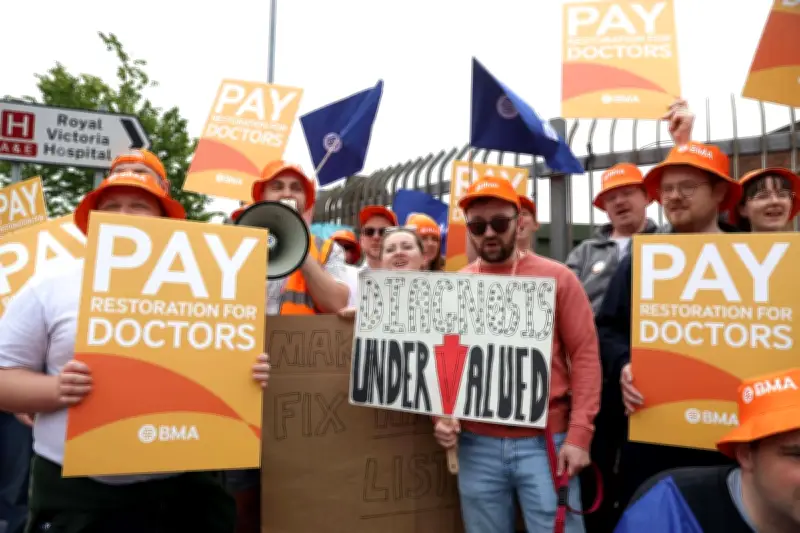
Resident doctors in England have voted to accept the Government’s latest offer to improve pay and working conditions, ending a year of strike action, the Department of Health and Social Care (DHSC) has said. There have been 21 days of strike action by the British Medical Association (BMA) Resident Doctor Committee (RDC) since July 2025 during the dispute.
Details of the pay deal
The new package includes standard 2016 resident doctor contract terms for all locally employed medics and an average 6.6% pay uplift to be fully implemented by April 2027. There will also be 4,500 extra specialty training places over three years. The deal will mean resident doctor pay will be 35.2% higher on average than it was four years ago, the DHSC has said.
Reactions from health officials
Health Secretary James Murray said: “This is very good news for resident doctors, patients and the NHS as a whole, allowing us to draw a line under the disruption of previous months and focus on getting on with the job of rebuilding our health service.” He added: “Because of this deal, resident doctors will benefit from a new pay structure, better career progression opportunities and a range of other improved conditions to support them as they rotate and train. Patients will be relieved that the NHS is entering a period of greater stability.”

Vote and strike background
The online vote for resident doctors ran from June 18 to June 26. The BMA had also warned that if they choose to reject the deal, strikes would “have to escalate in intensity”. Thousands of resident doctors in England were set to stage a four-day walkout on June 15, which would have been the 16th round of strike action since 2023. But it was called off on June 13 after the offer was made.
BMA chairman's statement
Dr Jack Fletcher, chairman of RDC, said: “Resident doctors have spoken. They have decided that the current offer is sufficient to continue on the road to pay restoration, and sufficient to address the absurd lack of jobs in the NHS. The strikes will now end.” He continued: “These strikes did not need to happen. We spent far too long at loggerheads with the Government when a solution in everyone’s interest was waiting for us: more jobs for doctors, better pay for doctors, and a better-staffed NHS secured for patients well into the future.” Dr Fletcher warned that this is “by no means the end of the road for pay restoration” and hopes the Government will keep “this journey going”. He added: “I’d like to thank everyone who stood on a picket line, who organised, argued and raised their voice on the issues of pay and jobs. Your continued dedication and refusal to give in has moved us miles from where we started, and you should be proud. When we organise, we win.”
Vote turnout and employer response
53% of eligible members voted in favour of the offer, the BMA said. The turnout of the referendum was 57% with 32,932 doctors voting in total. Dean Royles, interim chief executive of NHS Employers, said: “After such a long running dispute that has caused so much upset and disruption to patient care, all parties will be pleased that a resolution now seems to have been found and there will be no further strike action.” He added that the “hard work of implementation will now begin” and called the timescales of the deal “ambitious”.