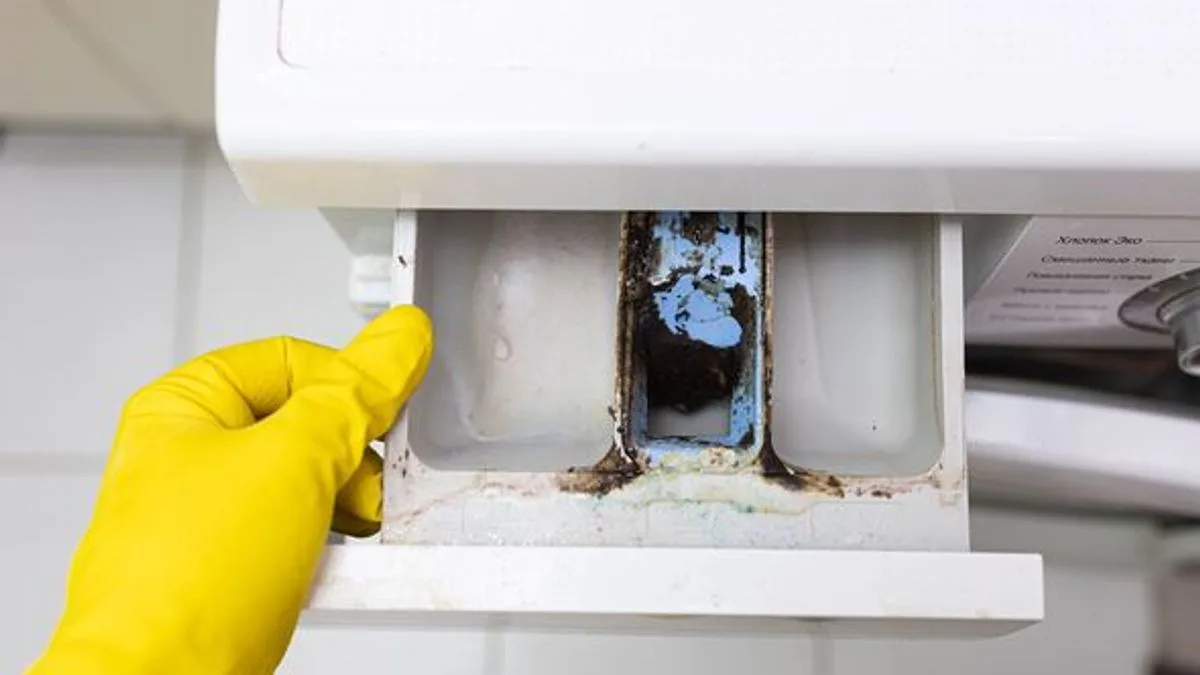
Getting bathrooms squeaky clean can be an arduous task, especially when dealing with annoying soap scum, hard water marks, and unsightly mould. However, if you want to avoid using chemical and commercial mould products, there is a homemade alternative that delivers just as good results.
The Secret Homemade Solution
Cleaning guru and content creator Chantel Mila, known as Mama Mila, recently shared her go-to cleaning solution that helps restore bathrooms to their former glory. She claims that all it takes is just four household components. Chantel described this homemade solution as the "secret" to making your bathroom sparkle again. It can be used to clean a wide variety of surfaces, including bathroom vanities, bathtubs, inside showers, and shower glass.
Ingredients You Need
All you need are four simple ingredients, most of which you probably already have at home. In a spray bottle, mix one cup of water, one tablespoon of dishwasher rinse aid, one tablespoon of washing up liquid, and 10 drops of either tea tree, peppermint, or clove oil. Liberally spray the mixture all over the bathroom and work it in with a damp sponge or cloth. Follow by wiping off with another cloth. When using in the shower and on shower glass, the spray can be rinsed off with water.
How Rinse Aid Helps
Rinse aid helps ward off watermarks, fingerprints, and smudges by functioning as a surfactant, reducing the surface tension of water. A surfactant enables water to glide off surfaces without leaving any marks. This helps prevent streaks from forming when washing off with water. According to appliance brand Bosch, using a rinse aid is especially beneficial if you live in a hard-water area.
The Role of Washing Up Liquid
By mixing in washing up liquid, you help break down soap scum more easily. Washing up liquid acts as an emulsifier, binding with grease and oil stains, allowing them to be rinsed away with water. It contains surfactants that are both hydrophilic (attracts water) and hydrophobic (repels water and binds to oil-based marks). These surfactants attach to grease, enabling oil and water to mix and form a stable emulsion that can be washed away.
Essential Oils for Mould and Scent
The addition of tea tree oil can help combat mould, as the oil is a natural fungicide that can kill mould spores. Mould in Homes noted that of all natural mould-killing remedies, tea tree oil is the most effective. However, although tea tree oil is natural and environmentally friendly, it can be toxic if ingested and may cause irritation on sensitive skin. Ideal Home explained that tea tree oil kills mould by breaking down the cell wall of mould spores, causing them to rupture and leak. This also helps prevent future mould growth as the spores won't grow or spread.
Clove oil works in much the same way. It can help clean and remove mould thanks to its antifungal properties, specifically its eugenol content. Eugenol is a natural phenolic compound widely used as a flavouring agent in food, cosmetics, and perfumes, but it is also used for its anaesthetic, antiseptic, and analgesic properties in medicines. Adding an essential oil to the mix also freshens up the bathroom's scent, helping to cut through the chemical smell.