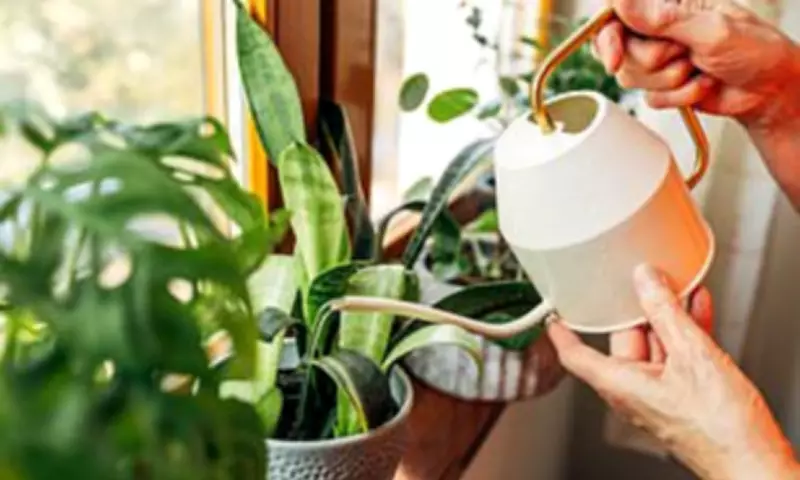
Stocking up on plants could be the key to cooling your home without fans or air conditioners this summer, according to Craig Morley, houseplant expert at Budget Seeds. He has revealed that even NASA has used plants to combat rising temperatures caused by climate change.
How Plants Cool the Air
It is well known that plants improve air quality, but Morley highlights that they also act as 'green air conditioning' through a process called transpiration. 'Transpiration is the process by which water flows upwards through a plant, from the soil to the leaves and stem,' he explained. 'As well as delivering water and nutrients to the plant's cells, this process keeps plants cool as water evaporates from the leaves.'
Just like humans, sweat is an important way for plants to regulate their temperature. When water travels up the plant's stem and to the leaves, it often seeps out through its pores, known as stomata. As the water evaporates, it removes heat from the air, creating a cooling effect around the plant.

NASA's Research on Plant Transpiration
Transpiration accounts for around 10 per cent of the water in the atmosphere, according to NASA. In 2018, the administration launched a mission called ECOSTRESS to observe how the Earth's vegetation sweats and changes temperature. The mission provided crucial information now used by city planners and policymakers to improve urban development and keep warmer areas cooler.
'NASA's Earth Science Division proved this means plants can help combat rising temperatures caused by climate change,' Morley said. 'On a smaller scale, having houseplants in your home can help cool your home in summer – free, eco-friendly air conditioning, if you like.'
Best Plants for Cooling
If you are looking for greenery that most effectively combats summer heat, Morley gave his best suggestions. 'Some plants transpire more than others, so if you are investing in new plants, it is important to know which ones to choose for their air-cooling properties,' he said. 'Snake plants, peace lilies, aloe vera, bamboo palm, and Boston ferns are all great options as they have high rates of transpiration.'
For those new to plants or not the best at keeping them alive, Morley suggested low-maintenance varieties. He recommended golden pothos, known for air-purifying qualities, and spider plants, which are perfect for bathrooms due to their love of moisture.
Seven Best Air-Conditioning Plants
- Snake Plant (Dracaena Trifasciata)
- Peace Lily (Spathiphyllum Wallisii)
- Aloe Vera (Aloe Barbadensis Miller)
- Bamboo Palm (Chamaedorea Seifrizii)
- Boston Fern (Nephrolepis Exaltata)
- Golden Pothos (Epipremnum Aureum)
- Spider Plant (Chlorophytum Comosum)
Tips for Thriving Plants and Maximum Transpiration
To ensure your plants last the summer, Morley shared six tips for keeping them thriving and maximizing transpiration.
1. Keep Your Plants Well-Watered
Hydration is essential for overall health and effective transpiration. 'If a plant is not watered often, this can reduce the rate of transpiration as the plant tries to conserve water,' he advised. 'Giving your houseplants ample water will encourage transpiration and help to cool your home during hot weather.'
2. Increase the Humidity
'Placing your plant in a wet pebble tray can also promote transpiration,' Morley said. 'As the water evaporates from the tray, it creates a bubble of humidity surrounding the plant. Investing in a humidifier also has the same effect.'
3. Group Plants Together
'Grouping plants together helps to create a humid microclimate. This prevents each plant from drying out, which hinders transpiration,' the expert explained.
4. Upsize Your Pot
'Plants in containers may transpire less, as their roots are often confined within a small space, making them prone to water stress. Opting for a larger pot can mitigate this issue.'
5. Avoid Pruning in Summer
'Pruning can decrease transpiration as it reduces water uptake. Avoid pruning during warm weather to ensure transpiration is not hampered.'

6. Know Your Plant's Needs
'Houseplants placed in an environment that does not satisfy their needs will not be as efficient at cooling your home. Consult your plant's care tag or research ideal growing conditions: How much sunlight does it need? Does it prefer dry or humid conditions?'