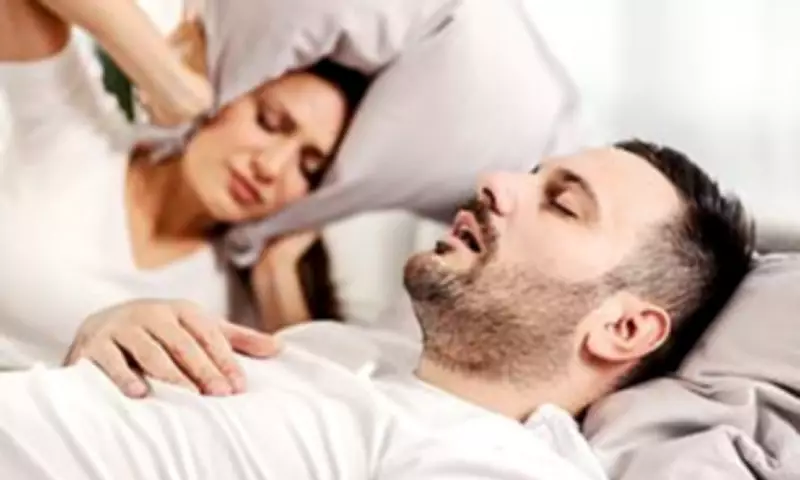
Getting patients to sleep on their side could be the most effective form of treatment for obstructive sleep apnoea, a severe snoring condition that can lead to deadly complications. The condition arises when the walls of the throat relax during sleep, blocking the airways.
Positional Sleep Apnoea
Approximately 75 per cent of patients suffer from positional sleep apnoea, which is triggered by sleeping on their back. Researchers have now discovered that using a positional therapy device, which ensures patients sleep on their side, serves as an effective long-term treatment. This condition is associated with an elevated risk of heart disease and stroke.
The findings were presented at the 2026 American Thoracic Society International Conference last week. The study revealed that the treatment leads to sustained improvement for patients, even after active therapy is discontinued.

Long-Term Benefits
After six months of using a positional device, more than two-thirds of patients continued to sleep on their sides and managed to control their sleep apnoea without further treatment. This effect persisted even a year later.
Several positional devices are already available on the market, such as a belt that vibrates when the user rolls onto their back, prompting a change in position, or a vest with a ball sewn into the back to discourage back sleeping.
Current Treatments and Challenges
Currently, no drug is licensed for sleep apnoea, and patients are often prescribed continuous positive airway pressure (CPAP) therapy. CPAP involves a machine that delivers air through a mask worn at night to keep the airways open. However, as many as half of patients struggle to adhere to CPAP masks due to discomfort.
Experts suggest that the latest findings could provide a simple solution for those who find CPAP difficult to tolerate. Dr Irene Cano-Pumarega, head of the sleep unit at Madrid's Ramon y Cajal Hospital and one of the researchers, said: 'We observed that positional therapy was not only effective, comparable to CPAP, but also better tolerated.'