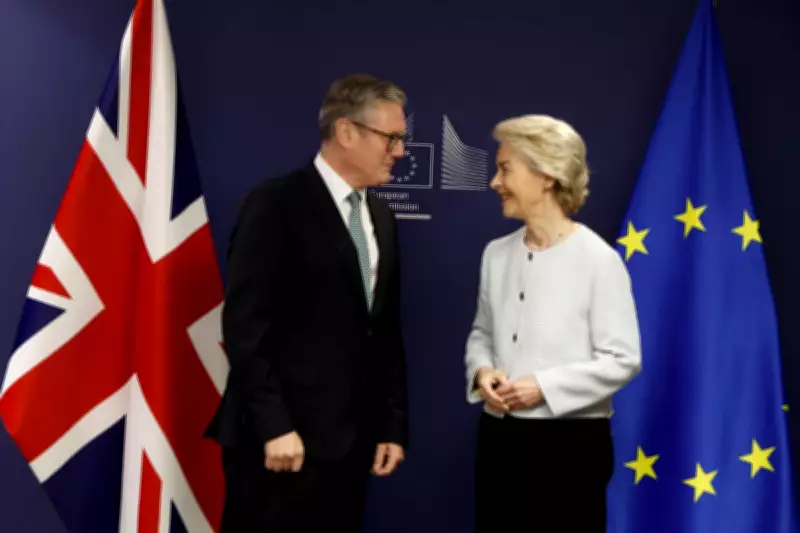
In a significant development in post-Brexit negotiations, the European Union is pushing back against the United Kingdom's insistence on implementing a strict annual cap for a proposed youth exchange programme. This scheme, designed to facilitate individuals under the age of 30 to live, work, and study across UK and EU territories, has become a focal point of diplomatic friction as both sides seek to redefine their relationship.
Divergent Views on Migration Control
The UK government is advocating for a hard annual limit, potentially restricting participation to tens of thousands of people annually, arguing that this measure is necessary to manage migration flows effectively. However, Brussels counters that the initiative should not be treated as a conventional migration programme. Instead, EU negotiators emphasise its role in fostering cultural and educational ties between younger generations in Britain and the European Union, aiming to mitigate some of the disruptions caused by Brexit.
Emergency Brake Mechanism Proposed
As an alternative to the UK's proposed cap, the European Union has put forward an 'emergency brake' monitoring system. This mechanism would allow for temporary suspensions or adjustments to the scheme if participation levels surge unexpectedly, without imposing a rigid numerical ceiling. Proponents argue that this approach offers greater flexibility and aligns with the scheme's goal of building bridges rather than barriers.

Tuition Fee Disputes Add Complexity
Beyond the debate over participant numbers, disagreements have also surfaced regarding university tuition fees. EU representatives are pressing for their students to be charged the same rates as domestic British students when studying in the UK, a move that could significantly reduce costs for European learners. This issue underscores broader tensions over fairness and reciprocity in educational exchanges post-Brexit.
Implications for Upcoming Summit
These contentious points are set to dominate discussions at a major summit scheduled for June or July, where Sir Keir Starmer, the UK Prime Minister, is expected to meet with EU leaders. The outcome of these talks could have far-reaching consequences for UK-EU relations, influencing not only youth mobility but also broader economic and social cooperation. As negotiations intensify, both sides remain entrenched in their positions, highlighting the ongoing challenges of navigating a post-Brexit landscape.
In summary, the EU's proposal for an 'emergency brake' represents a key attempt to balance control with collaboration, while disputes over caps and fees reflect deeper struggles over sovereignty and integration. The resolution of these issues will be closely watched as a barometer for future UK-EU engagements.