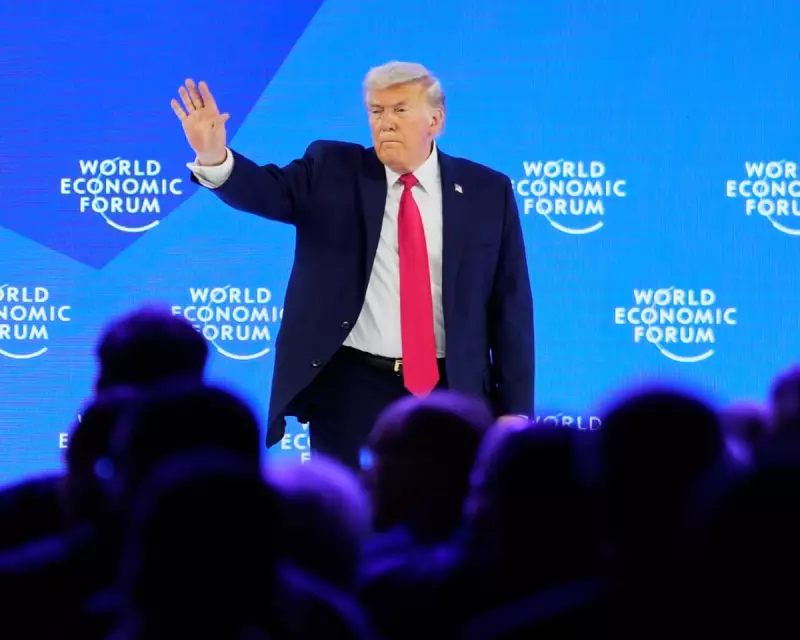
Waving goodbye to Donald Trump will be neither simple nor swift for Europe, yet the continent must seize the moment to initiate a strategic financial separation. While public appearances may suggest business as usual, behind the scenes, the European Union and the United Kingdom have the potential to sever joint financial ties, effectively closing shared accounts and limiting the sway of a domineering former partner.
The Urgent Need for Financial Independence
This process will undoubtedly be challenging and time-consuming, but achieving a degree of autonomy is both essential and within reach. As a turbulent week at the World Economic Forum in Davos concludes, with discussions shifting towards post-summit peace deals for Ukraine, some may hope that distraction or appeasement could placate the US president. Others might pin their hopes on US midterm elections reining in Trump's influence permanently.
Unfortunately, such optimism appears misplaced. The breakdown of the post-Second World War order has been accelerating, with warning signs flashing since the 2008 financial crisis. Washington's next administration is likely to maintain a similarly confrontational stance when international regulations attempt to constrain its actions.

Global Financial Shifts Underway
Within the shifting tectonic plates of international finance, recognition is growing that distancing from Washington's disruptive policies is becoming a priority for many nations. While the S&P 500 continues to attract substantial international investment, creating an impression of unstoppable growth, other financial markets tell a different story.
China has spent the past year systematically reducing its holdings of US government bonds, effectively decreasing its lending to the American government through bond markets. Japanese pension funds have followed a similar path, driven partly by concerns about overheated US stock prices reaching levels not seen since the dotcom bubble at the turn of the century.
What appears prosperous today could lead to significant losses tomorrow, prompting lenders to adopt more cautious positions and hedge against potential disaster. While China and Japan's actions are partly motivated by domestic challenges requiring repatriation of foreign investments, their moves contribute to a broader trend of financial decoupling.
The European Response: Practical Steps
The gradual withdrawal of bond investors has begun to incrementally increase US government borrowing costs. If Europe were to initiate its own financial separation, it would similarly begin selling its US bond holdings. This week provided a glimpse of what could become standard practice when AkademikerPension, Denmark's main retirement fund for academics, announced it would divest all remaining US government bonds from its multibillion-pound portfolio by month's end.
Investment director Anders Schelde explained the decision was primarily rooted in concerns about deteriorating US government finances, though he acknowledged that ongoing tensions between the US and Europe didn't make the choice more difficult. While the fund's $100 million holding represents a modest amount, its symbolic importance as a beacon to other institutional investors could prove substantial.
Regulatory Support and Market Alternatives
European regulators could facilitate this transition by making it easier for pension funds to reduce their US bond exposure. Some experts argue that pension funds have historically followed credit rating agencies too slavishly, despite these agencies' questionable track record during the 2008 financial crisis when they incorrectly deemed mortgage-backed securities containing subprime loans as safe investments.
If pension funds begin viewing US debt as increasingly risky, they can gradually reduce their holdings. While there are costs associated with such reductions—remaining bonds in any portfolio decrease in value as more investors sell—there are also significant benefits. Following the Danish example, portfolios become less risky as US bond exposure diminishes.

Europe could further strengthen its financial independence by developing its own bond market denominated in euros. This would create a viable alternative to US Treasury bonds, offering international investors a safe haven that would simultaneously drain capital from American markets. This proposal dates back to a 2010 document from the Bruegel thinktank, which has recently updated its recommendations.
Building a Coalition for Change
The European Union has previously demonstrated its ability to coordinate disparate members around one-off eurobond initiatives, most notably through the borrowing that supported its €385 billion NextGenerationEU recovery scheme following the COVID-19 pandemic. However, as both Bruegel and the Peterson Institute have argued, what's needed now is a permanent market that could genuinely rival American and other international bond markets.
The timing appears opportune, with investment funds worldwide actively seeking secure alternatives. Europe could position itself as one of these destinations. Brussels could begin with a coalition of willing nations rather than requiring unanimous agreement among all member states. Such an approach might reluctantly acknowledge that much of the necessary financial expertise and market infrastructure resides in London, which hosts bond markets of greater depth and breadth than any on the continent.
This recognition could serve dual purposes: politicians in Berlin, Amsterdam, Dublin, and potentially Paris increasingly seek to draw the United Kingdom closer to the European Union. If substantial financial benefits emerge from collaboration, resistance on both sides of the Channel might naturally diminish.
Ultimately, if creating a European debt market in its own currency provides even partial insulation from Trump's threats of financial retaliation, the strategic advantage would be significant. The path toward financial independence won't be straightforward, but Europe's economic future may depend on taking these crucial first steps toward separation.