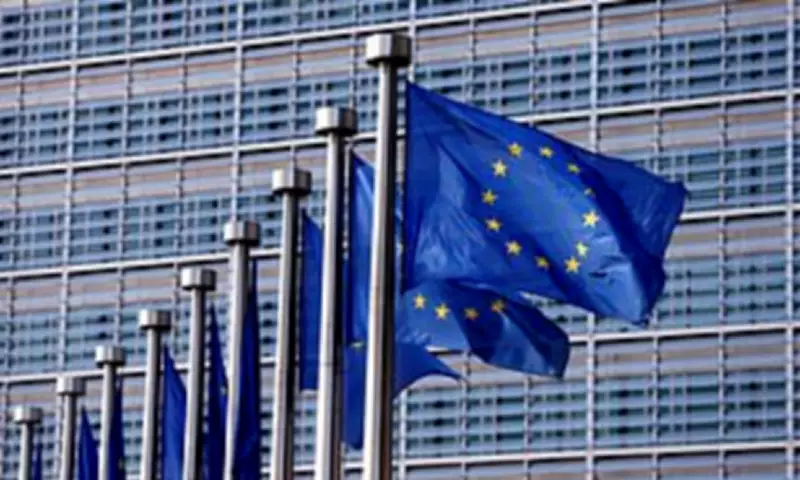
Chancellor Faces Stark EU Demands for Deeper Post-Brexit Ties
Chancellor Rachel Reeves has received a clear warning from senior European Union diplomats: pouring billions of pounds into Brussels' aid budget will be the unavoidable price for securing even closer ties with the bloc. According to sources speaking to the Mail, Britain should prepare to become "big payers" into the EU's cohesion fund—a mechanism designed to eradicate poverty by funding infrastructure in poorer regions—if it wishes to align with Brussels regulations across additional sectors.
Jurisdiction and Financial Obligations Highlighted
The demands extend beyond mere financial contributions. Diplomats emphasized that the United Kingdom would also have to accept the jurisdiction of European Court of Justice judges over significant portions of the British economy. This condition forms part of a broader package of "rights and obligations" that accompany closer integration.
Under Sir Keir Starmer's post-Brexit reset agreement, Labour has already committed to following EU rules on food and plant standards, electricity, and carbon pricing. However, in a speech delivered on Tuesday, Ms Reeves indicated openness to extending Brussels' influence into further areas of government policy, including chemicals, automobiles, and industrial goods.

Reeves Cites Economic Damage from Brexit
The Chancellor defended this direction as necessary to undo what she described as the "deep damage" inflicted by Brexit, referencing disputed research suggesting the economic impact equates to as much as 8 percent of GDP. Critics, however, argue that returning to alignment with EU regulations effectively surrenders the control that voters demanded in the historic 2016 referendum.
Ahead of a Brussels summit, one senior EU diplomat confirmed that no EU country would block Labour from signing Britain up to more Brussels rules, but cautioned that such moves come with stringent obligations. "If the UK is willing to align more, then very much it's possible," the diplomat stated. "And part of the alignment is of course accepting the rules of the European Court of Justice, because you have to have an independent arbiter."
Cohesion Fund Payments as Market Access Fee
The diplomat elaborated on the financial implications, noting, "It means that if you take part in the internal market, that you also pay for the cohesion fund part of it. Whoever takes part in the internal market also pays for market access. We take part in the internal market in my country and we're big payers in the cohesion fund part of it. That's part of the deal."
A second senior EU diplomat reinforced this point, asserting, "If the UK wishes to get closer to Europe, which we want, it goes of course with rights and obligations. If you're part of it then you're completely part of it. And I think that is the discussion we should have. And the closer you can get, the better for us. The closer the better—but on the basis of rules, privileges and obligations [including paying into EU budgets]."
They pointed to Norway as an example, which pays over £2 billion into the EU's cohesion fund across a seven-year budget cycle in exchange for closer ties, despite not being a member state.
Political Backlash and Accusations of Stealth Re-join
In her address, Ms Reeves insisted that ministers would not take Britain fully back into the EU's Single Market or customs union. Nonetheless, critics have accused the government of attempting to re-join "by stealth" through its agreement to "dynamically align" with the bloc on food standards, electricity, and carbon pricing. This approach effectively positions Britain as a "rule-taker," subject to future regulations without any say in their creation.
Mark Francois, chair of the European Research Group of Tory MPs, condemned Labour's policy, stating, "As Labour grow increasingly nervous about the forthcoming May elections, they seem to think they can avoid an electoral hiding by somehow cosying up to Brussels and seeking the jurisdiction of the European Court—well, that way madness lies."

Reform UK MP Andrew Rosindell echoed these concerns, remarking, "Reports that Britain could be expected to hand over billions to Brussels and once again become a rule-taker should alarm everyone who values our sovereignty. The British people voted to leave the European Union—the Government has no mandate to edge back in through the back door."
A Reform spokesman added, "After the next election, we will reverse Reeves' move to drag us back into the single market."
Ongoing Negotiations and Stalled Talks
Ministers anticipate that the deal on alignment of food standards, established last May, will be operational by mid-2027. Concurrently, separate discussions are underway regarding a youth mobility scheme, though these have stalled due to Brussels' demands that EU students pay the same tuition fees as British counterparts at UK universities, where costs are significantly lower.