This round-up of claims has been compiled by Full Fact, the UK’s independent fact checking charity which works to give people access to reliable information they can trust.
Does polling suggest the UK would vote to rejoin the EU?
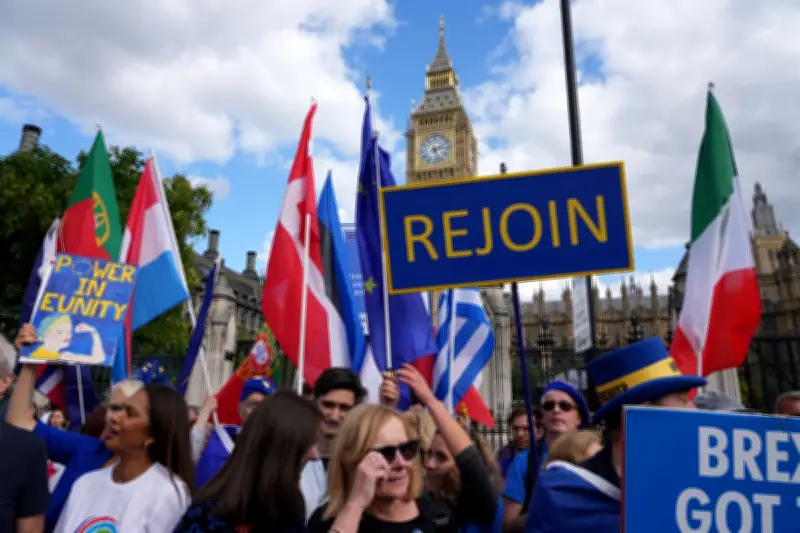
With this week marking 10 years since the Brexit referendum, Full Fact has examined what polling now shows on the public’s views. While all polling comes with a margin of error, and public opinion can change, recent polls suggest that a clear majority of voters now in principle support the UK rejoining the EU – though it depends on what the terms of rejoining would be.
In the 2016 referendum, 52% of voters chose to leave the EU. However, a recent Ipsos poll found public opinion is now about 61% to 39% in favour of rejoining, when removing respondents who said “don’t know” and focusing only on likely voters. This lead for rejoining is partly because Leave voters are about twice as likely to have changed their minds since the referendum.

In principle, these voters might change their minds again, but there have also been large demographic shifts in the past 10 years. Older people were always more likely to support Brexit, and they still are today. But as older voters have died and younger people have joined the electorate, there has been a net shift towards support for rejoining. The impact is so significant that the former chairman of YouGov, Peter Kellner, estimated in December 2025 that the change in demographics alone since 2016 suggests a majority of voters would now favour EU membership, even if nobody had changed their minds.
Demographic changes continue. As polling expert Professor Sir John Curtice wrote in an article for the UK in a Changing Europe think tank earlier this month: “The clear implication is that generational turnover could gradually serve to reduce the level of support for being outside the EU even further.”
Complexities in rejoining terms
These figures relate to overall support for rejoining the EU. When more specific questions about what that might look like are asked, the picture becomes more complicated. If the UK were to hold another referendum, “rejoining” might have a specific meaning that it lacks today – for example, if the government had negotiated new terms with the EU.
A YouGov poll this month found that if the UK could only rejoin by accepting all EU rules from which it used to be exempt, such as joining the euro and the Schengen passport-free travel zone, only 35% would support rejoining, with 43% opposed.
Does Sir Keir Starmer get a £115,000 ‘pension’ as an ex-PM?
After his resignation announcement on Monday, several social media claims suggested that Prime Minister Sir Keir Starmer will be entitled to £115,000 a year “for the rest of his life” after leaving office. Some have described this as his “salary” or “pension”, but that is not accurate.
The £115,000 figure refers to the Public Duty Costs Allowance (PDCA) – an allowance that can be used by former PMs to reimburse expenses “for necessary administrative costs arising from their special position in public life”, such as managing an office, dealing with correspondence, and covering costs of appearing at events in their capacity as an ex-prime minister. It is not paid automatically; £115,000 is the maximum amount they can claim in a year once costs have been incurred.
Former prime ministers can also claim a “pension allowance” on top of this to contribute towards their staff’s pension costs, limited to a maximum of 10% of the PDCA. The most recent government figures show that in 2024/25, of the eight living former PMs, five claimed the maximum or close to the maximum £115,000 allowance. David Cameron did not claim the full amount and was not entitled to claim the PDCA for part of that financial year while serving as foreign secretary. Liz Truss also did not claim the full amount. Rishi Sunak has said he does not intend to claim the PDCA.
Since 2015, there has been no special pension for prime ministers specifically. Unless he has opted out, Mr Starmer is likely enrolled in the Ministerial Pension Scheme, which covers government ministers, in addition to the pension scheme for MPs. However, the value of these pensions in Mr Starmer’s case is unknown, and both schemes only provide a pension upon retirement, not upon leaving office.

This is not the first time misleading claims about the PDCA have circulated following a prime minister’s resignation. Full Fact wrote in more detail about this and other support available to former PMs back in 2024.