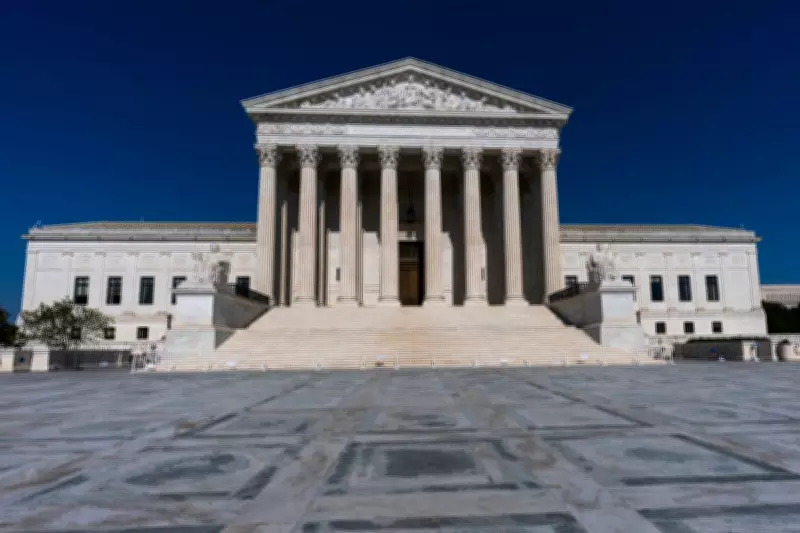
The Supreme Court on Thursday delivered a unanimous decision upholding the Securities and Exchange Commission's (SEC) broad authority to reclaim ill-gotten gains from individuals involved in securities fraud, without requiring proof that specific investors suffered financial losses.
Case Background
The ruling came in the case of Ongkaruck Sripetch, a Los Angeles resident who pleaded guilty to selling unregistered securities as part of a scheme involving high-risk penny stocks. Sripetch was sentenced to 21 months in prison and faced a court order to repay more than $3 million, including interest. He challenged the order, arguing that the SEC needed to demonstrate that individual investors had lost money as a direct result of purchasing the stocks.
Supreme Court's Decision
Justice Neil Gorsuch, writing for the court, rejected that argument. The justices determined that it was sufficient to show that Sripetch had profited from illegal transactions. The court further noted that an investor may be considered a victim of an offender's wrongdoing and thus entitled to compensation, even without direct proof of individual losses.

The decision reinforces the SEC's ability to pursue disgorgement—the legal principle of returning profits gained through illegal activities—in fraud cases, a key tool for the agency in combating financial misconduct.
Implications
This ruling strengthens the SEC's enforcement capabilities, allowing it to recover funds from fraudulent schemes more efficiently. Legal experts suggest it could lead to increased scrutiny of securities transactions and potentially larger penalties for violators. The decision also clarifies the standard for disgorgement, reducing the burden on regulators to trace specific investor harm.
The case reflects the court's ongoing interpretation of federal securities laws and the regulatory powers of the SEC, which has been a subject of debate in recent years.