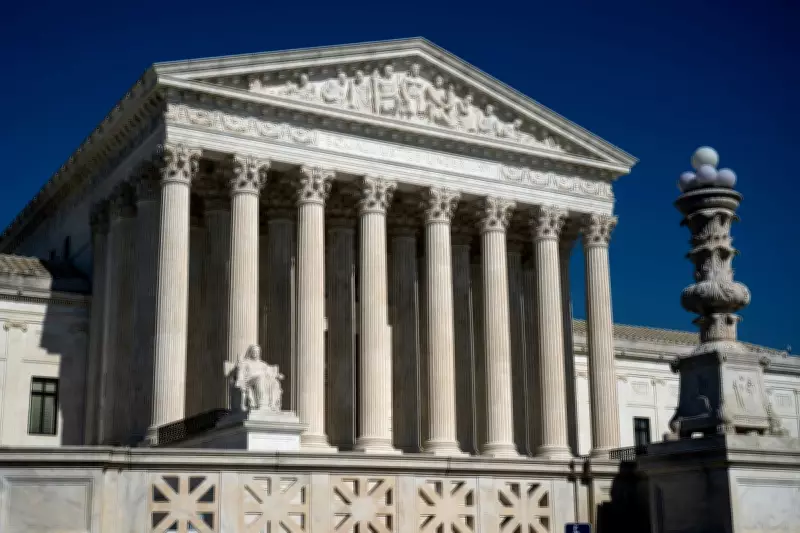
The United States Supreme Court has delivered a significant ruling in favor of Terry Pitchford, a Black death row inmate from Mississippi who argued that racial bias tainted the jury that convicted him. In a narrow 5-4 decision announced on Thursday, the justices sided with Pitchford, who was sentenced to death for his involvement in the fatal shooting of a grocery store owner in northern Mississippi.
Background of the Case
Pitchford, now 40 years old, was 18 when he and a friend decided to rob the Crossroads Grocery, located just outside Grenada. During the robbery, the friend shot and killed store owner Reuben Britt, but was spared the death penalty due to being under 18. Pitchford, however, was tried for capital murder and received a death sentence. The case has been navigating the judicial system for two decades.
The trial featured only one Black juror, a situation reminiscent of another Black man on Mississippi’s death row, Curtis Flowers, whose conviction was overturned by the Supreme Court seven years ago. In that case, Justice Brett Kavanaugh noted a “relentless, determined effort to rid the jury of Black individuals.” The prosecutor in both cases was Doug Evans, now retired, who had a history of dismissing Black jurors for discriminatory reasons. In Pitchford’s trial, Evans excused four other Black potential jurors.

Legal Framework
The Supreme Court’s 1986 decision in Batson v. Kentucky established that jurors cannot be excluded based on race, and created a process for trial judges to evaluate claims of discrimination and the race-neutral explanations provided by prosecutors. Pitchford’s appeal centered on whether his attorneys adequately objected to the rulings of Judge Joseph Loper, and whether the Mississippi Supreme Court acted reasonably in rejecting their objections.
In 2023, U.S. District Judge Michael P. Mills overturned Pitchford’s conviction, ruling that the trial judge failed to give Pitchford’s lawyers sufficient opportunity to argue that the prosecution was improperly dismissing Black jurors. Mills stated that his decision was partly influenced by Evans’ conduct in prior cases. However, a unanimous panel of the 5th U.S. Circuit Court of Appeals reversed that ruling.
The Supreme Court’s decision sends the case back to lower courts for further proceedings, potentially leading to a new trial or a revised sentence. The ruling underscores ongoing concerns about racial discrimination in jury selection, particularly in capital cases.