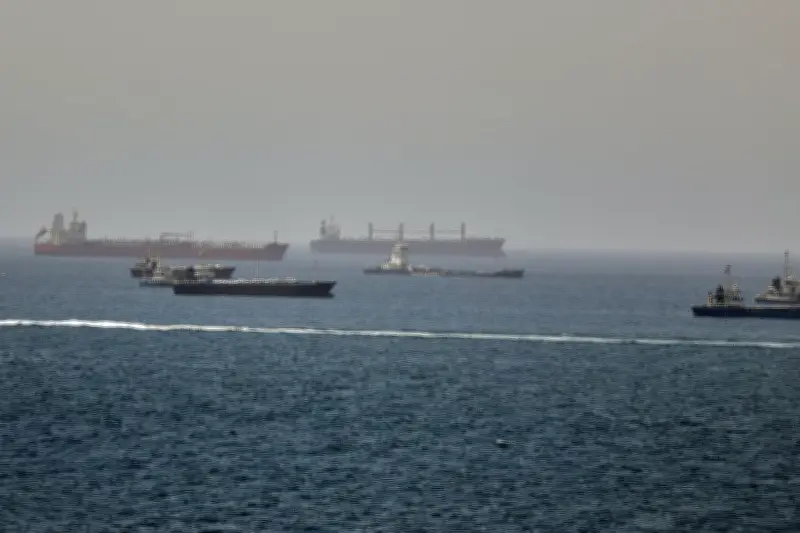
US Forces Strike Iran After Tanker Attacks in Strait of Hormuz
US Central Command forces have carried out a series of "powerful strikes" against Iran in retaliation for the targeting of three commercial tankers in the Strait of Hormuz. The attacks occurred just hours after Washington revoked Tehran's license to sell oil, which had been issued only last month following an interim ceasefire deal.
According to a statement on X, the American military said: "US Central Command forces have begun launching a series of powerful strikes against Iran to impose heavy costs for targeting and attacking commercial shipping crewed by innocent civilians in an international waterway. The US strikes are in response to Iranian attacks on three commercial vessels that were transiting the Strait of Hormuz. Iran’s demonstrated aggression was unwarranted, dangerous, and a clear violation of the ceasefire."
Three Civilian Vessels Hit in One Day
Three civilian vessels were struck in the strait on Tuesday, marking the most in a single day since late April, according to UN International Maritime Organisation figures. The renewed hostilities threaten to again disrupt shipping transiting the Gulf channel, a vital artery for global oil and gas supplies.

Ending Tehran's stranglehold on the strategic waterway, which had previously disrupted global oil and gas supplies and driven up fuel and food prices, was a key demand in earlier negotiations. However, the initial deal between the US and Iran, known as the Islamabad memorandum of understanding, only secures safe, toll-free passage of the strait for 60 days, pending a final agreement on Tehran's disputed nuclear plans.
Iran's Continued Leverage Over the Strait
The pact also leaves it to Iran and Oman, in conjunction with other Gulf states, to "define the future administration and maritime services in the Strait of Hormuz." In the meantime, Iran has continued to exert leverage over the channel, including demanding ships seek permission to transit and raising the spectre of future charges. Tehran has also claimed that only it is permitted to carry out mine clearance in the strait under the interim agreement, after Oman agreed to work with Britain and France to ensure the sea route remained open.
International Response
Britain and France have been at the forefront of a proposed international mission to protect and reassure vessels using the waterway once hostilities are over. But Iran warned that the involvement of any other country in the channel would amount to a provocation. A joint statement issued by Prime Minister Sir Keir Starmer and French President Emmanuel Macron last Friday said: "The Strait of Hormuz is a vital artery for the global economy. Restoring safe transit for ships of all nations through the Strait is a matter of global concern. The Sultanate of Oman has agreed to work with the United Kingdom and France to ensure that its sovereign territorial waters are safe for navigation. The UK and France also stand ready to deploy the wider multinational military mission to support freedom of navigation in the Strait of Hormuz."
The two leaders added: "The United Kingdom and France reaffirm their shared commitment to regional stability, respect for the sovereignty of all states, and their willingness to maintain close co-operation with their partners in order to uphold global security, freedom of navigation and international law."