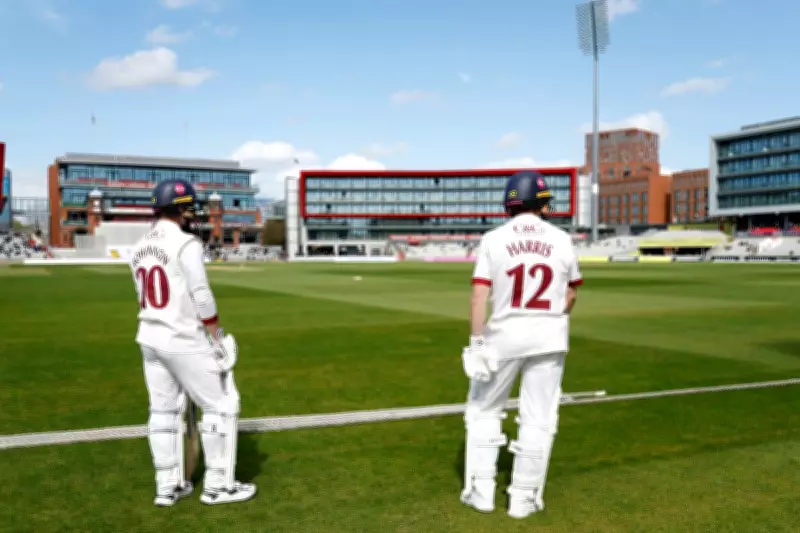
Lancashire are currently facing scrutiny as the county cricket season trials new substitute rules, which have caused controversy and confusion. The Old Trafford club has encountered significant issues with the regulations, which allow teams to replace injured or ill players during matches, subject to match referee approval.
Background of the Trial
The England and Wales Cricket Board (ECB) introduced the trial this year, permitting County Championship teams to substitute players affected by injury, illness, or significant life events. This expands existing allowances for concussions or England call-ups. Replacements can occur at any point in a match, with no limit on numbers, but must be approved by the match referee based on documentation from the team doctor.
Lancashire's Struggles
Lancashire have faced particular difficulties in successive matches. In a game against Gloucestershire, fast bowler Ajeet Singh Dale pulled a hamstring early, and the team sought to bring in Tom Bailey as a like-for-like replacement. However, the match referee denied this request, citing Bailey's greater experience and age. Lancashire eventually had to settle for Ollie Sutton, a left-arm medium all-rounder who bowled only 12 overs.

Similarly, against Durham, Lancashire lost young all-rounder Arav Shetty to a fractured thumb and attempted to replace him with Tom Hartley, a left-arm spinner with Test experience. Again, the referee blocked the move, deeming Hartley too experienced. Lancashire instead brought in George Bell, a wicketkeeper-batter who bowls occasional off-spin. The team lost the match partly due to the lack of a frontline spinner, with seamer Tom Bailey even bowling off-breaks in desperation.
Subjective Judgments and Concerns
The playing regulations require replacements to be "like for like (or sufficiently close)" in terms of role, but make no mention of ability, age, or experience. Critics argue that match referees are making subjective judgments, effectively critiquing team selection. For instance, referee Peter Such reportedly denied Bailey's substitution because Bailey had bowled better than Singh Dale the previous week.
This has raised concerns about potential manipulation of the system. Hampshire head coach Russell Domingo even joked about giving underperforming players laxatives to trigger an illness replacement. The trial is part of broader ICC encouragement, but England's rules are more vague than elsewhere. India's Ranji Trophy trial only allowed external injuries, while Australia's Sheffield Shield permitted soft-tissue injuries but not illness, with a limit of one change per side within the first two days.
Stand-Down Rule and Frequency
England's eight-day stand-down rule, compared to Australia's 12 days, has also been questioned. It is based on calendar days rather than playing days, so players can serve the period during a week without a fixture. This may have contributed to a spike in replacements—six in the second round, triple the first round—before many counties had a break.
The ECB has emphasized that this is a trial, with grey areas expected and even desired to gather insights. Mid-season tweaks are theoretically possible, but their implementation remains uncertain.
Broader Implications for Test Cricket
Beyond domestic cricket, the trial raises questions about potential adoption in Test cricket. While well-meaning, such replacements could alter the fundamental nature of Test cricket as a test of collective endurance, fitness, and courage. Concerns include potential abuse, with teams gambling on player fitness or seeking fresh legs mid-match. As noted, every fast bowler has some underlying issue, and the temptation to exploit the system could undermine the sport's integrity.
Lancashire captain and veteran bowler Jimmy Anderson, despite recent frustrations, can at least smile at the irony that his 704 Test wickets mean any bowler can now replace him, contrary to predictions after his England retirement.