

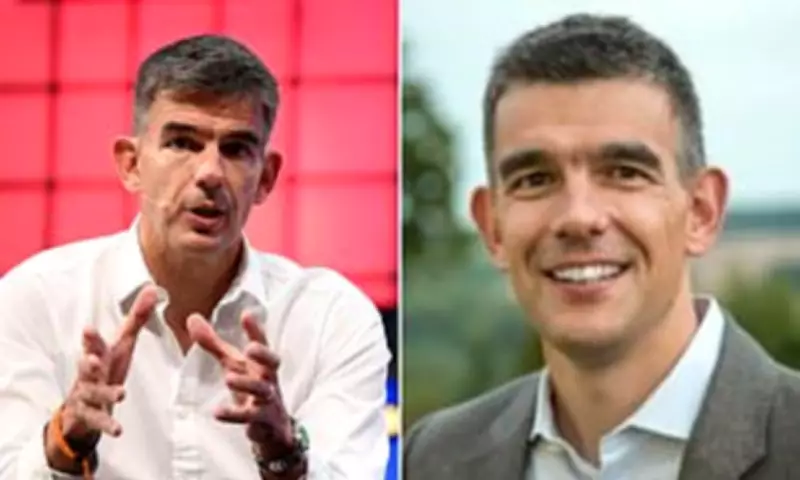
In a surprising twist to the search for the BBC's next director general, former Google executive Matt Brittin has emerged as the leading contender for the prestigious role. This development follows the withdrawal of two other prominent candidates from the running, positioning the 57-year-old tech veteran as a strong favourite to succeed Tim Davie.
The Prime Candidate Emerges
A source with intimate knowledge of the selection process has identified Mr Brittin as the 'prime candidate' who has advanced to the later stages of consideration. 'He is a very plausible contender,' the insider revealed. 'His big challenge will be to convince Samir Shah, the BBC chairman, that he understands public service broadcasting. His background is entirely in technology, and big tech is often viewed as the enemy of the BBC.'
From Tech Giant to Public Broadcaster
Mr Brittin departed Google last year after an impressive 18-year tenure at the technology behemoth, serving his final decade as president for Europe, the Middle East and Africa. His potential appointment marks a significant shift from the corporate tech world to the realm of public service broadcasting, raising questions about how his experience will translate to leading Britain's national broadcaster.

Industry insiders are increasingly optimistic about his chances of taking the helm at the BBC, particularly following the resignation of Tim Davie in November. Davie's departure came amid significant controversy over a misleading edit of a Donald Trump speech in a Panorama episode, creating a leadership vacuum at a critical time for the broadcaster.
Competition Withdraws from Race
The path has cleared considerably for Mr Brittin with the understanding that Apple TV executive Jay Hunt and former Channel 4 chief Alex Mahon have both ruled themselves out of contention. This unexpected development has propelled the former Google executive from dark horse status to frontrunner position in the race for one of British media's most influential roles.
Compensation and Qualifications
If successful in his bid, Mr Brittin could expect a compensation package comparable to the £540,000 to £544,999 earned by his predecessor Tim Davie. Interestingly, this comes from a man who once admitted to MPs on the public accounts committee in 2016 that he had no idea how much he was paid while being questioned about a tax deal between HMRC and Google.
Following his departure from Google, Mr Brittin expressed his intention to take what he described as a 'mini gap year.' He stated at the time: 'I hope to apply what I've learnt about technology and leadership to help people make the most of this wave of innovation in education, business, science and society — from different vantage points.'
Recent Moves and Industry Support
In February 2025, Brittin joined Guardian Media Group's board as a non-executive director, marking his first significant move back into the media landscape since leaving Google. This position has provided him with valuable insight into the challenges facing traditional media organisations in the digital age.
Tim Davie is said to have spoken favourably about Mr Brittin in the past, though some industry observers maintain reservations about appointing a technology executive to lead a content-focused organisation like the BBC. The debate centres on whether his extensive tech background represents an asset or a liability for an institution grappling with digital transformation while maintaining its public service remit.
Athletic Background and Leadership Style
Beyond his corporate credentials, Mr Brittin brings an interesting personal history to the table, having been part of the British rowing team at the Seoul Olympics in 1988. This athletic background suggests a competitive spirit and discipline that could serve him well in navigating the complex challenges facing the BBC, from funding pressures to evolving audience expectations in the streaming era.

The potential appointment of a tech executive to lead the BBC reflects broader shifts in the media landscape, where traditional broadcasters increasingly compete with digital platforms for audience attention and advertising revenue. Mr Brittin's candidacy represents both an acknowledgment of this reality and a gamble that his Silicon Valley experience can be successfully applied to public service broadcasting.





