Army Chief Warns Manosphere Fuels Military Misogyny Amid Deepening Social Rifts
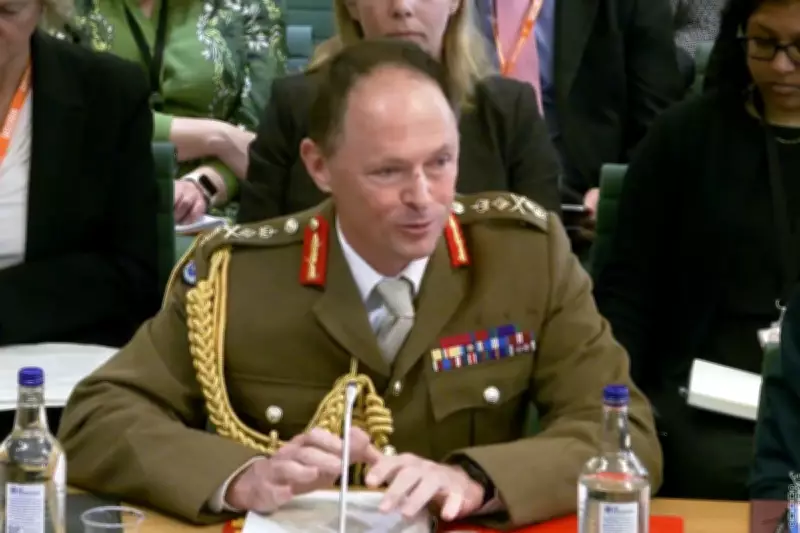
The head of the British Army has issued a stark warning that the online "manosphere" is intensifying misogyny and sexual harassment within the military, making it increasingly difficult to protect women serving in the armed forces. General Sir Roly Walker, Chief of the General Staff, testified before the Commons defence select committee, highlighting that "deepening rifts within young people", accelerated by social media, are significant contributing factors to this troubling trend.
Persistent Challenges Despite Reform Efforts
Sir Roly's appearance follows a 2025 inquest into the death of Gunner Jaysley Beck, which found the Army failed to act after she was sexually assaulted by a superior before taking her own life. When questioned by MPs about why sexual harassment rates remain as high as five years ago, Sir Roly responded: "My personal view is this gets harder before it gets easier, because of the trends in wider society."
He elaborated on the societal pressures affecting new recruits: "The level of misogyny, the level of rancorous behaviour and belief systems, and the tension in wider society, is something we have to accept as the environment from which we attract. I'm well aware of what is going on with things like the manosphere and the sense of deepening rifts within young people, all of which is playing and accelerating through social media. A lot of that generation are coming through into the armed forces."

Alarming Statistics from Army Training College
During the hearing, Labour MP Emma Lewell revealed disturbing figures from the Army Foundation College in Harrogate, North Yorkshire:
- Between 2021 and 2024, there were 122 investigations into sexual offences against under-18s at the college
- Of these, 80 cases involved sexual assault
- North Yorkshire Council received 89 safeguarding notifications concerning college staff over the past five years
The college serves as the sole military training unit for British Army recruits aged 16 to 17.5 years old.
Transformation Challenges for Young Recruits
Sir Roly expressed little surprise that harassment figures haven't declined, despite increased focus within the Army. He emphasized the difficulty of transforming civilians into soldiers: "The level of sexualisation in young people in society, the level of exposure to drugs, drink, alcohol, violence in wider society, it is not a surprise to me that when we take 10,000 civilians, generally between the ages of 17-and-a-half and 20, and train them to be soldiers, that in those early weeks and months of onboarding them into our organisation, we see the greatest correlation of behaviours which are at odds with our values and standards."
He described the transition as a journey rather than an immediate transformation: "People are drawn to the armed services because they want to be something different, and it takes a while to transform them from being civilians, in my case, into being soldiers. It is not a cliff edge where you walk in the door and suddenly, you're a different person. These have got to be learned behaviours and applied, and the guardrails are there to do that and do the very best for our people."
Leadership Vulnerabilities Across Services
The hearing also addressed leadership challenges across the armed forces. General Sir Gwyn Jenkins, First Sea Lord, acknowledged that the Navy remains vulnerable to "toxic" leadership due to flawed assessment methods: "We are very vulnerable to toxic leadership within our system, and it's very difficult to identify individuals who can actually create the environment that we want. Traditionally, when we've looked at our leaders, we tend to assess the outputs that they manage to create. We're not very good at assessing how they got there in the first place."

Sir Gwyn emphasized that proper leadership selection is crucial for cultural change: "This is really important, because I think the leadership at all levels is what will be able to implement the policies and create the environment for the teams to flourish. Unless we can pick the right leaders at all levels within the armed forces, we won't be able to accelerate the cultural change that we try to engender."
The Navy conducted a trial of a new assessment model in autumn 2025, which identified individuals who might succeed under current systems but negatively impact their teams.
Ongoing Scrutiny Following Atherton Report
Sir Roly appeared alongside senior defence officials, including Louise Sandher-Jones (Minister for Veterans and People), Air Chief Marshal Harv Smyth (Chief of the Air Staff), and Sam des Forges (MoD Director of Conduct, Equity and Justice). They faced questions about implementing cultural changes since the July 2021 Atherton Report, which found the Ministry of Defence and armed forces were failing to protect female personnel.
MPs pressed the officials on specific mechanisms being established to drive meaningful cultural transformation within the military services, highlighting ongoing concerns about the safety and equality of women in uniform.