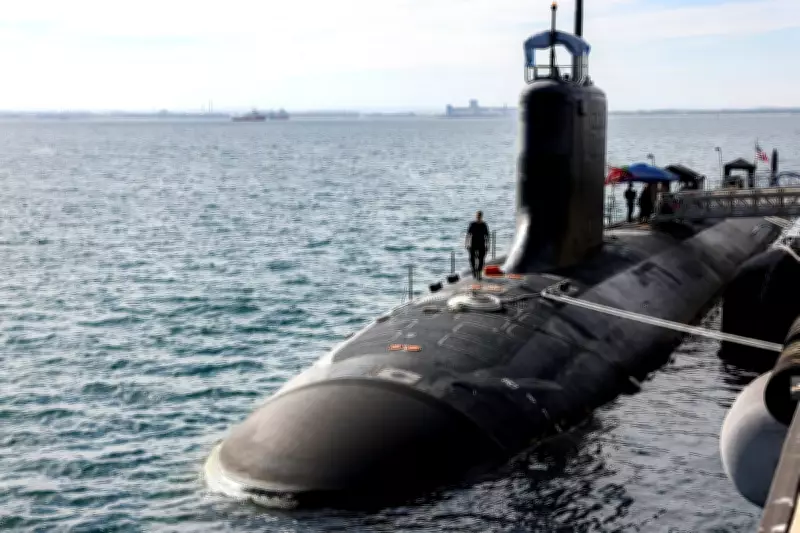
Australian Treasurer Jim Chalmers has announced a significant increase in defence spending in the 2026 federal budget, with funding for the Australian Submarine Agency (ASA) set to jump to $512 million in the next financial year. This marks a substantial rise from the current $385 million, reflecting the escalating costs of the Aukus nuclear-powered submarine program.
Budget Blowout for Aukus
The budget for the contentious Aukus deal has ballooned by more than $430 million over four years. The ASA’s resourcing for the 2025-26 financial year will increase by a third, from $385 million to $512 million. Staffing levels are also set to rise significantly, from approximately 883 positions to 1,209 next year—an increase of 37 percent.
The 2025-26 budget papers originally forecast the agency having total resourcing of $1.7 billion for the four years to 2028-29. However, this year’s budget has expanded that forecast to more than $2.13 billion for the same period, an increase of $431 million. In the previous budget, ASA’s total annual budget peaked at $529 million in 2026-27; it will now peak at $641 million, two years later in 2028-29.

Strategic Importance of Aukus
Aukus is the trilateral deal signed by the Morrison government with the United States and the United Kingdom. Under the so-called “Pillar One,” the agreement promises to deliver Australia its own fleet of conventionally armed nuclear-powered submarines. The budget papers describe the Aukus agreement as a “prudent response to deteriorating strategic circumstances.”
“Aukus partners have a shared commitment to the partnership and its importance in promoting a free and open Indo-Pacific through an enhanced collective capacity to deter aggression and contribute to stability, peace, and prosperity in the region,” the budget states. It further notes that for a maritime nation like Australia, a submarine capability is critical for national defence and for working with partners.
“The stealth, range, speed, and endurance of these submarines is unmatched, and will ensure we have a potent submarine capability for decades to come,” the budget adds.
Nuclear Waste Management Challenges
The 2026-27 budget also addresses another outstanding Aukus issue: nuclear waste management over millennia. Australia has not yet identified a permanent storage site for the nuclear waste generated by its nuclear-powered submarine fleet, including high-level radioactive waste from the reactor core and spent fuel, which will remain toxic for thousands of years.
Successive federal governments have spent three decades unsuccessfully trying to establish a nuclear waste site. In 2023, Defence Minister Richard Marles committed to publicly outlining a process for identifying a waste site “within 12 months.” However, no plan or site has yet been identified. Marles has stated that a site will be identified on defence land, either current or future.
The 2026-27 budget earmarks $11.9 million over two years for the Australian Radioactive Waste Agency to assist “in developing advice to inform Australia’s future radioactive waste management and disposal pathways.”
Concerns Over Submarine Delivery Timelines
Industry experts and defence analysts have raised concerns that Australia’s sovereign submarine fleet may never arrive. The government’s “optimal pathway” for Aukus involves the US selling Australia three Virginia-class submarines—two secondhand and one new—beginning in the early 2030s. However, given the stubbornly slow rate of submarine building in the US, the Congressional Research Service has openly considered that, instead of selling any Virginia-class submarines to Australia, the US might rotate its own US-commanded vessels through Australian ports.
For the past 15 years, US shipyards have built submarines at a rate of between 1.1 and 1.2 boats per year. The US fleet currently has only three-quarters of the submarines it needs, and would need to double its current build rate to supply any boats to Australia at all.

The backbone of Australia’s proposed nuclear-powered fleet depends on the UK designing and delivering the first of a new class of conventionally armed, nuclear-powered submarine: the SSN Aukus. The Royal Navy’s first Aukus submarine is slated for completion in the “late 2030s.” Australia will build its first Aukus submarine, based on the UK design, in Adelaide. That boat—the first of five to be built domestically—is scheduled to be in the water in the early 2040s.
However, the UK’s shipbuilding industry is even more moribund, hollowed out by decades of underinvestment and neglect. At the outbreak of the current US-Israel war with Iran, the UK had only one of its six-strong fleet of attack submarines at sea. The HMS Anson, visiting Australia, was hurriedly recalled to the northern hemisphere.
The UK must also prioritise, before building the first Aukus, constructing one further Astute-class attack submarine and four Dreadnought-class nuclear ballistic submarines at its sole submarine-building yard in Barrow-in-Furness.
Into the 2050s, Aukus is estimated to cost Australia $368 billion, including about $4.6 billion to be given to each of the UK and US to boost their submarine-building rates.