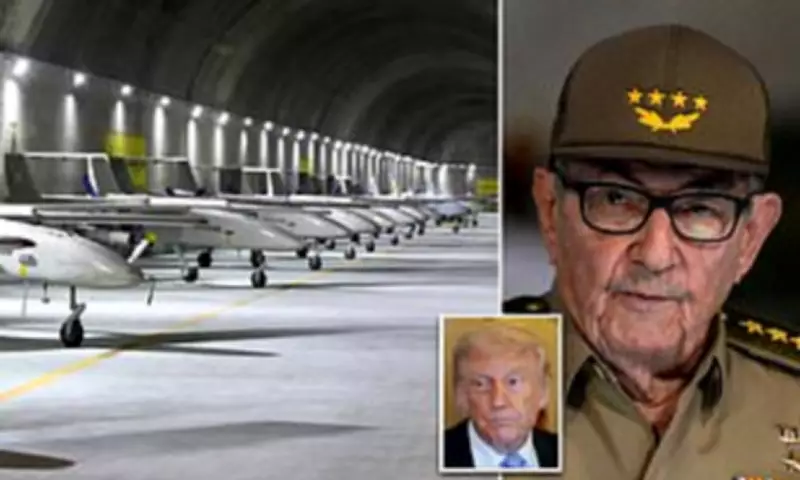
Cuba has reportedly acquired over 300 military drones for potential attacks on Guantanamo Bay and parts of Florida, according to classified intelligence shared with Axios. The intelligence indicates that Cuban officials have discussed hitting the US base in Cuba and Florida's Key West, located just 90 miles north of Havana.
US Officials Express Concern
A US official told Axios that the intelligence highlights how much the Trump administration views Cuba as a threat due to its drone development and the presence of Iranian military advisers in the country. 'When we think about those types of technologies being that close, and a range of bad actors from terror groups to drug cartels to Iranians to the Russians, it's concerning. It's a growing threat,' the official said.
Cuba has been purchasing drones of 'varying capabilities' from both Russia and Iran over the last three years, keeping them hidden, Axios reported. In the past month, Cuban officials have reached out to their Russian counterparts for more drones and military accounts, according to US officials.

Intelligence on Cuban Intentions
Intercepted intelligence suggests Cuban officials are 'trying to learn about how Iran has resisted us.' Officials added that they do not believe Cuba is an imminent threat or actively planning an attack on America, but rather they have been discussing drone warfare in case fighting breaks out as US relations continue to deteriorate.
'They're part of the Putin meat grinder. They're learning about Iranian tactics. It's something we have to plan for,' the official added. 'No one's worried about fighter jets from Cuba. It's not even clear they have one that can fly. But it's worth noting how close they are - 90 miles. It's not a reality we are comfortable with.'
Cuba's Response
In a statement, Cuba's embassy did not deny possessing attack drones, saying: 'Like any country, Cuba has the right to defend itself against external aggression. It is called self-defense, and it is protected by International Law and the UN Charter.' The statement continued: 'Those from the US who seek the submission and, in fact, the destruction of the Cuban nation through military aggression and war, do not waste a single moment fabricating pretexts, creating and spreading falsehoods, and distorting as extraordinary the logical preparation required to face a potential aggression.'
Potential Indictment Against Raul Castro
This development comes as US officials reportedly seek an indictment against former Cuban President Raul Castro in connection with the downing of planes 30 years ago. The potential indictment, which would need approval by a grand jury, is expected to focus on Cuba's deadly 1996 shootdown of two civilian aircraft operated by the humanitarian group Brothers to the Rescue. Four men were killed when the planes were shot down over the Florida Straits while on flights spotting Cubans fleeing communism in makeshift boats, relaying their coordinates to the US Coast Guard.
Florida's Attorney General announced in March he was reopening an investigation into the plane downing, a move supported by the victims' families. Raul Castro, now 94, formally stepped down as leader of Cuba's Communist Party in 2021 but remains a powerful figure in the country.
US-Cuba Tensions
President Donald Trump has pressed for major reforms in Cuba and even floated a 'friendly takeover' of the country. The Trump administration has also threatened tariffs on any country selling or supplying oil to Cuba, leading to energy shortages as oil shipments are largely cut off.
Amid these tensions, CIA Director John Ratcliffe met with Cuban officials, including Castro's grandson, on Thursday. Ratcliffe met with Raúl Guillermo Rodríguez Castro, Interior Minister Lázaro Álvarez Casas, and the head of Cuban intelligence services, discussing intelligence cooperation, economic stability, and security issues. According to a CIA official, Ratcliffe was there 'to personally deliver President Donald Trump's message that the United States is prepared to seriously engage on economic and security issues, but only if Cuba makes fundamental changes.'