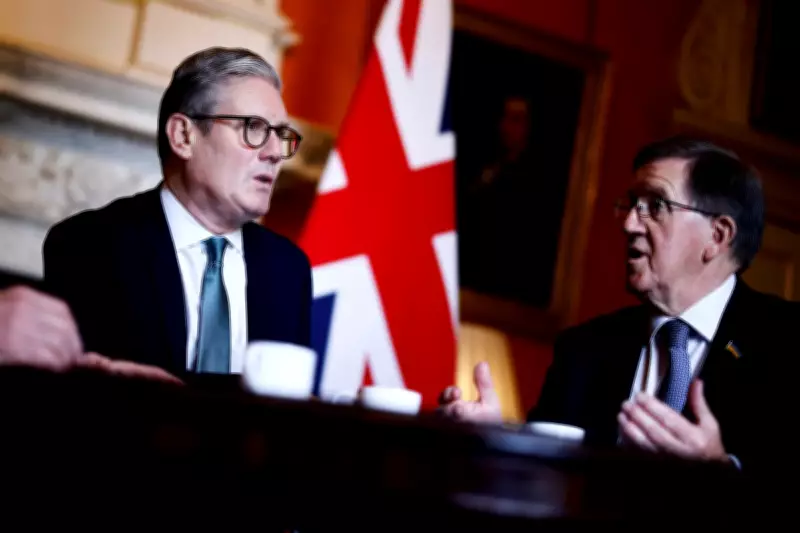
Former NATO Leader Delivers Devastating Critique of Prime Minister's Defence Policy
Lord George Robertson, the former NATO Secretary General and Labour's own former defence secretary, has launched an extraordinary public assault on Prime Minister Keir Starmer's approach to military funding. In a remarkable departure from his typically discreet manner, Robertson has accused Britain's leadership of demonstrating "corrosive complacency" that places the nation "in peril" while it remains "under attack."
The Substance of Robertson's Critique
Robertson's criticism, detailed in a speech trailed in advance by the Financial Times, centres on what he perceives as Starmer's unwillingness to make necessary investments in defence. "We cannot defend Britain with an ever-expanding welfare budget," Robertson declared, explicitly linking defence spending to potential welfare reductions. This represents a significant escalation, as Robertson previously authored the government's strategic defence review and typically voices disagreements privately.
The former NATO chief has lost patience with what he describes as Starmer's "stall, and stall, and stall again" approach to increasing defence spending beyond current levels. While much of his argument about the necessity of enhanced military investment is familiar, the direct personal criticism of Starmer and the specific suggestion about redirecting welfare funds represent new and politically damaging developments.

Starmer's Political Dilemma
Sources close to national security policy reveal that Starmer's primary strategy appears to be avoiding confrontation with the Parliamentary Labour Party. Many Labour MPs oppose the tough decisions he has already implemented and resist moving further in that direction. Even those within the party's moderate centre who acknowledge that global threats from Ukraine and Iran necessitate greater defence spending balk at the prospect of funding it through welfare reductions.
Starmer faces a fundamental political calculation. He could have adopted one of two coherent positions: either outlining a concrete plan to raise defence spending to 3% of national income early in the next parliament, funded through tax increases or welfare cuts, or alternatively defending the recent significant defence spending increase that was financed by redirecting foreign aid funds.
Instead, the Prime Minister has chosen a middle path, agreeing in principle that defence spending should rise from 2.5% to 3% of national income but refusing to commit to a firm timeline for achieving this target. This approach satisfies neither defence hawks nor welfare advocates within his own party.
The Internal Labour Dynamics
Labour MPs appreciate Starmer's rhetorical opposition to figures like Donald Trump but resist confronting the practical implications of such positions. They prefer symbolic gestures over substantive policy changes that would require difficult financial decisions. The recent shift from foreign aid to defence funding proved relatively straightforward because Labour MPs lacked time to organise opposition before its announcement, though it did prompt the honourable resignation of aid minister Anneliese Dodds.
Starmer's fundamental dilemma stems from his reluctance to confront Labour MPs with the harsh arithmetic of either raising taxes or restraining projected welfare budget increases. These same MPs hold nomination rights that could potentially trigger a leadership contest, creating powerful disincentives for the Prime Minister to take bold positions.
The Consequences of Indecision
Robertson, possessing considerable defence expertise, argues that Britain needs substantially more military investment. He warns starkly that "we are underprepared, we are underinsured, we are under attack. We are not safe." This critique highlights the tension between Starmer's language of absolute conviction and his cautious, day-to-day political management.
The Prime Minister declares growth as his number one mission until faced with difficult decisions like rejoining the European Union or reducing employer burdens. Similarly, he describes increasing defence spending to 3% as part of "my first duty as prime minister to keep our country safe" but qualifies this commitment with the caveat "when economic and fiscal conditions allow."

Had Starmer overruled Treasury objections to insist on higher defence spending, he might have faced internal opposition but potentially earned respect for decisive leadership. Conversely, had he defended the current 2.5% level as sufficient, Robertson would still have delivered his searing attack, but Starmer might have found support from the left wing of his party. Instead, the Prime Minister's middle course pleases no one and leaves him increasingly isolated as Robertson's warnings echo through the political landscape.