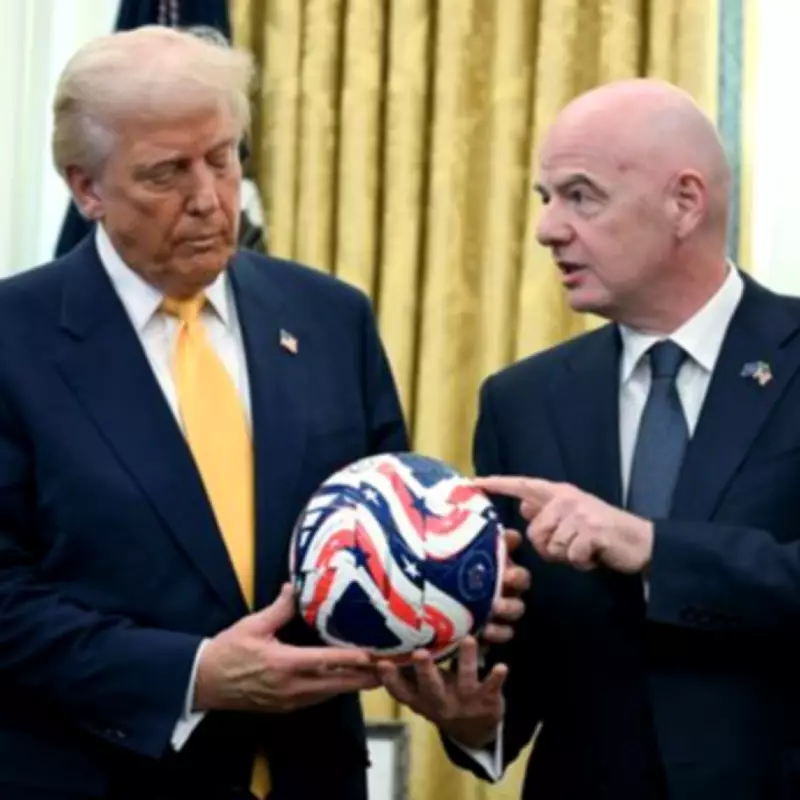
The 2026 FIFA World Cup will feature the most extensive security operation in the history of the sport, as the tournament expands to 48 teams and an expected seven million fans. FIFA has collaborated with the FBI, the Department of Justice, and various federal, state, and local law enforcement agencies, alongside a newly formed White House Task Force chaired by President Donald Trump.
Security Concerns Amidst Rising Gun Ownership
The latest assassination attempt on President Trump has highlighted the ease of access to firearms in the United States. Approximately 32 percent of the adult population owns a gun, with around 44 percent living in a household with firearms. Estimates suggest there are over 393 million civilian-held firearms in the U.S., owned by an estimated 65 to 77 million people. Gun ownership has risen by 28 percent from 1994 to 2023, contributing to 44,000 gun-related deaths in 2024, of which 35 percent were homicides.
Trump has referred to himself as “the best friend gun owners have ever had in the White House,” and his administration has moved to relax gun laws further, despite concerns raised by the shooting of Alex Pretti by ICE immigration service agents in January. It remains unclear whether ICE agents will be involved in security operations at World Cup venues.

Expanded Tournament and Enhanced Security Measures
The expansion from 32 to 48 teams means the number of World Cup games has increased from 64 to 104 across 16 host cities in the United States, Mexico, and Canada. The U.S. will host approximately 75 percent of matches, including the quarterfinals, semifinals, and final. Fans will face more rigorous checks before entering stadiums, and large bags will be banned at all U.S. venues.
In previous tournaments, local authorities handled security and event planning. However, for the 2026 World Cup, FIFA will assist U.S. authorities in overseeing security. The plans have been brought into sharp focus by the third assassination attempt on President Trump, where Cole Tomas Allen allegedly fired at a Secret Service agent whose bullet-proof vest saved his life. Allen was reportedly armed with a shotgun, handgun, and knives.
Drone Technology and Federal Funding
The Department of Homeland Security has awarded £85 million to host cities to invest in counter-drone technology, described as the fastest rollout of grants in its history. This technology will be used to counter aerial threats around venues' no-fly zones. Fans can expect security checks on train platforms, in fan zones, and on streets near stadiums. A DHS spokesperson said: “Drones represent the new frontier of American air superiority. This will help us continue to secure the border, protect our infrastructure, and keep Americans safe during FIFA 2026.”
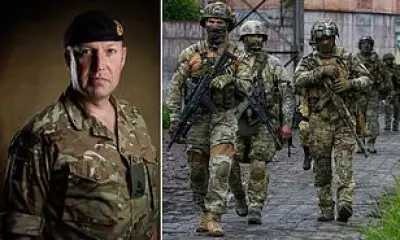
The UK policing operation will again be led by Cheshire Chief Constable Mark Roberts. Key intelligence will be shared with the U.S., including information on troublemakers identified at previous tournaments. Football banning orders have helped combat hooliganism abroad, with not a single UK national arrested in Qatar. Around 1,600 fans were banned from travelling to Euro 2024 in Germany, and most of those orders remain in place. Anyone attempting to enter the U.S. with a banning order could face up to six months in jail.
Human Rights Concerns and Travel Bans
Human rights groups have highlighted “discriminatory immigration policies” and “mass detentions and arbitrary arrests by masked, armed agents from U.S. Immigration and Customs Enforcement (ICE), US Customs and Border Protection (CBP), and other agencies.” The U.S. has imposed a ban on supporters from Iran, Senegal, Ivory Coast, and Haiti, marking the first time in World Cup history that fans have been unable to enter a host country.
One England supporter expressed concerns about the use of ICE enforcement officers in host cities, stating, “You feel complicit going to the US and supporting the tournament. But as a fan, you have no choice.” The Football Supporters Association, representing around 600,000 fans in England and Wales, has warned them about the increased cost of hotels, transportation, and tickets.

Host cities can use federal funds of £458 million “to pay for increased police and emergency response at FIFA venues, hotels, and transportation hubs.” ICE director Todd Lyons defended the organisation's role in the World Cup, stating that Homeland Security Investigations will play a key part in the overall security apparatus. However, the precise role of ICE remains unclear, with Lyons noting it does not necessarily mean patrolling stadium entrances.
A letter signed by nearly 50 members of Congress warned that the event is a “uniquely attractive target for malicious actors” with intelligence confirming an increase in threats targeting stadiums. The U.S. State Department responded: “We are making every effort to ensure these events are safe and successful, and that global fans, families, and athletes have a seamless experience during every part of their visit. Preparations for the FIFA World Cup have been underway for over a year, with safety and security as the top priority of the White House Task Force on the FIFA World Cup 2026. We are closely monitoring global events and any potential impacts on the FIFA World Cup. We will adapt our security posture as needed to address emerging threats and ensure the utmost safety for the entire duration of the tournament.”