US Defense Secretary Outlines Escalating Conflict with Iran
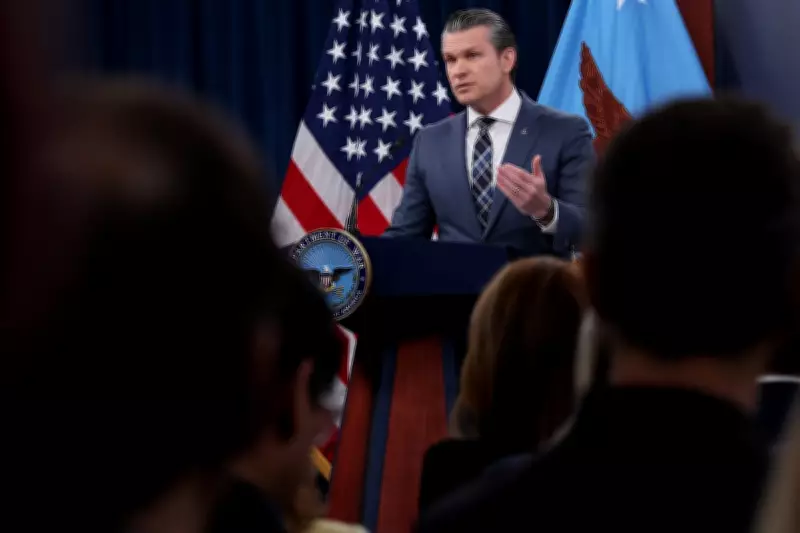
US Defense Secretary Pete Hegseth declared on Thursday that there is no established "timeframe" for concluding the ongoing war against Iran, while simultaneously announcing plans for what he described as the "largest strike package yet" in the conflict. Speaking from the Pentagon, Hegseth emphasized that the decision to end hostilities would rest solely with President Donald Trump.
Military Campaign Intensifies Amid Funding Questions
The military offensive, which began three weeks ago as a joint US-Israeli operation, continues to expand in scope and intensity. Hegseth revealed that US forces have already struck over 7,000 targets across Iran, targeting military infrastructure and strategic assets. "Today will be the largest strike package yet... death and destruction from above," he told reporters, underscoring the escalating nature of the campaign.
When questioned about reports that the Pentagon might seek an additional $200 billion in taxpayer funding to sustain operations, Hegseth did not deny the possibility. "Obviously it takes money to kill bad guys," he stated, adding that the administration would work with Congress to ensure proper funding for both current and future military needs. The Guardian reported that the first six days of conflict alone cost approximately $13 billion.

Strategic Objectives and Media Criticism
Hegseth outlined three primary objectives for the military campaign:
- Dismantling Iran's missile-launching capability
- Crippling Iran's defense-industrial base and naval fleet
- Preventing Iran from acquiring nuclear weapons
He insisted these goals remained unchanged since the conflict's inception, dismissing suggestions of mission creep as media fabrication.
The Defense Secretary launched a sharp critique against media coverage, accusing what he called "a dishonest and anti-Trump press" of attempting to downplay military progress while amplifying costs. "Sadly, TDS [Trump derangement syndrome] is in their DNA. They want President Trump to fail," Hegseth asserted.
Expanding Geographical Scope
Top US military officer General Dan Caine, speaking alongside Hegseth, detailed the conflict's widening geographical reach. Military operations now extend deeper into Iranian territory, with long-range strikes targeting:
- Underground storage facilities
- Drone garrisons
- Coastal missile sites using bunker-busting munitions
In the Gulf region, A-10 "Warthog" aircraft are hunting fast-attack craft in the strategically vital Strait of Hormuz, while AH-64 Apache helicopters strike Iran-aligned militia groups in Iraq. Allied forces have begun deploying similar systems against Tehran's one-way attack drones.
Political and Economic Context
The military escalation comes amid significant political and economic pressures. Oil prices have soared following Iranian strikes on oil and gas facilities around the Gulf, while President Trump's approval ratings have continued to decline. The conflict began after Israeli strikes on Iranian sites prompted Tehran to escalate attacks on regional energy infrastructure.
Hegseth concluded his remarks with a religious appeal, asking Americans to pray for US troops "on bended knee with your family, in your schools, in your churches, in the name of Jesus Christ." He directed his message primarily toward the American public rather than the assembled media, expressing gratitude for what he characterized as Trump's courage in confronting Iran.
"The world, the Middle East, our ungrateful allies in Europe, even segments of our own press should be saying one thing to President Trump – thank you," Hegseth stated, framing the conflict as necessary to prevent Iran from "holding the world hostage" while pursuing nuclear capabilities.