

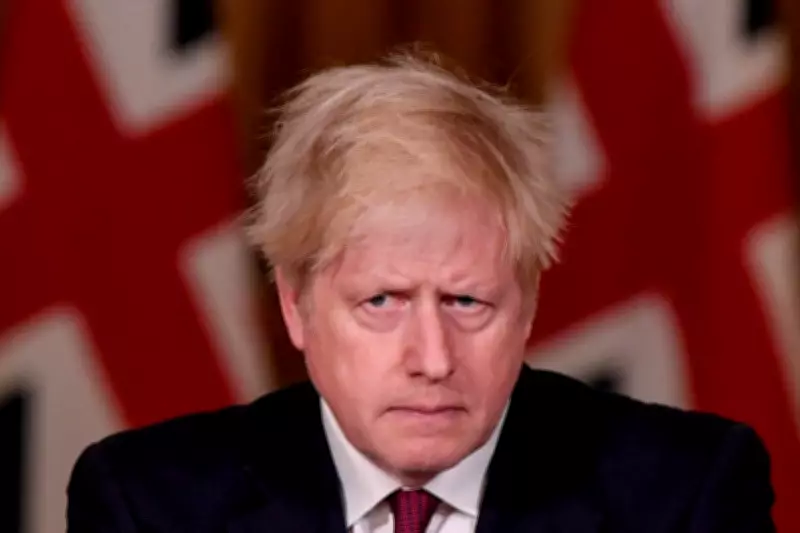
Boris Johnson Demands Immediate UK Non-Combat Troop Deployment to Ukraine
Former Prime Minister Boris Johnson has issued a stark call for the United Kingdom and its European allies to immediately deploy non-combat troops to Ukraine, marking a significant break from current Western military strategy. Speaking in a BBC interview ahead of the fourth anniversary of Russia's full-scale invasion, Johnson argued that stationing such forces in peaceful regions would demonstrate unwavering Western commitment to Ukrainian freedom and independence to Russian President Vladimir Putin.
A Direct Challenge to Cautious Western Policy
Johnson's proposal directly contradicts the existing approach of a "coalition of the willing," which plans troop deployments only after a ceasefire agreement to police the peace. In his remarks, set to air on Sunday, the former prime minister questioned the logic of this delay, stating: "If we are willing to do it in the context of a ceasefire, which of course puts all the initiative, all the power, in Putin's hands, why not do it now?"
He elaborated further, emphasizing: "There is no logical reason that I can see why we shouldn't send peaceful ground forces there to show our support, our constitutional support for a free, independent Ukraine." Johnson, who was a staunch supporter of Ukraine during his premiership in the early stages of the conflict, insisted that Putin should not dictate terms to Ukraine and its allies, framing the issue as fundamental to Ukrainian sovereignty.

Government Response and Strategic Concerns
In response to Johnson's comments, Britain's Ministry of Defence reaffirmed the government's current policy. A ministry statement confirmed ongoing work with the coalition to prepare for troop deployment after a ceasefire, noting: "The multinational force Ukraine under UK leadership will secure peace for the long term, with the Prime Minister being clear that we will put British troops on the ground following the end of hostilities."
Western military strategists have largely avoided public discussion of such an immediate deployment, fearing Russia would interpret it as an escalation. Indeed, Putin himself rejected Western peacekeeping proposals in September, warning that any troops deployed to Ukraine would be considered "legitimate targets." However, Johnson countered this concern by asserting that Ukraine's status as a free nation should determine such decisions, not Russian threats.
Historical Context and Broader Criticisms
Johnson also attributed the current conflict to perceived Western failures in recent history. He cited the lack of robust support for Ukraine after the 2014 Crimea invasion, the failure to punish Bashar al-Assad for chemical weapons use in Syria, and the chaotic US withdrawal from Afghanistan as emboldening factors for Putin.
"I think Putin was emboldened by a Western failure in Syria to punish Assad for using chemical weapons," Johnson remarked. He added: "I think Putin was further emboldened in February 2022 by what he'd seen in Afghanistan, and a sort of general sense that the West was on the back foot. He'd seen those appalling pictures of Americans being forced to flee Afghanistan and the UK pulling out as well, and that really did embolden him."
This call for immediate action underscores ongoing debates within Western circles about how best to support Ukraine while managing risks of broader conflict. Johnson's intervention highlights tensions between cautious diplomatic approaches and more assertive military postures as the war enters its fifth year.






