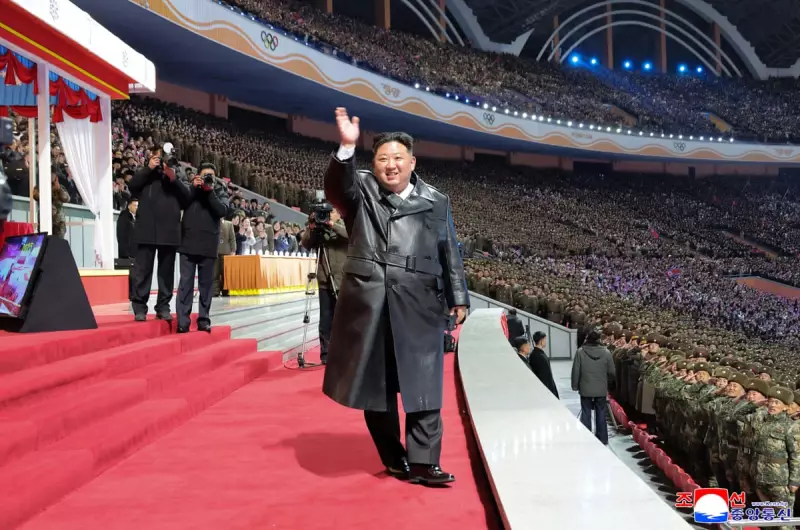
North Korean leader Kim Jong Un has used a major New Year's address to publicly celebrate a deepening military partnership with Russia, praising his soldiers deployed to support the invasion of Ukraine for forging an "invincible alliance."
A New Year's Salute to Forces in an 'Alien Land'
In a speech delivered at a lavish concert in Pyongyang's May Day stadium, Kim directly addressed troops fighting abroad. According to a detailed report from the state-run Korean Central News Agency (KCNA), he expressed missing them as the nation celebrated, commending their "heroic" defence of national honour on foreign battlefields.
"Behind you are Pyongyang and Moscow," Kim stated, urging his men to "be brave" and fight "for the fraternal Russian people." He also hinted at expanded overseas military action in the coming year, referencing "remarkable feats you will perform on the overseas battlefields."

The Grim Reality of North Korea's Ukraine Deployment
The public fanfare contrasts sharply with the reported conditions for North Korean personnel. South Korean and Western intelligence agencies estimate Pyongyang has sent thousands of soldiers to aid Russia's nearly four-year war in Ukraine.
South Korean estimates indicate at least 600 of these troops have been killed, with thousands more wounded. Disturbing accounts from the conflict suggest a dire situation for the embedded forces. South Korea's intelligence service and testimony from two captured North Korean soldiers reveal that troops have been ordered to take their own lives rather than be captured.
The two captured soldiers, held by Ukraine since January 2025, have reportedly expressed a desire to defect to South Korea.
Strategic Gains for an Isolated Regime
Analysts point out that this military cooperation is far from one-sided. In return for its support, North Korea is believed to be receiving crucial financial aid, advanced military technology, and vital supplies of food and energy from Russia.
This deepening alliance provides an economic and political lifeline to Kim Jong Un's regime, significantly bolstering its position and allowing it to rebuff recent diplomatic overtures from the United States and South Korea. The New Year's event, where Kim was accompanied by his wife, Ri Sol Ju, and his daughter, Ju Ae—seen as his likely successor—was staged to project strength and continuity.
Ultimately, Kim's message solidifies a dramatic geopolitical shift, transforming a long-standing historical relationship into a active, front-line partnership with significant consequences for the war in Ukraine and security dynamics in Northeast Asia.