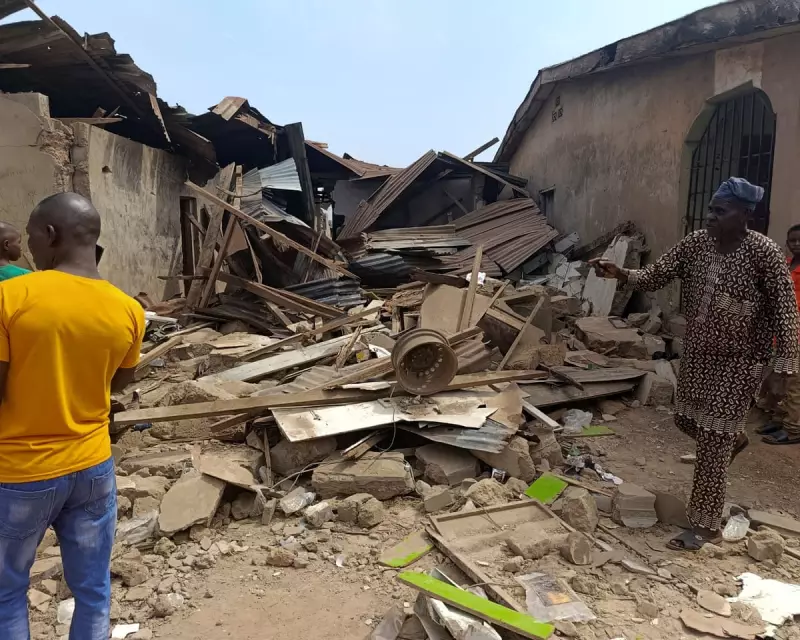
Nigeria's government has confirmed it provided crucial intelligence that enabled United States airstrikes against Islamic State (ISIS) militants on Christmas Day. The strikes targeted camps in north-west Nigeria, an operation US President Donald Trump framed as a response to the killing of Christians.
Nigerian Intelligence and Presidential Authorisation
In a significant revelation on Friday, Nigeria's Foreign Minister, Yusuf Tuggar, stated he held extensive discussions with US Secretary of State Marco Rubio both before and after the military action. He confirmed that Nigeria's President, Bola Tinubu, personally gave the "go-ahead" for the operation, facilitating the US strikes with local intelligence.
Tuggar was keen to distance the timing of the strikes from religious symbolism, telling the BBC the action had "nothing to do with a particular religion" or Christmas specifically. He described it as a necessary move against "terrorists who have been killing Nigerians" and suggested further strikes were part of an "ongoing process" likely involving other nations.

US Warns of Continued Military Action
The US has signalled its intent to continue the campaign. US Defence Secretary Pete Hegseth issued a stark warning on social media platform X, stating "More to come…" He linked the Christmas Day operation directly to President Trump's vow last month to end the killing of innocent Christians in Nigeria and elsewhere.
"The [Pentagon] is always ready, so ISIS found out tonight – on Christmas," Hegseth wrote, framing the strikes as a direct response to the militant group's actions.
Political Reactions and Wider Context
The strikes were met with enthusiastic praise from prominent supporters of President Trump. Far-right activist Laura Loomer hailed the action as an "amazing Christmas present," calling it a justified retaliation for the deaths of Christians.
The news of the Nigeria strikes broke amidst other significant international developments involving the Trump administration. These included an upcoming meeting between President Trump and Ukrainian leader Volodymyr Zelenskyy, aimed at pushing for a potential peace deal with Russia, and controversy surrounding a US media network's decision to pull an investigative report.
The events underscore the Trump administration's continued focus on international security threats and its willingness to employ military force, backed by allied intelligence, during a period of heightened global tension.