The Pentagon's internal watchdog has launched an investigation into whether US military commanders adhered to proper protocols when conducting boat strikes in the Caribbean Sea and eastern Pacific Ocean. The inquiry, initiated by the Department of Defense's Office of the Inspector General, focuses on whether commanders followed the standard six-step process required before approving and executing lethal strikes, according to a memo outlining the review.
Scope of the Investigation
The review covers operations under US Southern Command, which oversees American military activities across the region from its base in Doral, Florida. The Pentagon declined to comment, and Southern Command did not immediately respond to a request for comment.
Operation Southern Spear, a US military campaign targeting boats in the Caribbean, has sparked widespread outrage and accusations that the US has violated international law. The Trump administration has framed the operation as a fight against Latin American narco-traffickers en route to the US. Since its launch, at least 58 attacks have been conducted, according to a tracker by the law journal Just Security, resulting in 193 deaths, including 13 individuals missing and presumed dead.

Legal Justifications and Controversies
The administration has insisted the operation is on firm legal ground. In November, Sean Parnell, then chief Pentagon spokesperson, stated: "Our current operations in the Caribbean are lawful under both US and international law, with all actions in complete compliance with the law of armed conflict."
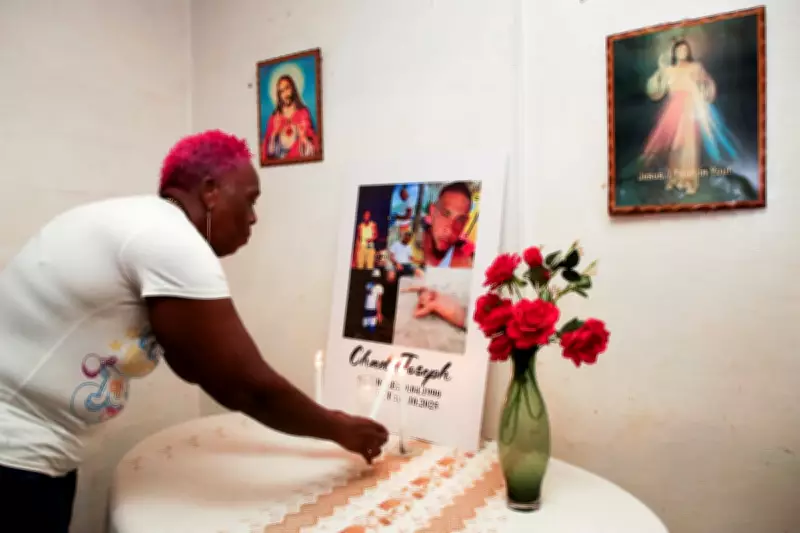
However, human rights groups, watchdogs, and international bodies, including a panel of UN human rights experts, have argued that the strikes constitute extrajudicial executions and violate US and international law. A joint investigation published this month by journalists led by the Latin American Center for Investigative Journalism identified 13 of the deceased, finding they came from impoverished communities with little or no apparent connection to organized drug networks. The report described the victims as day laborers who took work on boats out of desperation, not as significant figures in the drug trade.
María Teresa Ronderos, the center's director, noted: "The US is not taking down any Pablo Escobar or El Chapo. The strikes are actually hitting young people living in precarious conditions."
Political and Legal Reactions
Families of some victims have filed lawsuits against the US government, alleging the attacks were unlawful. Democrats have repeatedly attempted to curb the operation through Congress. Senators Adam Schiff of California and Tim Kaine of Virginia sponsored a resolution to prevent further strikes without congressional approval, which failed in the Senate 51–48 in October. The Republican-controlled Senate twice rejected resolutions that would have limited the administration's authority for continued military action.
In December, Senate Armed Services Chair Roger Wicker, a Republican from Mississippi, stated that his committee found "no evidence of war crimes" after its own examination of the strikes. In March, Democratic Representatives Joaquin Castro and Sara Jacobs wrote a letter supporting an inter-American human rights investigation into the strikes' legality.
French Foreign Minister Jean-Noël Barrot said at a G7 meeting in November that the strikes violated international law and risked destabilizing the region. Colombian President Gustavo Petro addressed the UN General Assembly in September, calling for a criminal process to be opened against Donald Trump over the strikes.
Inspector General's Process
The inspector general's office will conduct its review at the Pentagon and Southern Command headquarters, requesting senior officials to designate points of contact within five days. The office did not immediately respond to questions about what prompted the investigation or when findings will be published, but confirmed to Bloomberg News that the inquiry is self-initiated, not from a congressional request.