Starmer to Advocate for European Defence Autonomy at Munich Summit
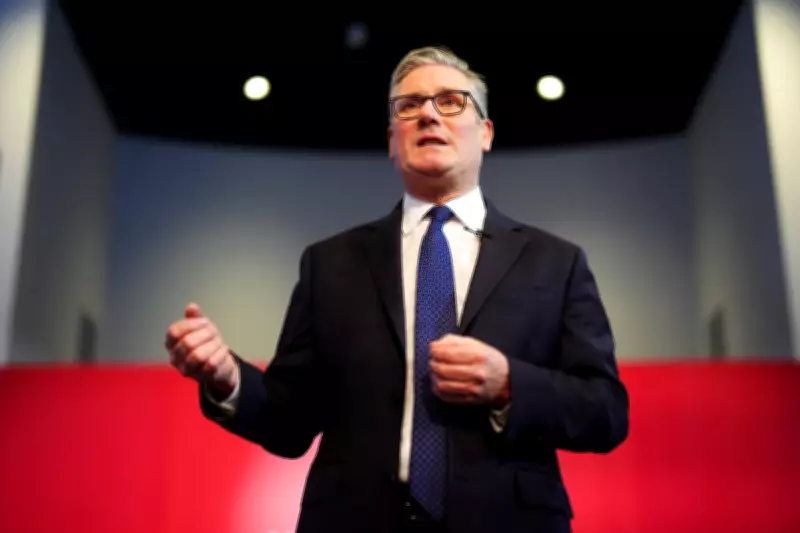
Prime Minister Sir Keir Starmer is set to deliver a significant address at the Munich Security Conference, urging European nations to reduce their strategic overdependence on the United States. The Labour leader will emphasise the critical need for the United Kingdom to forge deeper connections with the European Union, starkly warning that a retreat into isolationism would constitute a dangerous surrender of control in an increasingly volatile global landscape.
A Call for Stronger Transatlantic and European Bonds
Sir Keir, who is mingling with approximately fifty world leaders at the prestigious German conference, has already engaged in discussions with German Chancellor Friedrich Merz and French President Emmanuel Macron. These leaders, alongside Ukrainian President Volodymyr Zelensky, convened to strategise on ending the protracted conflict with Russia as the four-year mark of Vladimir Putin's full-scale invasion approaches. The future of European defence and the strained transatlantic relationship are central themes at this year's gathering, particularly amidst growing uncertainties about America's commitment to the NATO alliance.
Tensions have been exacerbated by recent provocative statements from former President Donald Trump, including threats to annex Greenland from NATO ally Denmark and disparaging remarks aimed at various European leaders. In his scheduled Saturday speech, the Prime Minister will articulate a vision for a more robust and autonomous European defence framework. This initiative, he will assert, must be supported by significantly strengthened ties between Britain and the European Union.

"No British Security Without Europe"
Sir Keir is expected to declare, "We are not the Britain of the Brexit years anymore. Because we know that, in dangerous times, we would not take control by turning inward – we would surrender it. And I won’t let that happen." He will further stress the inseparable link between British and European security, stating, "There is no British security without Europe, and no European security without Britain. That is the lesson of history – and it is today’s reality too."
While the Prime Minister will acknowledge the historic and ongoing contributions of the United States to European security, labelling it a key ally, his core message will focus on the necessity for Europe to assume greater responsibility for its own defence. This shift is presented as a pragmatic response to the international upheaval and the denigration of traditional alliances witnessed during the Trump administration.
Scrutiny on US Stance and European Capabilities
Attention at the summit will also be directed toward US Secretary of State Marco Rubio, observing whether his approach aligns with or diverges from the contentious rhetoric of Vice President JD Vance. Last year, Vance caused significant disruption by criticising European nations, including the UK, on issues like free speech and immigration. Rubio has hinted at a "new era in geopolitics" prior to his arrival. Notably, Sir Keir was seated next to the Secretary of State's place at a Ukraine meeting, though Rubio had not arrived by the time journalists departed for the private discussions.
In his keynote, Starmer will elaborate, "I’m talking about a vision of European security and greater European autonomy, that does not herald US withdrawal but answers the call for more burden sharing in full, and remakes the ties that have served us so well." He plans to critique Europe's failure to fully leverage its collective defence potential, advocating for enhanced UK-EU defence cooperation to unify strengths and establish a shared industrial base capable of accelerating defence production across the continent.

Addressing Political Extremes and Past Setbacks
This push for unity follows reported setbacks in negotiations for Britain to join the EU's substantial 150 billion euro Security Action for Europe (Safe) rearmament fund late last year, with the proposed entry cost deemed prohibitively high. Sir Keir will argue that Europe remains a "sleeping giant," noting that "Our economies dwarf Russia’s, 10 times over. We have huge defence capabilities. Yet, too often, all of this has added up to less than the sum of its parts." He will highlight issues of fragmented industrial planning and inefficient procurement processes leading to capability gaps and wasteful duplication.
The Prime Minister will also launch a pointed critique against political opponents, specifically targeting Reform UK and the Green Party as "the peddlers of easy answers on the extreme left and the extreme right." He will accuse them of sharing a dangerous common ground, being "Soft on Russia and weak on Nato – if not outright opposed" and willing to "sacrifice the longstanding relationships that we want and need to build, on the altar of their ideology." Starmer will warn that their proposed future leads to "division and then capitulation," evoking the spectre of darkened continents, but will vow, "we will not let that happen."
Sir Keir's diplomatic mission to Germany occurs against a backdrop of domestic political turbulence, with his premiership recently shaken by controversy surrounding the appointment of Lord Peter Mandelson as ambassador to the US, due to his past associations with the convicted paedophile Jeffrey Epstein.