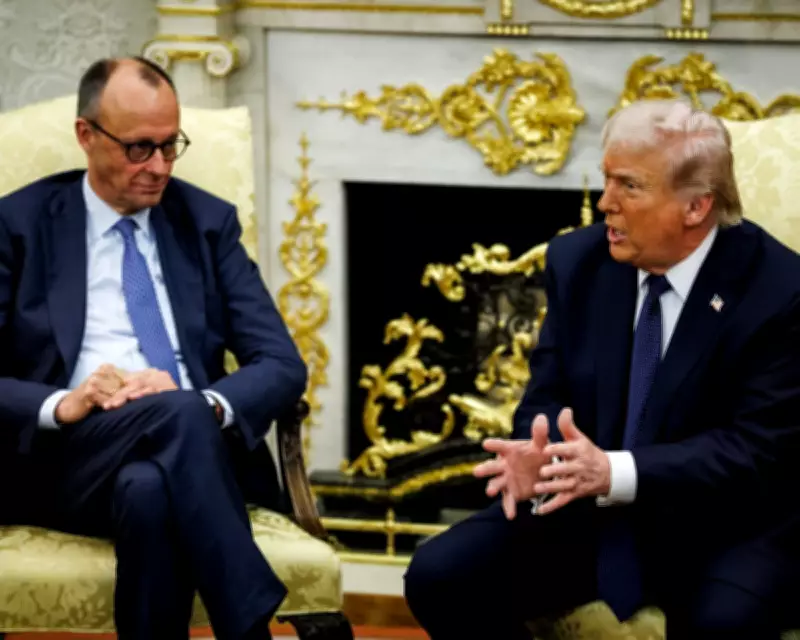
Donald Trump has threatened to withdraw additional US troops from Germany, stunning European leaders and some senior members of his own party. Last week, the US announced the withdrawal of 5,000 soldiers from Germany, leaving 30,000 US troops still stationed in the country, according to CNN. On Saturday, Trump told reporters, "We are going to cut way down, and we're cutting a lot further than 5,000."
Background to the Withdrawal
Trump's initial decision to reduce US personnel in Germany followed comments by German Chancellor Friedrich Merz, who stated that the US was being "humiliated" by Iran. Speaking to students in Marsberg last month, Merz said, "The Iranians are obviously very skilled at negotiating, or rather, very skillful at not negotiating, letting the Americans travel to Islamabad and then leave again without any result." He added, "An entire nation is being humiliated by the Iranian leadership, especially by these so-called Revolutionary Guards. And so I hope that this ends as quickly as possible."
The Pentagon announced the withdrawal of 5,000 troops on Friday, citing a "thorough review of the Department's force posture in Europe" and recognition of "theater requirements and conditions on the ground."

Republican Concerns
Senior Republicans have expressed alarm over the potential for further troop reductions. Senator Roger Wicker of Mississippi and Representative Mike Rogers of Alabama, who chair the armed services committees in Congress, released a joint statement on Saturday saying they were "very concerned" by the possibility of reducing troops in Germany.
"Germany has stepped up in response to President Trump's call for greater burden sharing, significantly increasing defense spending and providing seamless access, basing, and overflight for US forces in support of Operation Epic Fury," they said, using the military name for the campaign against Iran. They emphasized that any reduction in troops should be done in coordination with Congress and allies.
"Rather than withdrawing forces from the continent altogether, it is in the US interest to maintain a strong deterrent in Europe by moving these 5,000 US forces to the east," the statement continued. "Those allies there have made substantial investments to host US troops, reducing costs for the US taxpayer while strengthening NATO's front line to help deter a far more costly conflict from ever beginning."
Broader Implications
Merz's comments have highlighted tensions between the US and NATO, as well as European allies, over the war in Iran and other foreign conflicts. A Pentagon email leaked to Reuters revealed that the US considered punishing Spain, a vocal critic of the war, by suspending it from the NATO alliance.