Trump Warned US Missile Stockpile Could Deplete in Prolonged Iran War
Military insiders have reportedly warned former President Donald Trump that America's stockpile of missiles and interceptors could run dangerously low if his war with Iran becomes prolonged. According to sources cited by the Wall Street Journal, Trump was cautioned that an extensive, resource-draining conflict could put US targets at risk if Iranian missile and drone capabilities are not destroyed quickly.
Stockpile Concerns Amid Escalating Conflict
The precise size of the US missile and interceptor stockpile remains classified, but current and former military officials have expressed serious concerns about depletion rates. The US arsenal—including air defense interceptors and Tomahawk cruise missiles—has been significantly reduced by ongoing conflicts with Iran and its proxies throughout the Middle East.
The strikes launched on Saturday initiated a critical race against time to destroy Iran's missile force before America exhausts its interceptor supply needed to fend off retaliatory attacks. A senior official indicated that Trump's decision to launch strikes first was strategically motivated by the hope of debilitating Iran's ability to use its missiles and drones effectively.

Critical Weapon Systems Under Pressure
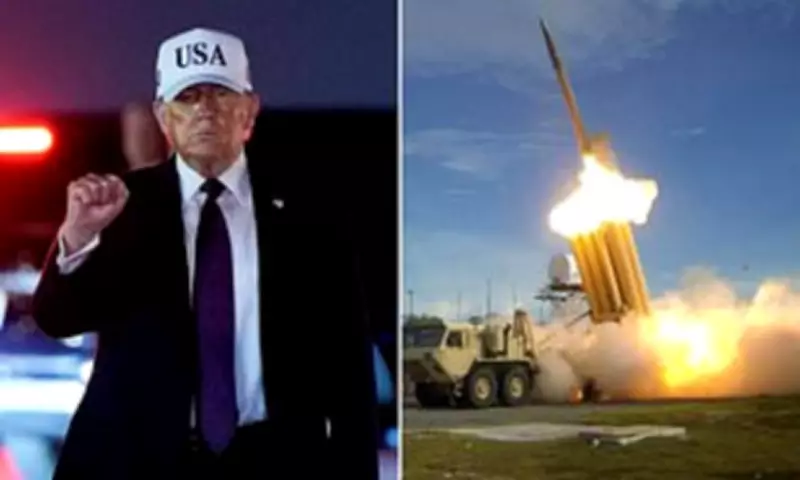
Among the most vital pieces of weaponry in the US arsenal is the Thaad antimissile system, which is stationed globally to monitor and track potential incoming fire. Military insiders emphasized that maintaining adequate stocks of Thaad weaponry is crucial, with systems deployed not only in the Middle East but also in strategic locations like South Korea and Guam to deter threats from North Korea and China.
Replenishing stocks of Patriot and Standard Missile (SM) weapons has become a priority amid heightened Middle East tensions. Notably, only SM-3 missiles possess the capability to intercept ballistic missiles above Earth's atmosphere, making their availability particularly critical.
Rapid Depletion Rates and Strategic Implications
Kelly Grieco, a senior fellow at the Stimson Center think tank and former instructor at the Air Command and Staff College, told the Wall Street Journal that with more strikes and interceptions likely, "the size of the US stockpile may become a factor." Grieco warned, "One of the challenges is you can deplete these really quickly. We're using them faster than we can replace them."
Becca Wasser, a senior fellow at the Center for a New American Security, highlighted that the Trump administration has utilized weaponry at an extraordinary rate over the past year. This includes extensive use of long-range precision weapons against Yemen-based Houthi militants and multiple Tomahawk Land Attack Missile (TLAM) deployments globally.
Wasser noted concerning implications for potential future conflicts, stating, "When we wargame, TLAMs are some of the first munitions to go within that first week of a U.S.-China conflict." This underscores the strategic dilemma facing military planners as they allocate limited munitions between current operations in Iran and potential future confrontations.
Conflict Timeline and Casualties
In a call with the Daily Mail on Sunday, Trump suggested the conflict could last approximately four weeks, stating, "It's always been a four week process. We figured it will be four weeks or so." He emphasized his objective of achieving "PEACE THROUGHOUT THE MIDDLE EAST AND, INDEED, THE WORLD" in a Truth Social post on Saturday.
The US Central Command confirmed on Sunday that three American servicemen had been killed in strikes on Iran. In an exclusive phone interview with the Daily Mail, Trump broke his silence on the casualties, paying tribute to the victims as "great people" with "outstanding records." He acknowledged these were the first fatalities of his second term, noting previous operations in Venezuela and against Iranian nuclear facilities had been completed without American deaths.

Regional Fallout and Negotiation Prospects
Iran retaliated against US and Israeli strikes with missile barrages targeting neighboring nations, some of which penetrated air defense systems. The killing of Ayatollah Ali Khamenei has created significant uncertainty, with sources telling the Associated Press on Sunday that Iran's leadership is now "open" to negotiations.
With next steps uncertain, US forces reported that their efforts to block Iranian strikes had been largely successful, though some attacks managed to bypass defenses in neighboring countries. As the conflict continues, military planners face the dual challenge of managing current operations while preserving critical munitions for potential future conflicts in an increasingly volatile global security environment.