The British government and military have received a stark warning to prepare for potential war, delivered by a figure with deep expertise in UK defence matters. Former NATO chief and Labour defence secretary Lord George Robertson has issued a dire assessment, highlighting what he describes as "corrosive complacency" among previous leaderships.
A Legacy of Depletion
Successive post-Cold War governments have tapped into the peace dividend, leading to a significant reduction in military personnel. The UK Armed Forces now total approximately 173,270 personnel, a sharp decline from 192,000 in 2010, 321,000 in 1980, and over half a million in 1960. This represents the smallest military force since the Crimean War era.
Current Force Composition
The breakdown reveals 109,000 troops in the Army, comprising around 73,000 regulars and 36,000 reserves. The Royal Navy maintains 37,900 personnel, while the Royal Air Force has just under 35,000. The majority of service members remain men, who constitute 120,700 of total personnel compared to 16,300 women. The average age of British military personnel now stands at 31 years.

Recruitment Challenges and Strategic Shortcomings
Army recruitment faced particular difficulties after being privatized in 2012 under Tory-led rule, with Capita's management proving disastrous through repeated shortfalls and inefficiencies. Lord Robertson, who will address these concerns in a Salisbury speech, plans to state that despite being "under attack," the UK remains "unprepared" and "unsafe."
He attributes this vulnerability to ballooning welfare budgets and a lack of urgency from political leadership, describing Iran as a "rude wake up call" for national security priorities.
Technological Advances Versus Ground Realities
Ministry of Defence strategists defend the reduced troop numbers by emphasizing technological advancements that supposedly diminish the need for large forces. However, contemporary conflicts tell a different story. While drone technology has become essential on battlefields like Ukraine, trench warfare and urban combat continue to demand substantial human resources.
The government maintains it is "delivering on the Strategic Defence Review," a process Lord Robertson helped lead, granting him extensive insight into military capabilities and shortcomings.
Equipment and Operational Concerns
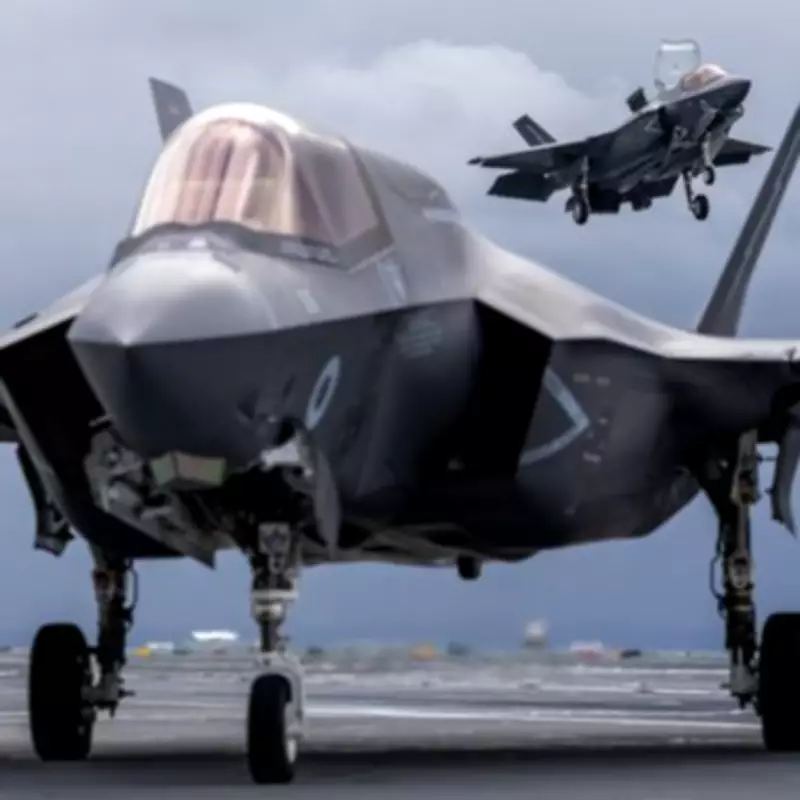
The UK's flagship £3.5 billion aircraft carrier HMS Prince of Wales alternates foreign missions with sister ship HMS Queen Elizabeth to extend firepower. These vessels are armed with F-35B Lightning fighter jets, though the UK possesses only 48 of these advanced aircraft despite theoretical capacity for 73 per carrier. An additional 15 F-35Bs are being acquired, alongside squadrons of at least 120 Typhoon Eurofighter jets.
Operational readiness has raised concerns, exemplified by HMS Dragon's recent difficulties. The vessel experienced power cuts, propulsion problems, and water supply issues after completing six weeks of battle-ready preparation in approximately six days. This contrasts sharply with the Royal Navy's 1982 achievement of preparing the Task Force Falklands within four days.
Mobilization Scenarios and NATO Considerations
Should conflict arise with Russia—identified as the UK's primary short-term threat—Britain would likely invoke NATO Article Five, treating an attack on one member as an attack on all. Initial response would involve professional Army forces supported by RAF warplanes and Navy vessels.
Mobilization projections present sobering mathematics: Army reserves would immediately begin intensive basic training for approximately 500,000 recruits in the first year. Year two could see over one million troops deployed, year three over two million, and year four over three million, including survivors from previous deployments.
These figures gain grim context when considering Russia's current willingness to sustain losses of 1,000 troops daily in Ukraine. As government warnings about potential conflict intensify, the message grows increasingly urgent: the UK must awaken to dark times ahead and address its military preparedness with seriousness matching the threat landscape.