

Russian President Vladimir Putin's relentless assaults on Ukrainian territory have laid bare the grim reality of his expansionist ambitions, even as diplomatic discussions continue and Kremlin officials make controversial claims about territorial promises from former US President Donald Trump.
Civilian Infrastructure Under Sustained Attack
Russian forces have maintained their brutal campaign against Ukrainian civilian populations, employing explosive drones to target heating infrastructure during extreme winter conditions. These attacks, occurring in temperatures as low as minus sixteen degrees Celsius, represent a cruel strategy that appears strategically ineffective while causing immense human suffering.
Rescue services have been deployed extensively to manage the aftermath of these air assaults on Kyiv and other population centers. The humanitarian impact has been severe, with Ukrainian emergency personnel working tirelessly to protect civilians from both immediate explosions and subsequent freezing conditions.

Military Developments on Multiple Fronts
While Russian advances remain painfully slow along the eastern frontline, making only marginal progress near Borova in the Kostyantynivka-Druzhkivka sector, Ukrainian forces have achieved significant tactical gains in the Zaporizhzhia region. This area has become a focal point of intense fighting, with both sides committing substantial resources to control the battle-scarred territory.
Recent nights have seen approximately one hundred and fifty drone attacks, predominantly utilizing Iranian-designed Shahed weapons systems, targeting Ukrainian positions and infrastructure. Despite this aerial bombardment, Ukrainian military units continue to demonstrate resilience and tactical innovation in their defensive operations.
Strategic Economic Warfare Intensifies
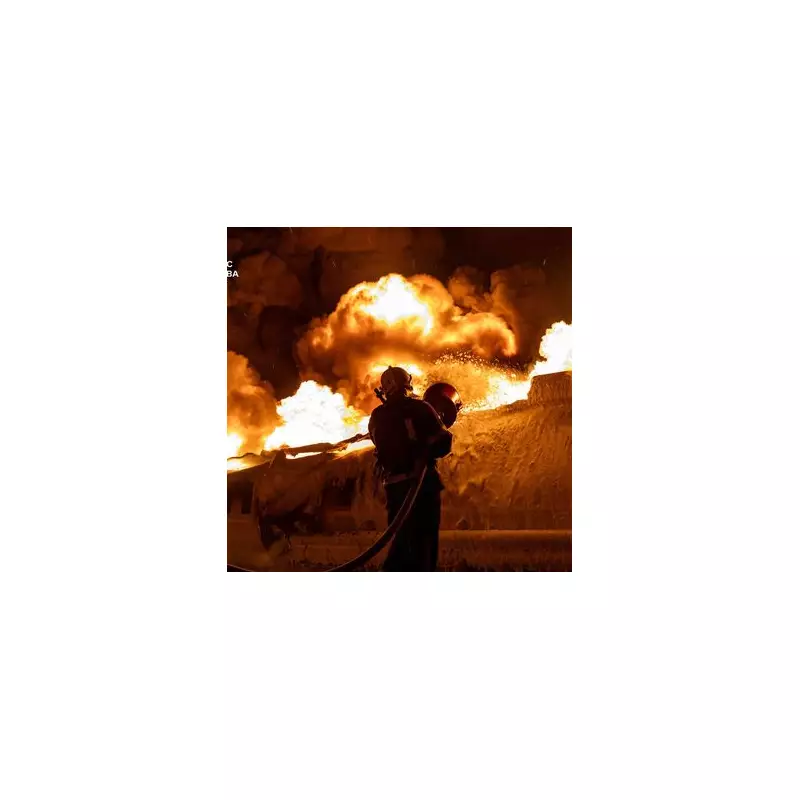
Ukraine has escalated its campaign against the financial foundations of Russia's military effort, successfully striking the substantial Slavyansk-na-Kubani oil refinery in Russia's Krasnodar region. This attack triggered significant fires and represents a continuation of Ukraine's strategy to undermine the energy exports that fund Putin's military operations.
This economic warfare occurs against a stark contrast in targeting priorities: while Ukrainian forces focus on military-industrial infrastructure, Russian attacks continue to prioritize civilian targets and essential services. The divergence in strategic approaches highlights fundamentally different approaches to the conflict.
Diplomatic Theater Amid Military Reality
So-called peace negotiations involving Ukrainian, American, and Russian military and diplomatic representatives have been proceeding in Abu Dhabi for several days. Ukrainian President Volodymyr Zelensky has described these discussions as "constructive" while simultaneously announcing that an agreement for peacetime US security guarantees for Ukraine stands completely prepared for signature.
Meanwhile, Russian officials maintain their maximalist position, with Kremlin spokesman Dmitry Peskov reiterating Moscow's "consistent position" regarding territorial claims. Peskov specifically referenced the "Anchorage formula," which Russia claims was established during discussions between Putin and Trump last August.
The Geopolitical Chessboard
President Zelensky finds himself navigating extraordinarily complex diplomatic waters, compelled to maintain positive public statements about peace negotiations while fully aware that Russia appears to have received advance concessions from Trump regarding Ukrainian territorial integrity. This knowledge forces the Ukrainian leadership to engage in diplomatic theater while their military continues defensive operations.
The strategic calculation involves playing for time as Ukrainian forces valiantly resist Russian advances, hoping for either a military breakthrough or internal Russian difficulties that might alter the conflict's dynamics. This delicate balancing act occurs against a backdrop of multiple global crises, including US military preparations regarding Iran, Chinese threats toward Taiwan, Middle Eastern instability, and American domestic political challenges.

European Support as Critical Lifeline
As Ukraine approaches the fourth anniversary of Russia's full-scale invasion, European support has emerged as the nation's most reliable hope. With Putin reportedly planning to mobilize an additional four hundred thousand troops despite current morale problems within Russian forces, Ukraine recognizes that sustained European assistance represents its most viable path toward maintaining defensive capabilities.
The Ukrainian leadership continues to demonstrate remarkable resilience, maintaining defensive operations while managing diplomatic relationships with allies whose reliability varies considerably. This includes maintaining necessary diplomatic engagements with Trump while harboring minimal genuine trust in his commitments, all while focusing strategic reliance on European partners who have demonstrated more consistent support throughout the conflict.
Ukraine's current strategy combines tactical military operations against Russian energy infrastructure, diplomatic engagement with questionable sincerity, and deepening reliance on European support structures. This multifaceted approach represents the nation's best available path forward as it confronts an adversary demonstrating both relentless aggression and expansionist territorial ambitions.





