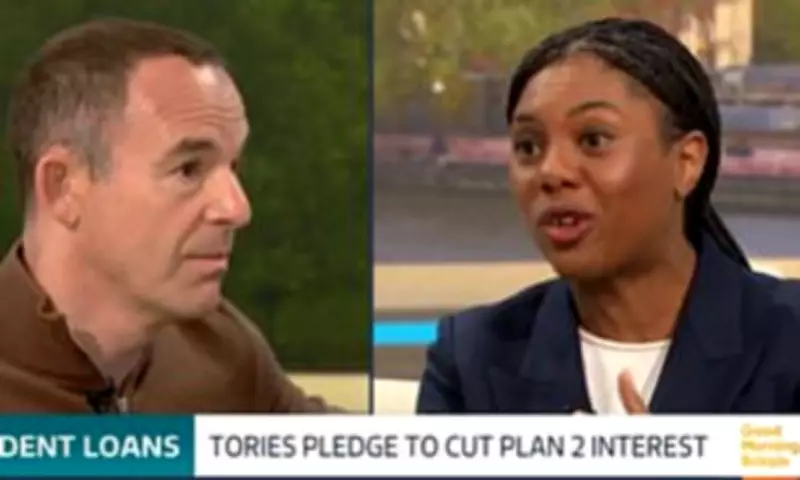
Badenoch Faces Live TV Ambush Over Student Loan Proposals
Conservative Party leader Kemi Badenoch was subjected to an intense and unexpected confrontation during a live television appearance today, as she attempted to outline her plans for reforming student loan repayments. The situation unfolded dramatically on ITV's Good Morning Britain, where Badenoch found herself caught in what observers described as a coordinated verbal pincer movement.
Heated Exchange with Balls and Lewis
Badenoch was initially being questioned by former Labour minister Ed Balls about her controversial proposal to eliminate 100,000 university places deemed to be of low quality. The Conservative leader explained that the substantial savings generated from this reduction—estimated at £3.6 billion—would be redirected to alleviate the burden of student loan interest rates for graduates.
However, the interview took an unexpected turn when consumer finance expert Martin Lewis made an unannounced entrance onto the set. Lewis immediately began challenging Badenoch on what he perceived as a critical omission in her policy: the failure to address the salary threshold at which student loan repayments commence.

The situation quickly escalated as both Balls and Lewis spoke simultaneously, creating a cacophony that left Badenoch struggling to articulate her position. At one particularly fraught moment, the Conservative leader interjected firmly: 'If you want us to have a debate I’m very happy for us to have a debate. I think people need to know what it is I am talking about, you’re both talking over me, excuse me, let me explain what my policy is.'
Policy Details and Growing Controversy
Following a subdued apology from Balls, Badenoch elaborated on her proposals. 'I want to make sure that those young people who are paying and paying and their debt is not going down get a relief,' she asserted. 'If you think there is a better offer, let’s look at it.'
The controversy centres on the so-called 'Plan 2' student loans, which currently accrue interest at a rate of Retail Price Index (RPI) inflation plus an additional percentage of up to 3%, depending on a graduate's earnings. This structure has provoked widespread anger among former students, many of whom report that their debt continues to grow despite holding stable employment and making regular repayments.
The political dimension intensified when Labour's Rachel Reeves announced during the November Budget that salary thresholds for loan repayments would remain frozen at £29,385 for the next three years. In response, the Conservatives have pledged to restrict interest rates to RPI only, a measure they argue would enable greater numbers of graduates to eventually clear their educational debts.
Broader Educational Reforms
Badenoch's proposals form part of a broader Conservative initiative dubbed a 'new deal for young people.' Beyond the loan repayment adjustments, the party aims to reduce university admissions by approximately 100,000 places annually. The substantial financial savings from this reduction would then fund an equivalent increase in apprenticeship opportunities for individuals aged 18 to 21.
The political fallout from the student loan debate has extended beyond Badenoch's television appearance. Education Secretary Bridget Phillipson faced her own challenging interviews yesterday, appearing visibly uncomfortable when pressed on the government's stance. While acknowledging the difficulties faced by graduates, Phillipson offered no concrete commitments, stating only that she would 'look' at the existing arrangements and 'continue to keep under review ways in which we can make it better.'
This televised confrontation highlights the deepening political divide over higher education funding and graduate debt, with all major parties now under increasing pressure to present viable solutions to what has become a significant financial burden for millions of former students across the country.