Fuel Protest Convoys Bring Belfast to a Standstill Amid Rising Cost Concerns
Slow-moving convoys of agricultural and commercial vehicles have caused significant traffic disruption across Belfast and other locations in Northern Ireland on Tuesday, as widespread fuel price protests took hold throughout the region. The demonstrations have created major congestion on key transport routes, prompting urgent warnings from government ministers about potentially life-threatening consequences for those requiring emergency medical care.
Major Traffic Disruption Across Multiple Locations
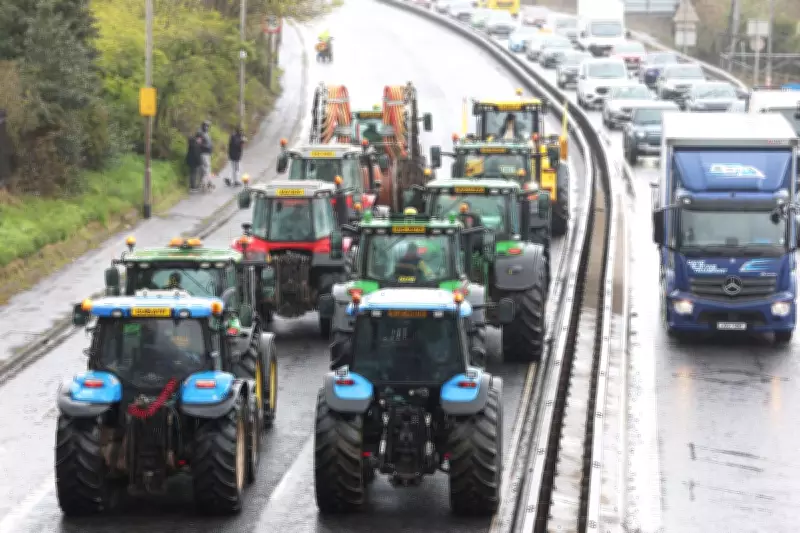
A substantial convoy comprising approximately thirty-five tractors, lorries, and trucks with activated flashing lights traveled along both lanes of the A1 motorway heading toward Belfast during Tuesday evening. Additional disruption has been reported near Ballygawley in County Tyrone, indicating the protest movement has spread beyond the capital city.
Earlier in the day, around noon, traffic completely clogged the Sydenham bypass adjacent to Belfast City Airport. Passengers had received advance warnings about potential travel disruption hours before the protest convoys materialized. The slow-moving procession then continued down the bypass in the direction of Bangor toward Belfast City Airport, with some frustrated motorists attempting to undercut the vehicles using the cycle route to pass on the inside lane.

Health Minister Issues Grave Warning About Medical Consequences
Northern Ireland's Health Minister Mike Nesbitt has made a direct appeal to protesters, urging them to refrain from blocking roads entirely. He emphasized that such actions could potentially endanger the lives of individuals seeking urgent medical treatment or hospital care.
"Today, as is the case every day, there will be well over 100,000 engagements or interactions between the Health and Social Care system and the public," Mr. Nesbitt stated. "Thousands and thousands of them depend on the workforce getting from A to B, or for patients or service users getting from B to A in a timely manner. Ultimately, the logic to that is disruption threatens life. My plea is let the health and social care system work as it is supposed to work."
The minister stressed the importance of maintaining "legitimate legal protest" methods that do not compromise emergency service access or public safety.
Farmer Protester Voices Economic Frustrations
Ballygowan farmer Sam Hanna, accompanied by his border collie Roy in the cab of one lead tractor on the Sydenham bypass, explained that the protest movement extends beyond agricultural concerns. "This isn't about farmers," Mr. Hanna declared. "This is extortionate what we're getting charged in taxes throughout life – not just fuel, petrol, everything, we're being extorted."
The farmer defended the protesters' approach, claiming they had deliberately kept the hard shoulder open for emergency vehicles. "Technically, it's not us that's blocking the hard shoulder. We have kept the hard shoulder open. The cars are underpassing the whole way, the police are sitting watching them underpass. It's the cars that are blocking the hard shoulder," he asserted.
Mr. Hanna described the escalating price of fuel as the "final nail in the coffin" for many households and businesses. He contrasted the situation with support provided in the Republic of Ireland, noting: "The south have got 505 million out of it, to the farmers and all. It's probably a few pounds per litre but it's still money getting back, and it's only figures on a page for them boys, they're not living in the real world like us and trying to scrimp and scrape."
The farmer expressed profound frustration with Westminster, stating: "The UK Government have to act and realistically what we're doing here, they don't care what we're doing. They don't give a damn about us here and that will show in their response to this."
Political Leaders Call for Emergency Action
First Minister Michelle O'Neill and deputy First Minister Emma Little-Pengelly previously wrote to Prime Minister Sir Keir Starmer last week, urging him to implement a comprehensive support package for Northern Ireland residents. Their requests included reducing fuel duty, providing targeted assistance for hauliers, farmers, and small-to-medium enterprises, and establishing a broader cost-of-living support framework.

Ulster Unionist leader Jon Burrows has called for an emergency meeting of the Stormont powersharing Executive to address the escalating fuel price crisis. "When people block roads for whatever purpose, it has a lot of unintended consequences," Mr. Burrows cautioned. "Right now there will be emergency services who will struggle to get to calls, there will be key workers who will not be able to get to work."
He continued: "I understand the concern about the cost of fuel, about the cost of living crisis, but we need to have calm leadership and cool heads. I would ask the people involved in blocking roads to stop. This Executive needs to stand up and deliver in terms of convening an emergency meeting to decide what we are going to do about the cost-of-living crisis."
Regional Context and International Factors
The Belfast disruption follows similar demonstrations south of the border that disrupted fuel supplies, port operations, and urban traffic for an entire week. Although authorities cleared blockades at Ireland's sole oil refinery and other locations over the weekend, smaller protests continued on motorways around Dublin on Monday. A further protest was scheduled for Tuesday at Leinster House, coinciding with a parliamentary confidence vote in the government.
Social media platforms have circulated calls for comparable fuel protests at multiple Northern Irish locations throughout Tuesday. The dramatic increase in petrol, diesel, and marked gas oil (commonly called "green diesel") prices has been directly linked to geopolitical tensions. Following US and Israeli bombing campaigns against Iran that commenced on February 28, Iranian forces implemented an effective blockade of the strategically vital Strait of Hormuz trading route, severely disrupting global energy and fuel supplies.
A Police Service of Northern Ireland spokesperson confirmed: "Police are advising of delays leaving Belfast country-bound on the Sydenham bypass due to slow moving traffic. Road users are advised to avoid if possible and to leave extra time for their journey."