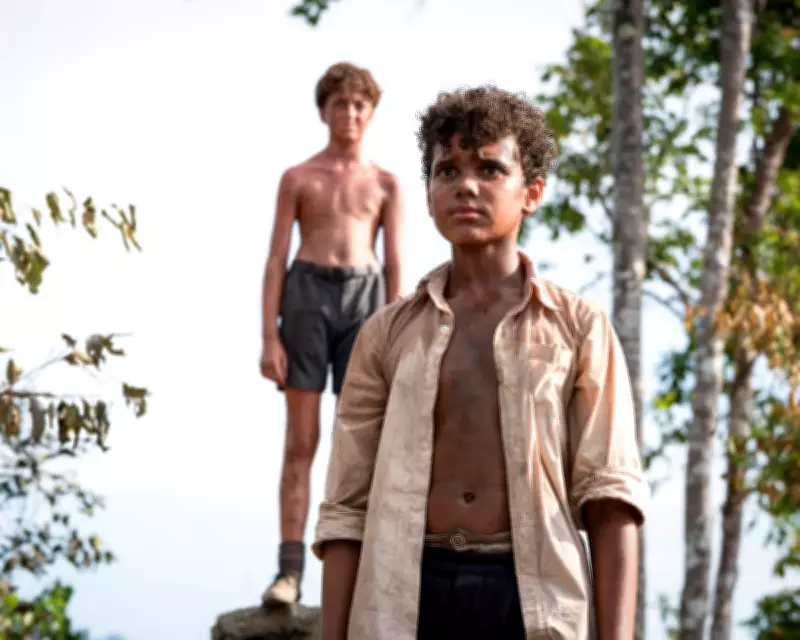
BBC's Lord of the Flies Adaptation Faces Scrutiny Over Diverse Casting Choices
The BBC's latest television series, an adaptation of William Golding's classic novel Lord of the Flies, has ignited a heated debate about the implications of diverse casting in historical and literary contexts. Created by Jack Thorne, known for his work on Adolescence, this new rendition returns to themes of masculinity but with a significant twist: a colour-blind cast that includes actors like Winston Sawyers in the role of Ralph.
Progressive Intentions Versus Thematic Obscurity
On the surface, the decision to employ a diverse ensemble is hailed as a progressive step forward, ensuring broader representation on screen and offering opportunities to Black and Asian actors who have historically been underrepresented. However, critics, including writer and academic Darren Chetty, contend that this approach may inadvertently dilute some of the most potent themes embedded in Golding's original work.
Golding's novel, a staple in GCSE curricula since its 1954 publication, delves deeply into concepts of civilisation, savagery, and the legacy of British colonialism. By abstracting the story away from its racial and colonial context, the adaptation risks losing the critical irony and self-reflection that allow the book to be interpreted as an anticolonial text.

The Robinsonade Genre and Racial Hierarchies
A key aspect of the discussion revolves around the Robinsonade genre, named after Daniel Defoe's Robinson Crusoe. This genre traditionally features white Englishmen stranded on islands, where encounters with non-European Others highlight racial hierarchies. In Lord of the Flies, Piggy's declaration—"We're not savages. We're English; and the English are best at everything"—directly references this trope, underscoring the novel's critique of imperialism.
By casting actors of colour in roles originally conceived as upper-class white boys, the series may obscure these racial dynamics. As Chetty notes, this mirrors issues seen in other productions like Bridgerton and Hamilton, where diverse casts sometimes depict racial difference without addressing underlying inequalities.
What Is Lost in Adaptation?
The adaptation's focus on gender and class, while downplaying race, transforms a dystopian narrative into what some describe as a racial utopia. This shift is particularly poignant in an era where racism often intertwines with patriarchal notions of dominance and protection. Critics argue that by sidestepping the entanglement of masculinity with racial hierarchies, the series may offer a sanitised version that retreats from uncomfortable truths.
Ultimately, while the BBC's Lord of the Flies provides valuable opportunities for actors of colour, it raises important questions about how adaptations balance inclusivity with fidelity to source material. The debate highlights the ongoing challenges in rehabilitating classics for modern audiences without erasing critical historical contexts.