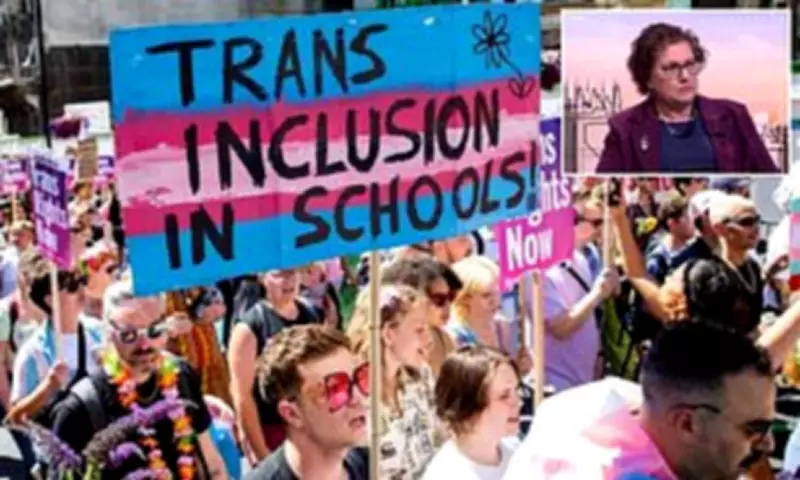
Baroness Hilary Cass, a leading paediatrician and transgender healthcare expert, has issued a stark warning to educators regarding the social transition of pre-pubescent children. Her comments follow the Department for Education's recent publication of guidance that permits primary school children, including those as young as four, to socially transition in what are described as "rare" circumstances.
Urging Super Caution in Schools
Appearing on the BBC's Sunday with Laura Kuenssberg programme, Baroness Cass emphasised that social transitioning should be an exceptionally rare occurrence, particularly for children who have not yet reached puberty. She advised teachers to exercise "super caution" and avoid acting too hastily when confronted with requests from confused pre-teens to change their gender identity at school.
"If they socially transition too early we think they can get locked onto a trajectory that may not have been the correct natural trajectory for them," Baroness Cass explained. "The risk of getting a child very fixed in a certain way, of being too early, is that you are not allowing them to develop and work it out."

Historical Context and Modern Pressures
The paediatrician drew upon historical data from gender identity clinics in the 1970s, noting that most pre-pubertile boys who experienced gender dysphoria eventually grew out of it and identified as gay men in adulthood. She attributed this natural resolution to the absence of hormone treatments and internet influence at that time.
Baroness Cass expressed concern that contemporary children are being "weaponised" and misled by social media narratives about gender identity. "I think what has kind of misled children is the belief that if you are not a typical girl, if you like playing with trucks, or boys who like dressing up or that you have same-sex attraction, that means that you're trans and actually it's not like that but those are all normal variations," she stated.
She further criticised the pressure on young people to conform to rigid stereotypes promoted on platforms like Instagram, suggesting this has contributed to an increase in cases.
Department for Education Guidance Details
The newly published guidance from the Department for Education outlines several key provisions:
- A child's birth sex must be recorded in all school and college records.
- Schools should seek parental views on any request for social transition, unless there is a compelling reason not to do so.
- Clinical advice received by families should always be considered.
- No staff member can unilaterally decide to transition a child; agreement must be reached with the school and parents.
- Schools must not initiate transition processes but can only respond to formal requests.
The document, released just before Parliament's half-term break, also advises schools to avoid enforcing rigid rules based on gender stereotypes. It encourages educators to take time to understand children's feelings while remaining vigilant about potential vulnerabilities, including bullying and mental health needs.
Medical Perspective on Gender Incongruence
Baroness Cass, who authored a landmark review of NHS gender identity services, clarified that only a tiny minority of individuals will never feel comfortable with their biological sex and require medical intervention. She stressed that for the vast majority of children, gender incongruence is a phase that resolves naturally with time and proper support.
"Left to their own devices, because we didn't have hormone treatments and the internet and all the rest then, most of them grew out of it and became gay men," she remarked, referencing historical clinic data. Her warning underscores the need for careful, evidence-based approaches in educational settings to ensure children are given the space to explore their identities without premature commitments.