For decades, left-wing activists have consistently viewed schools as a critical arena for ideological conflict. Revolutionary communists provide a stark historical example; in Hungary during 1919, they pioneered sex education programs with the explicit aim of undermining the moral foundations of Christian youth. This initiative was part of a broader Bolshevik strategy that compelled educators to impose a range of radical doctrines on students.
The Democratic Left's Educational Agenda
However, it is not only revolutionary factions that have sought to harness educational institutions for political ends. In democratic nations, left-leaning groups have also attempted to use schools to advance their ideological objectives. Over sixty years ago, Anthony Crosland, a prominent figure within the Labour Party often regarded as a moderate, openly acknowledged that transforming the education system could prove a more potent tool for achieving socialist goals than nationalising the economy.
Crosland detailed these perspectives in his publication titled The Conservative Enemy. The deliberate choice of the word 'enemy' rather than 'opponent' reveals an underlying intolerance. His primary focus was on prioritising equality over educational quality. This shift has encouraged a pedagogical approach that often instructs pupils on what to think, rather than how to think critically.

A Transformation in Teaching
This ideological shift has profoundly altered the teaching profession. Remarkably, half a century ago, a significant proportion of job advertisements for teaching positions were still featured in conservative-leaning newspapers. Today, such a practice would be considered unthinkable, reflecting the substantial change in the profession's political landscape.
Consequently, millions of students have graduated from the comprehensive school system with a strong foundation in left-wing groupthink, even if their proficiency in core subjects like mathematics, English, or history remains inadequate. Recent reports indicate that some apprentices leave school lacking basic skills, such as telling time, and possess numeracy abilities equivalent to those of an eleven-year-old.
The Consequences of Politicised Education
This approach represents one of the left's most significant vulnerabilities. If the genuine goal is to improve the prospects of disadvantaged children, the focus should be on providing a robust education in subjects that will enable them to thrive in adulthood. Unfortunately, many radicals appear more concerned with shaping minds than with enriching individual futures.
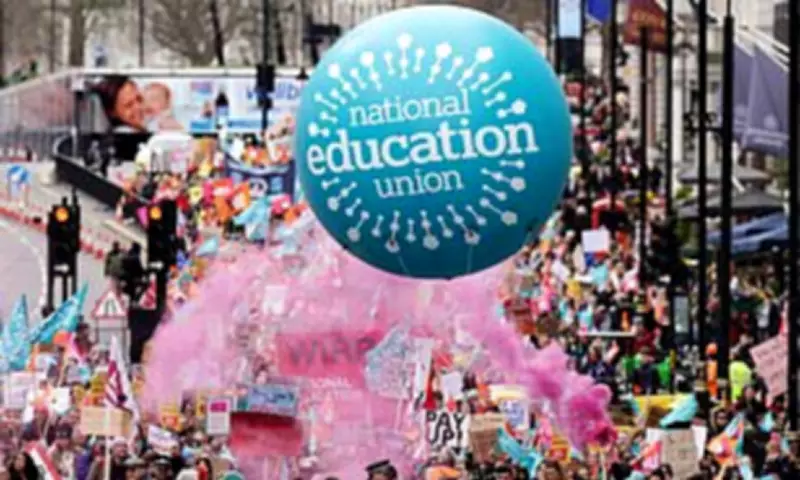
Evidence of this trend is vividly apparent in the agenda for the upcoming conference of the National Education Union (NEU), the largest teaching union in England and Wales. The schedule includes several highly contentious motions that blur the lines between education and political activism.
The NEU Conference Agenda
One motion explicitly calls for the trade union movement to "throw its full weight behind stopping a Reform UK government," characterising the party as a 'far-Right' entity. Another proposal advocates for the collection and distribution of 'anti-racist teaching materials,' raising questions about the intended audience, methods, and contexts for such dissemination.
While these resolutions might be fitting for a political party conference, their presence at a union event representing nearly half a million teachers is deeply concerning. Educators, like all citizens, are entitled to their personal political opinions regarding figures such as Nigel Farage and can vote accordingly during elections.
The Danger of Propaganda in Schools
However, the NEU's agenda prompts serious questions about whether political activism will remain confined to the ballot box. Imagine the reaction if the union were to similarly promote the ideas of Nigel Farage; it would undoubtedly face fierce opposition. This double standard highlights the inappropriate nature of such partisan engagements within educational institutions.
There is no legitimate place for propaganda in our schools. Therefore, it is imperative that organisations like the NEU refrain from endorsing one-sided political commitments. Education should be dedicated to fostering knowledge, critical thinking, and skills that empower all students, free from ideological coercion.