Independent Schools Australia Calls for National AI Pilot to Bridge Educational Gaps
Independent Schools Australia (ISA) is urging the federal government to implement a national AI pilot program, warning that failure to act could lead to a widening educational divide. The organisation highlights that without coordinated efforts, Australia risks creating a 'two-speed system' where some schools advance rapidly with artificial intelligence while others lag behind.
The AI Revolution in Classrooms: Innovations and Concerns
In some Australian schools, artificial intelligence is transforming traditional teaching methods. For instance, at Hills Christian Community School in Adelaide Hills, AI chatbots are used to interrogate students about their assignments, engaging them in two-way dialogues to ensure comprehension and deter plagiarism. Colleen O'Rourke, the school's leader of digital innovation, emphasises that AI tools are designed to amplify great teaching practices rather than dilute them, serving as a co-collaborator in the teacher-student dynamic.
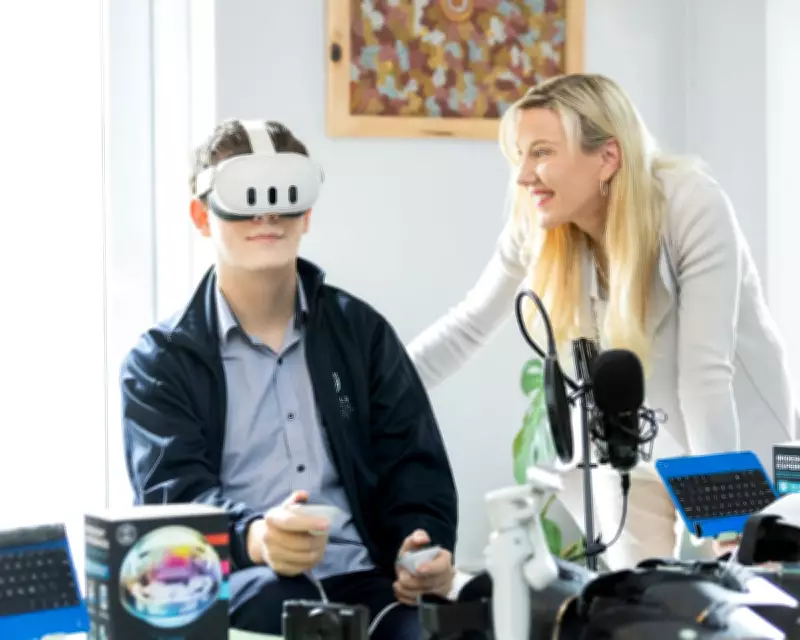
Beyond chatbots, students at innovative institutions utilise sensors, drones, and coding to explore natural ecosystems, while those with disabilities benefit from Meta AI glasses that provide explanations without disrupting class. However, the adoption of such technologies is not uniform across the country.

Uneven Adoption and the Risk of Inequality
A recent ISA paper, released on Monday, analysed the integration of generative AI into Australian schools three years after ChatGPT's debut. It found significant disparities in adoption rates, influenced by geography and resources. Currently, only New South Wales and South Australia have rolled out AI programs to public schools, following a ban lifted in late 2023.
Graham Catt, chief executive of ISA, stated that Australia is at a critical juncture where AI could either promote equity or exacerbate inequality. He warned, 'If we don't act deliberately now, we risk creating a two-speed system. Some schools will surge ahead, while others struggle to keep up.' The paper advocates for a national, sector-blind pilot to establish ethical guidelines and direct funding effectively.
Teacher Perspectives and Current Usage
The 2024 Teaching and Learning International Survey (TALIS) reveals that two-thirds of Australian secondary teachers and nearly half of primary teachers use AI in their work, placing Australia among global leaders in AI uptake. In independent schools, large language models assist with marking, feedback, and tutoring, while tools like NSWEduChat in New South Wales and EdChat in South Australia support lesson planning and student learning.
Despite these advancements, teachers express concerns about potential negative impacts on student wellbeing, privacy issues, and plagiarism risks. O'Rourke notes that educators need proper training to responsibly guide students, stating, 'We can't teach our kids how to use it responsibly if teachers don't know how to use it responsibly.'
Moving Forward: A Call for Action
ISA's push for a national AI pilot aims to provide a clear pathway for ethical adoption and resource allocation, ensuring all schools can benefit from technological innovations. As AI continues to reshape education, coordinated efforts are essential to prevent a deepening divide and foster an inclusive learning environment for all Australian students.