Government Launches New V-Level Qualifications to Combat Educational 'Snobbery'
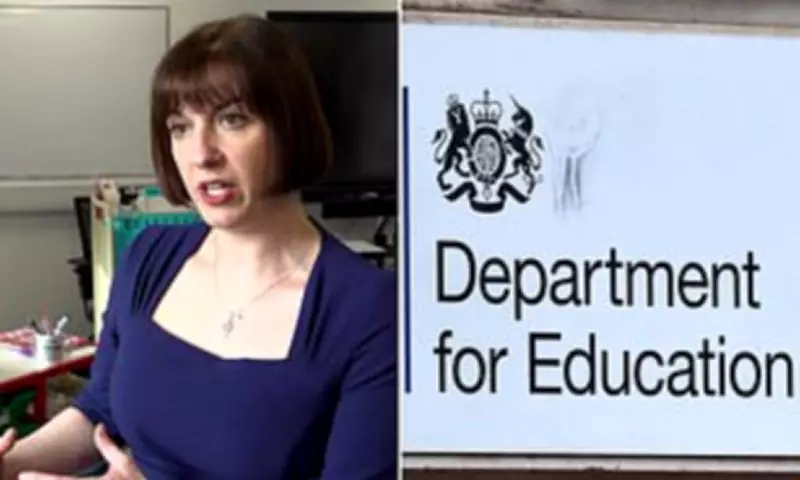
The first wave of new V-level courses has been officially unveiled by the government, marking a significant shift in post-16 education policy aimed at broadening options beyond traditional academic pathways. Education Secretary Bridget Phillipson announced the initiative during a visit to Nottingham College, declaring it would "end the snobbery in post-16 education" and provide young people with "real choice and real opportunity" for future-proof careers.
What Are V-Levels?
V-levels represent a new vocational qualification equivalent to A-levels, designed to offer students aged 16 and above practical alternatives to purely academic routes. The initial courses will be available in education, finance and digital sectors starting next year, with students currently in year nine being the first cohort eligible to enroll.
These qualifications can be studied alongside A-levels, allowing for flexible combinations that cater to diverse career aspirations. For instance, a student pursuing a V-level in finance might complement it with A-level mathematics if considering an accounting career. The government emphasizes that V-levels provide "high-quality technical and vocational routes" without forcing premature specialization for students uncertain about their future direction.

Broader Educational Reforms
The V-level announcement forms part of a comprehensive overhaul of post-16 education that includes several parallel initiatives:
- Expansion of T-levels: These two-year technical courses, equivalent to three A-levels, will broaden to include additional subjects such as sport, fitness and exercise science, and care services.
- Foundation Certificates: One-year qualifications in education and early years, and digital sectors for students aiming to progress to A, V or T-levels.
- Occupational Certificates: Two-year qualifications in catering and hospitality, and education and early years for those targeting apprenticeships or direct employment.
- Stepping stone qualifications: Level one courses designed to support students who need to resit English and mathematics GCSEs, with particular focus on helping white working-class pupils.
Ambitious Targets and Implementation Timeline
Labour leader Keir Starmer has established an ambitious target for two-thirds of young people to be engaged in higher education, technical or vocational training, or pursuing "gold standard" apprenticeships by age 25. The Department for Education is actively pursuing this objective through these qualification reforms.
The rollout plan includes potential expansion of V-levels to business, care services, construction, engineering, health, legal, sales, sports, fitness, and exercise science by September 2028, pending final confirmation from the DfE. A comprehensive implementation strategy will be published by June 2026.
Addressing Current Challenges
The reforms respond to several pressing educational concerns identified through government research:
- One in four parents of 14 to 18-year-olds in England lack confidence that their children understand post-GCSE options
- Half of parents express primary concern about their children finding stable, secure employment
- Recent Office for National Statistics figures show 957,000 young people not in education, employment or training (Neet)
- Only one in five students successfully passes GCSE resits under current systems
Education Secretary Phillipson emphasized the importance of "high-quality advice" and clearer qualification pathways to address these challenges, noting that speaking with local colleges and providers represents a valuable resource for families navigating educational choices.
Industry Response and Transition Period
The educational sector has responded cautiously to the announcements. Nottingham College chief executive Janet Smith welcomed reforms that would "improve accessibility to qualifications and provide students clear pathways" toward employment or further study.

Bill Watkin, chief executive of the Sixth Form Colleges Association, particularly praised the decision to retain most BTec diplomas and extended diplomas until 2028 while V-levels are gradually introduced. This transitional approach aims to prevent "the sharp decline in student outcomes that would have accompanied their hasty withdrawal." Legacy qualifications including BTecs will be defunded from 2027 in subjects covered by T or V-levels.
The government has also launched a consultation on business engagement, seeking to increase apprenticeship opportunities and T-level placements through stronger corporate partnerships. Phillipson stressed that "anything more businesses can do to support young people" would be valuable given current Neet figures.
These sweeping reforms represent the most significant restructuring of post-16 education in recent years, aiming to create a more balanced system that values vocational and technical pathways equally with traditional academic routes.