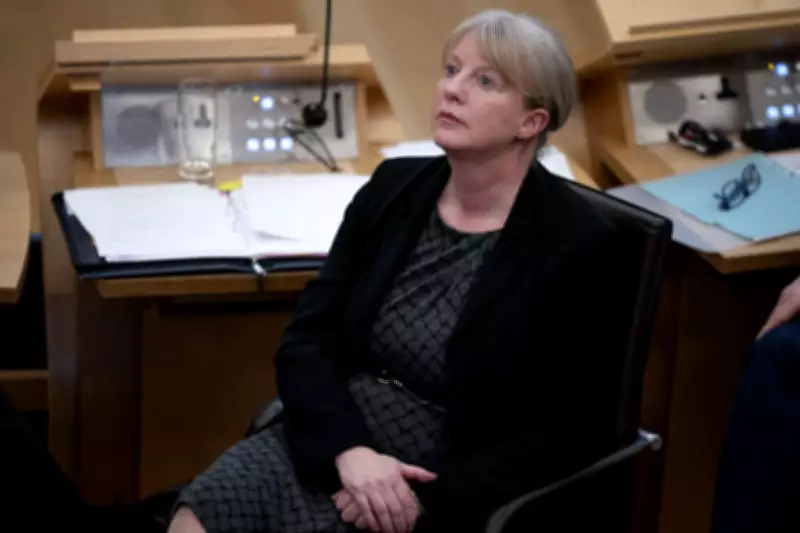
Robison Urges Successor to Be 'Bold and Ambitious' as Holyrood Passes Budget
The Scottish Budget for the 2026-27 financial year has been formally passed by the Scottish Parliament, marking a significant moment in Holyrood's legislative calendar. Outgoing Scottish Finance Secretary Shona Robison used the occasion to deliver a powerful message, urging her successor to adopt a bold and ambitious approach in future fiscal negotiations with Westminster.
Call for Fiscal Framework Reform
Robison, who is stepping down as an MSP at the upcoming May elections, emphasised during the Budget debate that the next Scottish Parliament must push for a more ambitious and flexible settlement with the UK Government. She highlighted that while meaningful progress was made during the 2023 review of the fiscal framework, which governs financial relations between Holyrood and Westminster, this cannot represent the end of the journey.
With a further review now beginning, the next Parliament will have the opportunity and responsibility to argue for a more ambitious and flexible settlement, Robison stated. She insisted that under current arrangements, many critical financial levers remain with Westminster, leaving Holyrood heavily dependent on UK Government decisions. This dependency is particularly concerning given that funding growth for Scotland is projected to slow significantly in the coming years.

Robison's Legacy and Budget Details
Reflecting on her 27-year tenure at Holyrood, Robison described serving as Finance Secretary as the most rewarding role by far, noting it provides the tools to drive real change across government and society. The Budget itself was passed by 66 votes to 29, with 24 abstentions. Robison asserted that it continues to protect the majority of taxpayers in Scotland while supporting necessary investment in public services.
Key provisions highlighted include:
- Maintaining commitments to shield lower-income taxpayers, with over half expected to pay less than they would elsewhere in the UK.
- Protecting core elements of Scotland's social contract, such as free prescriptions, free tuition, expanded free school meals, free bus travel for under-22s and over-60s, and free baby boxes.
Opposition Criticism and Reactions
The Budget faced strong opposition from the Scottish Conservatives, who voted against it. Finance spokesman Craig Hoy labelled it a dreadful Budget that fails to address what he called the doom loop of ever higher taxes Scots face to fund SNP benefits. He criticised the freezing of higher-rate income tax thresholds, warning that by the end of the decade, 30% of Scots could be paying higher rates, leading to unsustainable tax rises or cuts to public services.
Labour abstained from the vote, with finance spokesman Michael Marra condemning the knackered SNP Government for its impact on Scotland's public services and finances. He argued that the Budget lacks transformative change and predicted it would not last the year, foreseeing an emergency budget from a new government after the May elections.
As Robison prepares to depart, her call for boldness and ambition sets the stage for future fiscal battles, underscoring the ongoing tensions between Holyrood and Westminster over financial autonomy and public service funding.