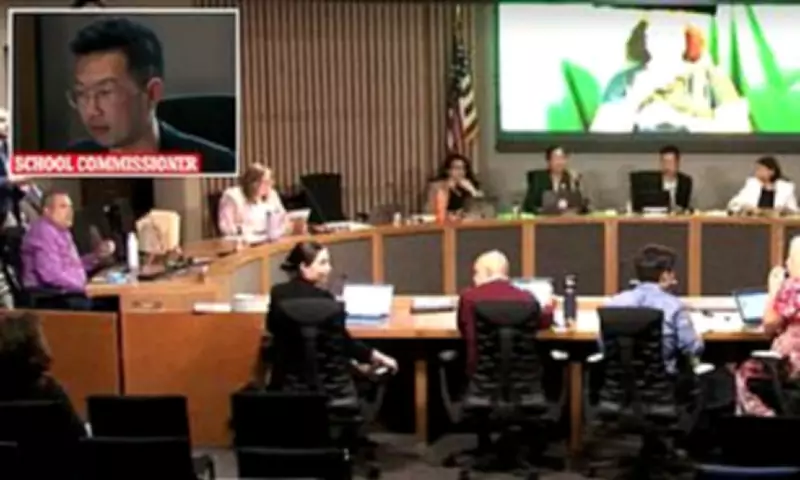
San Francisco School Board Votes to Restore Eighth-Grade Algebra After 12 Years
In a closely contested decision, the San Francisco Board of Education has voted to reintroduce eighth-grade algebra into the public school curriculum, marking a significant reversal of a policy that has been in place for the past 12 years. The board's 4-3 vote on Tuesday came after years of mounting criticism from parents and researchers, who argued that the removal of algebra had negatively impacted student outcomes and college readiness.
The Original Rationale and Its Unintended Consequences
Back in 2012, the San Francisco school district eliminated algebra from nearly all of its middle schools, with the intention of providing disadvantaged and minority students more time to master foundational math concepts. The theory was that by delaying algebra until high school, these students would be better prepared to tackle the subject. However, this approach led to a stark disparity: only 2 out of 21 middle schools offered a pathway for students to take algebra, while at the other 19 schools, enrollment required a counselor meeting and signed parental consent, according to the Center for Educational Progress.
The policy did not achieve its intended goals. A 2023 Stanford study revealed that participation in Advanced Placement (AP) math courses dropped by 15 percent, largely due to declines in AP Calculus. Moreover, the delay in algebra failed to close racial equity gaps in math classes. The study's authors noted that the percentage of Black students enrolling in any AP math course remained statistically unchanged from the pre-policy period, while Hispanic student enrollment in advanced math increased by just 1 percentage point.

Parental Outcry and Political Shifts
For years, parents expressed frustration over the change, primarily because it made their children less competitive in college applications. This discontent culminated in March 2024, when San Francisco voters overwhelmingly approved a non-binding measure calling for the return of algebra as an eighth-grade offering. The political landscape has since shifted, with newly-elected school board members increasingly aligning with parental concerns. Mayor Daniel Lurie, elected in November 2024 and viewed as a moderate Democrat, also supports the reinstatement of middle school algebra.
Educational and Financial Implications
School Board Commissioner Phil Kim, one of the four 'yes' votes, argued that bringing back algebra could reverse enrollment declines that have drained district funding. "Families want to see a public school system that offers rigorous coursework," Kim stated. "This is absolutely an instructional strategy. But it’s also a retention tool to bring families to our district and demonstrate we will not only take care of your children, but we will teach them, too."
Most school systems across the United States offer Algebra I in eighth grade, which sets students on a trajectory for geometry in ninth grade, Algebra II in 10th, pre-calculus in 11th, and calculus in their senior year. For students aspiring to enter STEM fields, having calculus before college is particularly crucial. In San Francisco, the absence of eighth-grade algebra effectively put many students a year behind their peers nationwide.
Implementation Plans and Pilot Programs
District Superintendent Maria Su has been tasked with developing a plan to make algebra an elective course in 19 schools. Interested students will take it alongside regular eighth-grade math. Students with high enough grades will be automatically placed in algebra but will have the option to opt out. Additionally, there will be an alternative for students to take algebra without enrolling in standard eighth-grade math.
Two other schools will participate in a pilot program where all middle school students will take an accelerated math course load over three years, covering Math 6, 7, 8, and Algebra I. This program was developed following a two-year experiment in which the district tested various approaches to middle school math. Stanford economist Thomas Dee, an author of the university's study on scrapping algebra, reviewed the data and told The New York Times that the accelerated approach showed "dramatic gains" in math scores for students enrolled in Math 8 and Algebra I.

The reinstatement of eighth-grade algebra represents a pivotal moment for San Francisco's public education system, aiming to enhance academic rigor, address equity concerns, and bolster student retention in the face of ongoing challenges.