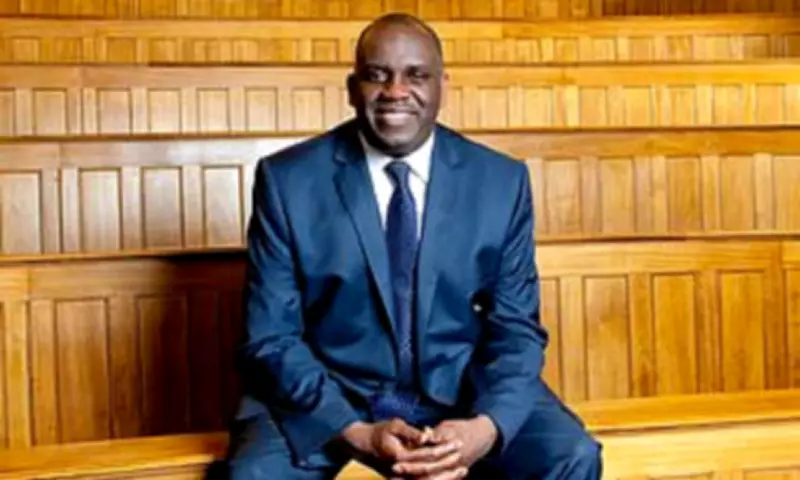
Lord Sewell to Confront Starmer Over White Working-Class Boys' Education Crisis
The author of a landmark report into inequality in Britain is preparing to deliver a stark warning to Prime Minister Keir Starmer, asserting that his government is failing to improve educational outcomes for white working-class boys. Lord Tony Sewell, who chaired the Commission on Race and Ethnic Disparities established by former Prime Minister Boris Johnson, will highlight what he describes as a persistent crisis in educational attainment among this demographic.
The Commission's Findings and Ongoing Concerns
Lord Sewell's commission was originally convened in 2021 to investigate whether Britain could be considered a racist country following the widespread Black Lives Matter protests. The resulting landmark review made headlines by concluding that Britain was not institutionally racist and should be regarded as a model for successful multi-ethnic societies worldwide. However, it also uncovered a troubling educational disparity: while children from many ethnic minority backgrounds were performing well or even excelling academically, white pupils often occupied the lowest achievement brackets.
At the time of the report's publication, Lord Sewell specifically warned ministers about the needs of the white working class, describing how these groups appeared "stuck" in cycles of underachievement. Five years later, he believes little has changed, and he plans to reiterate these concerns at an event in Westminster this week marking the report's anniversary.

Current Data Reveals Persistent Educational Gaps
The latest figures from the Centre for Social Justice paint a concerning picture. According to their research, only one third of white pupils receiving free school meals achieve the minimum passing grade (grade 4 or above) in both GCSE English and Mathematics. This stands in stark contrast to other demographic groups: over eighty percent of Chinese pupils on free school meals achieve this benchmark, alongside nearly seventy percent of Indian and Bangladeshi pupils who also qualify for free meals.
More detailed analysis from the CSJ's "Lost Boys" report from March of last year reveals that just 35.9 percent of white British pupils on free school meals achieved grade 4 or above in both core subjects. This figure is seven percent lower than the overall average and represents the lowest performance of any ethnic group examined. For comparison, mixed white and black Caribbean pupils achieved pass rates of 36.9 percent, while Bangladeshi pupils reached 67.2 percent and Chinese pupils an impressive 83.7 percent.
National Patterns and Government Data
Official government statistics from May further underscore the scale of the problem. The data indicates that white working-class children are falling behind their peers in all but twenty-one secondary schools across England. This means that in fewer than one percent of the country's more than 3,400 secondary institutions do these pupils perform at parity with their classmates.
The government figures also reveal that only 18.6 percent of white working-class pupils achieve grades 5 or above in English and Mathematics GCSEs, substantially below the national average of 45.9 percent. This achievement gap highlights what experts describe as systemic educational disadvantage affecting specific demographic groups.
Lord Sewell's Forthcoming Remarks
In his anticipated address, Lord Sewell is expected to state: "Five years ago, we were told by the woke Left and liberal Right that the evidence on class and family was uncomfortable. Since then, this evidence has only hardened. White working-class boys from the poorest homes are still stuck at the bottom of the class. Our warnings were not listened to."
He will add: "If we are serious about opportunity, we have to stop arguing about language and start delivering change in the places that need it most."
Commission Member Perspectives
Mercy Muroki, who served on Lord Sewell's commission and now works as development director at the Centre for Social Justice, emphasized broader social factors in educational outcomes. "Family stability, class, and aspiration matter far more for children's life chances than many of the issues that dominated identity politics culture wars in 2020," she stated.

Muroki continued: "Five years on from Sewell's report, the evidence is clear: family breakdown, deprivation and low expectations for young people, not ethnicity, are the main drivers of disadvantage in Britain."
The Original Report's Conclusions and Controversy
Lord Sewell's original report generated significant controversy, particularly on the political left, for its conclusion that Britain serves as a global model for successful multi-ethnic societies and that no evidence of institutional racism exists in the UK. The commission found that the educational success of many ethnic minority communities "should be regarded as a model for other white-majority countries."
The report specifically highlighted education as "the single most emphatic success story of the British ethnic minority experience," crediting the aspirations and hard work of these communities with transforming British society over five decades. However, this positive narrative about ethnic minority achievement has been overshadowed by the persistent underperformance of white working-class pupils, creating what experts describe as a complex educational inequality landscape requiring targeted intervention.