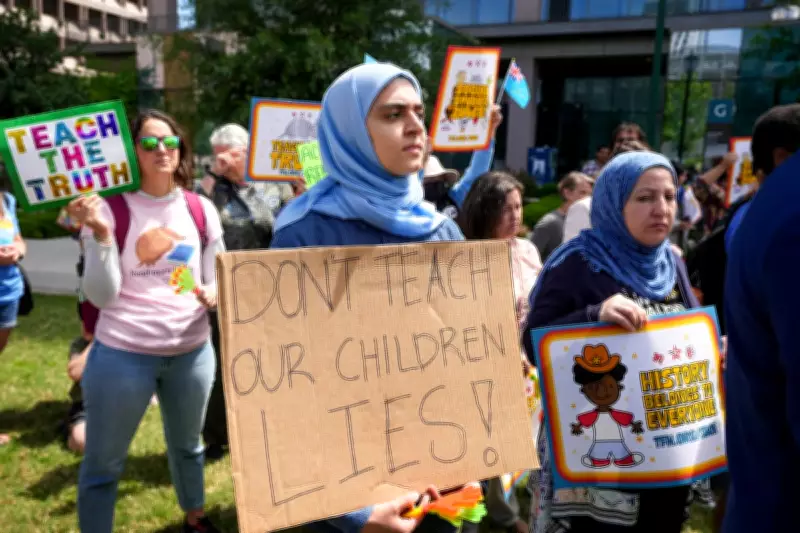
Texas Education Board Debates Controversial Bible Stories Reading List for Public Schools
A proposed new reading list for Texas public schools, which would incorporate Bible stories such as Jonah and the Whale, has drawn significant attention and sparked hours of heated testimony from religious leaders, teachers, parents, and students. The overflow crowd at Tuesday's state education board meeting highlighted the deep divisions over the role of religion in public education, a long-standing national issue that continues to drive legislative and legal actions across the United States.
National Context and Texas Influence
The debate occurs against a backdrop of national efforts to expand religious expression in public schools, with former President Donald Trump having pledged to protect such initiatives. Texas, a red state that educates approximately one in ten of the nation's public school students, often plays a pivotal role in setting educational agendas. In 2023, Texas became the first state to allow chaplains in schools, and last year, a Republican-led mandate requiring the display of the Ten Commandments in public schools took effect, though around twelve dozen districts removed them due to legal challenges.
Arguments For and Against the Reading List
Supporters of the reading list argue that Bible passages are essential for understanding the nation's history and moral foundations. Nathan Irving, a pastor and father of eight from Myrtle Springs, Texas, emphasized, "Our children need truth. Truth is the only currency that never devalues. Investing truth into our children is the most loving thing that we can do for them. This is the truth. This country and this state were founded upon a Christian worldview. Like it or not, it is true."

Opponents, however, cite the First Amendment's establishment clause, which prohibits laws respecting an establishment of religion. Rabbi Josh Fixler of Congregation Emanu El in Houston stated, "This list is a tool of proselytization that has no place in our public schools. There is a difference between teaching about religion and teaching religion, and this list will force teachers to cross that line." Megan Boyden, a Christian mother of three from Denton, Texas, expressed concerns about the state infringing on private faith, questioning how non-Christian students would be affected and whether Bible passages might conflict with her beliefs.
Details of the Proposed Reading List
The reading list stems from a 2023 state law calling for the creation of state-approved, high-quality educational materials. It includes:
- Third-graders learning about the Road to Damascus, detailing Paul's transformation from persecutor to follower of Christianity.
- Seniors studying the Book of Job, a story about faith tested through loss.
- Classics like Dr. Seuss's "The Cat in the Hat" and stories about national folk hero Daniel Boone.
- Works by famous African Americans such as Frederick Douglass, Martin Luther King Jr., and a book about Harriet Tubman of the Underground Railroad.
The GOP-leaning board has previously approved an optional Bible-infused curriculum for kindergarten through fifth grades. A final vote on the reading list is expected in June, with no changes taking effect until the 2030-31 school year.
Broader Curriculum Concerns
Beyond the reading list, the board is considering social studies standards criticized for being too state-centric, lacking focus on world events, and promoting American exceptionalism. These standards require students to identify the Texas flag as a symbol of state pride, recognize the state song "Texas, Our Texas," and understand stories about Texas Independence.
Curriculum debates are not new; for example, state boards in places like Kansas have previously debated whether evolution teaching should include doubts about the scientific theory to allow for intelligent design arguments. Allison Cardwell, a mother and fifth-grade social studies teacher, urged the board to reconsider the standards, noting that fifth grade is often the only time Texas students receive U.S. history instruction before high school. She asked, "How can we expect to create citizens who value liberty, responsibility, and the principles this country was founded on, if we don’t ensure that they truly understand those foundations?"

The ongoing discussions highlight the complex balance between religious expression, educational standards, and constitutional rights in Texas and beyond.