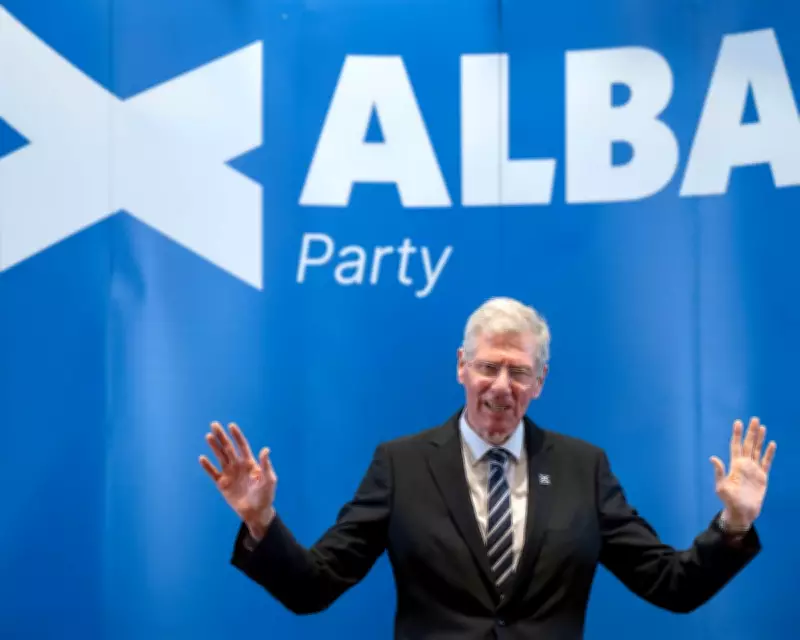
The Alba party, a pro-independence political force in Scotland, has declared it will formally wind up its operations and will not present any candidates for the upcoming 2026 Scottish parliament election. This decision marks the end of a brief but turbulent chapter in Scottish politics, initiated by the late Alex Salmond in 2021 as a "new political force" aimed at advancing the cause of Scottish independence.
Financial Crisis and Membership Decline
Since its inception, the Alba party has faced significant challenges, including a sharp decline in membership and a severe financial crisis. These issues have culminated in the party's inability to sustain its activities, leading to the recent announcement. Police Scotland has been conducting an investigation into alleged "irregularities" within the party's finances since May, adding to the mounting pressures.
Leadership and Decision-Making
Kenny MacAskill, who took over as leader after defecting from the Scottish National Party and succeeding Salmond, revealed that the ruling national executive committee made the decision to dissolve the party on Sunday. He expressed "considerable regret" over the outcome, attributing it to insurmountable financial difficulties. According to MacAskill, the party's current liabilities far exceed both its available cash and projected income, making continuation untenable.

The Electoral Commission had advised the Alba party that, given its dire financial situation, it should either voluntarily de-register or face statutory de-registration. This guidance played a crucial role in the committee's deliberations, ultimately leading to the choice to wind up rather than risk forced closure.
Reactions and Legacy
In his statement, MacAskill extended his gratitude to the party's membership, acknowledging their efforts and dedication to the independence cause. He remarked, "It has been a privilege to work with them. We can be proud of what we sought to achieve and also the support which we gave to our founder in his time of need." He concluded with a poignant note: "The dream shall never die, parties as with individuals are mortal, but our cause is eternal."
However, not all members have accepted this decision passively. Last month, the "Alba continuation group" had called for MacAskill's resignation if he was unwilling to lead the party into the Scottish parliament elections. Chris McEleny, the party's former general secretary and a close ally of Salmond, responded to the announcement by urging caution against public attacks on MacAskill. McEleny highlighted that Alba had positioned itself as a unique pro-independence voice, supporting oil and gas industries and opposing gender self-ID policies, which he described as "discredited."
Implications for Scottish Politics
The dissolution of the Alba party removes a notable player from the Scottish political landscape, particularly within the pro-independence movement. Formed with the ambition of providing an alternative to the Scottish National Party, Alba's short-lived existence underscores the challenges faced by smaller political entities in navigating financial sustainability and member engagement. As the 2026 election approaches, this development may reshape dynamics among independence advocates, potentially consolidating support around remaining parties.
Despite its end, the Alba party's brief tenure has left a mark, advocating for specific policies and offering a platform for dissent within the broader independence movement. Its closure serves as a reminder of the volatile nature of political organizations, especially those operating in highly contested arenas like Scottish devolution and independence debates.