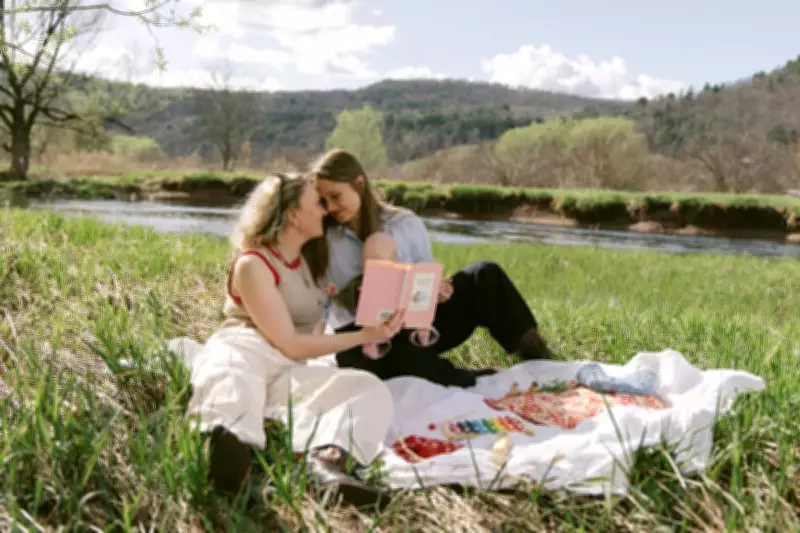
Rosa Rankin-Gee and her wife Leah always dreamed of having a family together. They wanted their journey to parenthood to be as mutual as possible, leading them to reciprocal IVF. In this process, one partner's egg is fertilized with donor sperm and the resulting embryo is transferred to the other partner's uterus. For Rosa and Leah, the plan was for Leah to carry Rosa's embryo first, then Rosa would carry Leah's embryo.
A Shared Biological Connection
Reciprocal IVF offered a way for both women to have an undeniable biological link to their child. Rosa explains, "This way, we would both have an irrefutable relationship with our children. Each time, one of us would be genetically related, and the other would have had a far larger impact: she would have transformed a cluster of cells into a baby." The process also involved elements of epigenetics and microchimerism, where cells pass between mother and baby, adding layers of connection.
Choosing a Known Donor
The couple decided to use a known donor rather than a sperm bank. They sought someone who was knowable, emotionally stable, and joyful. After careful consideration, they chose a dear friend who embraced the role. "He had always asked the best questions. All of which were about the future child, and what they might want and need," Rosa recalls.

The journey involved extensive testing, counselling, and legal contracts. Their egg retrievals were timed just 24 hours apart, thanks to their menstrual cycles synchronizing. In a petri dish in Manhattan, their eggs were combined with the donor's sperm to create embryos.
The Emotional Rollercoaster of IVF
IVF is characterized by waiting and uncertainty. Rosa and Leah were fortunate to have enough viable embryos. In January, one of Rosa's embryos was transferred into Leah. After a tense 10-day wait, a positive pregnancy test brought joy and disbelief. "This was the moment our bodies began to separate," Rosa says, as Leah's pregnancy progressed while Rosa remained physically unaffected.
Navigating Roles and Emotions
Rosa found herself in "Dad-land," a curious position as a woman. She could celebrate with champagne and sushi while Leah endured morning sickness. Leah, however, thrived during pregnancy, wearing crop tops and dancing in nightclubs. "It's not fair," Rosa would joke, "you're setting outrageously high standards."
The couple faced few insensitive comments. Friends often forgot they couldn't conceive naturally, and Rosa didn't mind being called "the dad." Fathers at birth classes offered reassurance: "Don't worry if you don't feel anything till they're about six months old."
The Birth of Mara
In October, their daughter Mara was born, weighing 6lb 10oz. Rosa held Leah's hand as their daughter emerged. "I looked at Leah and felt the most precise and sweeping love I have ever felt," Rosa remembers. Mara resembles Rosa, with blond curls and a frown that mirrors her mother's. But she is decidedly her own person.
Rosa's fears about grandparents were unfounded; Leah's mother's love for Mara is pure and deep. The couple is on Mara's birth certificate, but Rosa must legally adopt her own daughter for full parental rights, a process that is expensive and strange.
Looking Ahead
The family plans to continue their project of mutuality. If luck holds, Leah will carry Rosa's next embryo, allowing Rosa to experience pregnancy. Rosa reflects, "I love what it will mean to carry her child, with her genes. For her DNA to enter mine." Despite societal challenges and political shifts, their family feels both mundane and miraculous.