The leader of Reform UK in Scotland, Malcolm Offord, has launched a fierce critique against the Institute for Fiscal Studies (IFS) following its assessment that his party's tax proposals lack fiscal credibility. This confrontation highlights deepening tensions over economic strategy in the lead-up to the Scottish elections.
Reform UK's Tax Cut Proposals
Earlier this year, Lord Offord outlined ambitious tax plans for Scotland under a potential Reform government. The proposals include re-aligning Scotland's income tax system with the rest of the United Kingdom, followed by implementing a 1p-in-the-pound reduction, estimated to cost approximately £2 billion.
Subsequent cuts, totalling 3p, would incur an annual expense of £3.7 billion during the first parliamentary term, according to party statements. Reform UK argues that these tax reductions would stimulate significant economic growth, projecting that each percentage point cut would generate £8 billion in additional tax revenues annually through enhanced economic activity.

IFS Analysis and Criticism
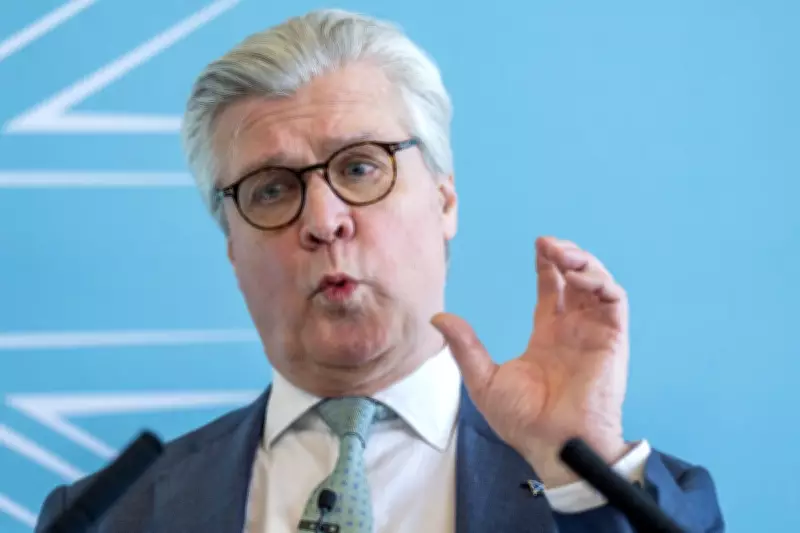
However, the Institute for Fiscal Studies issued a stark rebuttal on Friday, describing the plans as "not fiscally credible." David Phillips, head of devolved and local government finance at the IFS, emphasised that each point of economic growth would likely yield only around £300 million for Scotland, far below Reform UK's estimates.
Phillips stated, "The 'self-funding' tax cuts are therefore a mirage created by a misunderstanding or misrepresentation of the current devolution settlement and incorrectly comparing cumulative and annual figures." He added, "This is not good enough. The analysis of the potential revenue effects of the headline income tax cuts is unserious at best."
Lord Offord's Response
In a column published in the Daily Express on Monday, Lord Offord dismissed the IFS as a "siren voice of the status quo" and an "oracle to be obeyed." He criticised what he perceives as an entrenched mindset within Holyrood, writing, "In the world of the Holyrood bubble, it is an essential rule that if you want to be in the club, you don't challenge the wisdom of the IFS."
Offord defended his party's strategy, asserting that it would deliver the first major tax cut for Scots in 25 years by eliminating the SNP's additional tax bands and reducing income tax rates to 1p below those in the rest of the UK. He argued, "The nub of the IFS argument rests on the principle that tax cuts don't really have any impact on incentivising growth in the economy. Serious economists, including one Arthur Laffer, would take major issue with this subjective view."
The former Tory peer also addressed funding concerns, proposing to cut the number of public sector bodies—suggesting scrapping all and reinstating only necessary ones—and reducing "ideological spending" on initiatives like net zero. He stated, "I reject this decline mindset, because doing nothing is simply untenable."
IFS Rebuttal and Broader Context
In response to Offord's comments, David Phillips reaffirmed the IFS's commitment to impartiality, saying, "For both myself and the IFS more widely, independence and impartiality is vital to impact. We analyse all major parties' manifestos without fear or favour and have been critical of others, too."
Phillips referenced the IFS's 2021 Scottish election summary, which noted a "lack of credibility unites manifesto offering of three biggest Scottish parties." He acknowledged that while tax cuts of Reform UK's scale are possible, they would not be self-funding and would likely necessitate cuts to frontline services or benefits, given the pressures on the Scottish budget.
Phillips concluded, "Our aim is to inform debate not single anyone particular out," highlighting the think tank's role in providing objective analysis across the political spectrum.
Political Reactions and Implications
The dispute has drawn reactions from other political figures. Scottish Conservative leader Russell Findlay commented on Monday, "Anyone that starts to question the validity or the independence of the IFS is just confirming the failures of their own argument, the flaws in their own case."

Findlay added, "What the IFS have said is that the tax proposals being put forward by Lord Offord and Reform just aren't credible. It's there for all to see—that's why he's kicking back, lashing out at the IFS which, again, just confirms their lack of credibility."
Lord Offord further escalated tensions by labelling the Scottish Tories as "irrelevant" in the current election campaign, underscoring the fractious nature of political discourse surrounding tax policy and economic planning in Scotland.
This clash between Reform UK and the IFS underscores broader debates over fiscal responsibility, economic growth strategies, and the role of independent analysis in shaping public policy. As the election approaches, the credibility of tax proposals remains a pivotal issue for voters and policymakers alike.