Scottish Parliament Rejects Assisted Dying Bill After Intense Debate
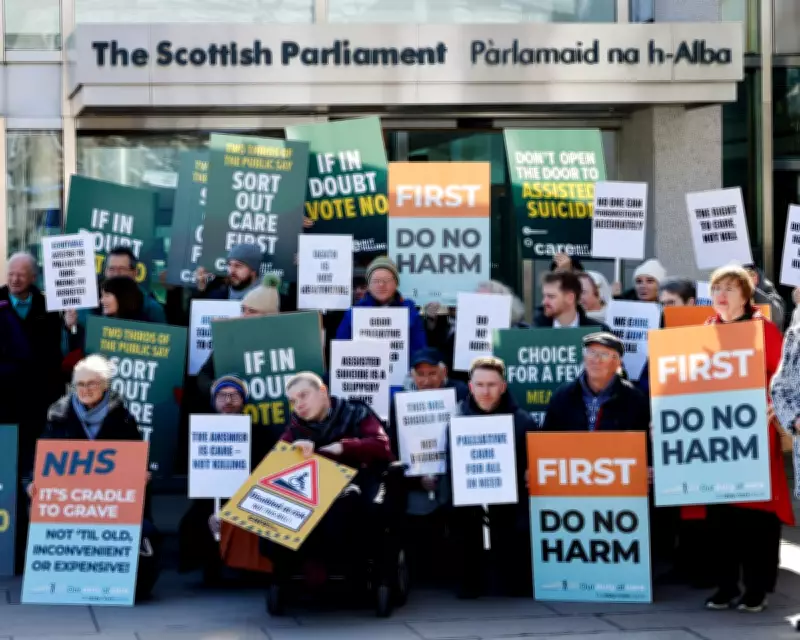
In a significant decision, the Scottish parliament has voted against legalising assisted dying, with MSPs rejecting the proposals by a margin of 69 to 57 in a late-night vote on Tuesday. This outcome follows a concerted campaign by critics and religious groups to block the measures, despite a series of last-minute amendments designed to placate opponents.
Debate and Amendments
The bill's defeat came after four days of intensive debate at Holyrood last week, focusing on whether disabled and infirm individuals were adequately protected from coercion. In a major concession, Liam McArthur, a Scottish Liberal Democrat MSP and the bill's sponsor, agreed to limit access to people judged to have six months left to live. This move was intended to address concerns from wavering MSPs, though McArthur had previously argued that such a time bar was too arbitrary.
During the final debate, McArthur urged MSPs to support the bill, warning that a "no" vote would increase suffering and force people to seek assisted dying overseas without safeguards. He described the opposition as driven by unfounded fears, emphasising that the bill included robust provisions for conscientious objections, no detriment clauses, and training.

Opposition and Support
Numerous MSPs spoke against the legislation, including SNP MSP Jamie Hepburn, who changed his mind due to concerns about altering the patient-doctor relationship. Brian Whittle of the Scottish Conservatives argued that cuts to social care made it unsafe to support the bill, while Edward Mountain, another Tory MSP, expressed fears that doctors would be empowered to offer death as a treatment option.
Jeremy Balfour, an independent MSP and one of two disabled MSPs campaigning against the bill, stated that disabled Scots would be "terrified" by the debate, claiming the protections were insufficient. However, supporters like Sandesh Gulhane, a Scottish Conservative MSP and practising GP, backed the bill as a "good and sound" piece of legislation, noting that 81% of Scottish voters favoured it.
Broader Implications
The rejection means that no part of the UK will have rights to assisted dying in the near future, despite its popularity among voters and legalisation in other wealthy nations such as the US and Australia. A parallel bill for England and Wales, passed by MPs last year, is expected to fail due to opposition in the Lords, where over a thousand amendments have been tabled, leading to accusations of filibustering.
Amendments to the Scottish bill included removing clauses that gave Scottish ministers power to regulate medical staff training, as these powers belong to the UK government. Royal medical colleges insisted these safeguards were necessary, rejecting assurances from UK ministers that Westminster would transfer the powers without dilution.
Government Stance and Future Outlook
While the Scottish government remained officially neutral, First Minister John Swinney, along with former First Minister Nicola Sturgeon and Scottish Labour leader Anas Sarwar, opposed the legislation. Patrick Harvie, a Scottish Green MSP, highlighted that the bill included safeguards requiring Scottish parliament approval of training powers from Westminster.
Earlier this year, a section 30 order granted Scotland powers to use legally restricted drugs and equipment, which came into force on 11 March. Despite this, Rona Mackay, the SNP's chief whip, urged MSPs to back the bill, arguing that terminally ill individuals deserve choice and compassion in a modern Scotland.
The defeat underscores ongoing tensions over end-of-life care and highlights the challenges in balancing autonomy with protection for vulnerable groups, suggesting this issue will remain contentious in Scottish politics.