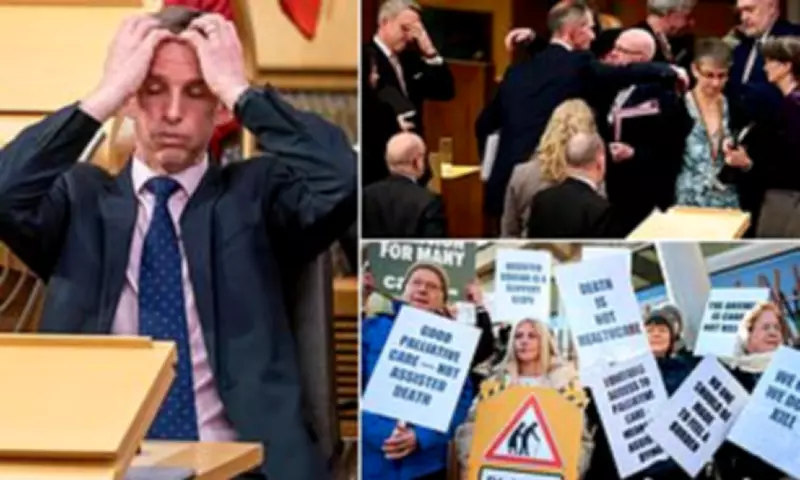
In a momentous decision that will resonate across the United Kingdom, the Scottish Parliament has decisively rejected legislation to legalise assisted dying. On a Tuesday evening in Edinburgh, MSPs voted 69 to 57 with one abstention against the controversial bill, bringing to an end years of campaigning by proponents.
A Debate Conducted with Honour and Gravity
The Scottish Parliament demonstrated its capacity for serious deliberation on one of the most profound moral questions facing any legislature. Before the free vote on this conscience issue, MSPs spoke with remarkable sobriety, thoughtfulness, and objectivity. The debate maintained a dignified tone throughout, with courtesies extended from both sides and no personal insults or impugned motives.
The quality of discussion evoked comparisons to the best traditions of Scottish public discourse, reminiscent of historic General Assembly debates when the Kirk commanded national respect. There were only minor departures from this tone, most notably when Jackson Carlaw introduced ill-timed humour more suited to a Burns Supper than this grave occasion.

The Bill's Collapse and Key Concerns
Liam McArthur, the MSP for Orkney who championed the legislation, appeared visibly emotional as his five-year campaign reached its conclusion. Despite securing preliminary support last May when MSPs voted 70-56 in favour of assisted suicide in principle, the detailed legislation ultimately proved unworkable for many parliamentarians.
Several critical concerns emerged during the final debate that contributed to the bill's defeat:
- Coercion and manipulation of vulnerable individuals
- Medical errors in assessing mental capacity, particularly concerning young adults
- Constitutional complications regarding doctors' rights to conscientious objection
- Inadequate protections for private Christian healthcare facilities
Jeremy Balfour, an MSP who lives with a disability, delivered what many considered the most powerful speech of the night. "We cannot legislate for the feeling of being a burden," he declared. "We cannot legislate for the throwaway comments that make me and others feel that our lives are worth less."
Strategic Errors and Unanswered Questions
The bill's proponents made significant strategic errors, most notably alienating Daniel Johnson, the Labour MSP for Edinburgh Southern who had pushed for crucial amendments. Johnson's subsequent decision to withdraw support proved devastating to the legislation's chances.
Furthermore, amendments that could have addressed key concerns were "loftily spurned" according to observers, leading many MSPs to conclude they were "simply not dealing with serious people on the gravest of questions." This perception caused several previously supportive parliamentarians to change their votes.
The Wider Implications and Future Prospects
The margin of victory for opponents of assisted dying was surprisingly firm, reflecting the numerous unanswered questions and glaring holes in the proposed legislation. The blithe optimism of proponents – characterised by one observer as "Sure, we'll be grand!" – ultimately failed to convince sufficient MSPs.
This issue may not resurface at Holyrood for some time, particularly if May's elections return a significant bloc of centre-right, socially conservative MSPs as current polling tentatively suggests. However, proponents remain determined, with 18-year-old university student Ryan Thomas telling BBC Scotland: "We only have to win the argument once. The opposing side have to win it every single time."
The debate has highlighted deeper cultural shifts within Scottish society, with some observers noting what they describe as Scotland's "implacable slide into paganism and spiritual ignorance" over the past sixty years. As traditional Judeo-Christian values of restraint, humility, and compassion give way to what critics characterise as narcissistic determination to control life and death, this fundamental question will inevitably return to the political agenda.

For now, the Scottish Parliament has spoken clearly: the proposed assisted dying legislation contained too many unresolved issues and insufficient protections for society's most vulnerable members. In rejecting the bill, MSPs have affirmed the sanctity of life principle while demonstrating that even on the most divisive moral questions, parliamentary democracy can function with honour, fluency, and wisdom.