Since their invention around a century ago, adjustable metal handcuffs have become standard equipment for police officers and prison guards worldwide. However, Scottish jails are now replacing them with a new 'soft restraint' made of fabric.
Soft Cuffs: A New Approach
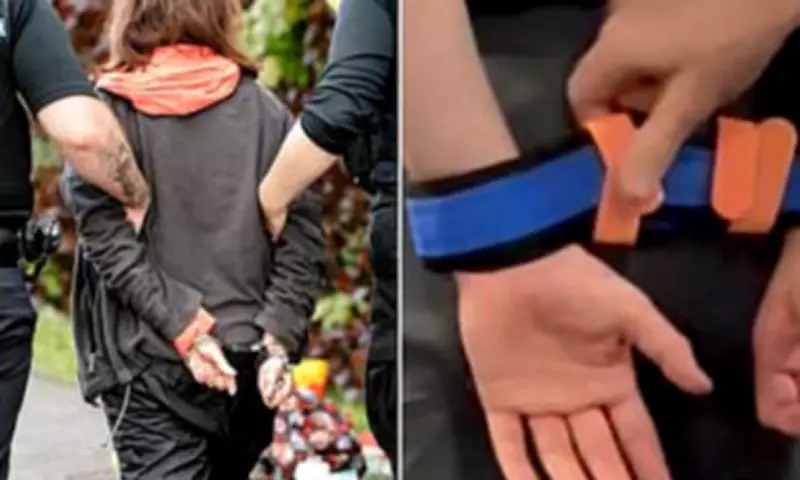
Bright blue with orange straps, these soft cuffs are a far cry from the traditional metal shackles long associated with life behind bars. Instead of a lock and key, they are secured with buckles and hook-and-loop fastenings.
A recent pilot project within Scottish prisons found that the soft cuffs reduced conflict between inmates and guards. Consequently, the Scottish Prison Service (SPS) has confirmed they are being rolled out as part of a shake-up of safety procedures.

Designed to Be Less Painful
According to the manufacturers, who spoke to The Scottish Mail on Sunday, the restraints are designed to be less painful than metal cuffs and less likely to breach human rights. Although they lack locks, the makers claim they are impossible to escape from once fastened behind a prisoner's back.
Doug Melia, chief executive of Safer Handling, the company supplying the soft restraints called Safety Cuffs, said: 'Trying to restrain or control a prisoner in metal cuffs can lead to pain or suffering – which could be seen as a breach of their human rights. The soft cuffs are a more ethical option.'
Injuries from Metal Cuffs
Standard metal handcuffs feature a ratchet that allows them to be fitted tightly around any size of wrist, with a double lock that secures the cuffs and prevents accidental tightening. However, they can still cause injuries such as skin lacerations, abrasions, bruising, swelling, and handcuff neuropathy – a painful nerve condition in the wrist.
'But because the soft cuffs are made of fabric, they spread the pressure right around the circumference of the wrist, reducing the risk of damage. They're also easy to adjust should they need to be tightened or loosened,' Mr Melia said.
Not Suitable for All Situations
Because the new cuffs can be undone without a key – for example, by another prisoner – they are not suitable for every situation. Mr Melia explained: 'They are best suited for use inside a prison where an inmate is already within a locked building and so isn't a flight risk. Metal cuffs would still be used for transporting prisoners or if a prisoner is being left unattended.'
Last night, the SPS confirmed the roll-out of the soft cuffs – costing around £70 a pair – following the pilot project at Polmont and Stirling prisons, young offender institutions, and HMP Low Moss.
Pain-Free Restraint Technique
A pain-free technique for restraining prisoners is also being introduced. Designed to keep them on their feet instead of forcing them to the floor, it comes ten years after the death of Alan Marshall, 30, who was restrained face down by up to 17 officers at HMP Edinburgh.