Stormont's Dysfunction: A Crisis in Northern Ireland's Power-Sharing
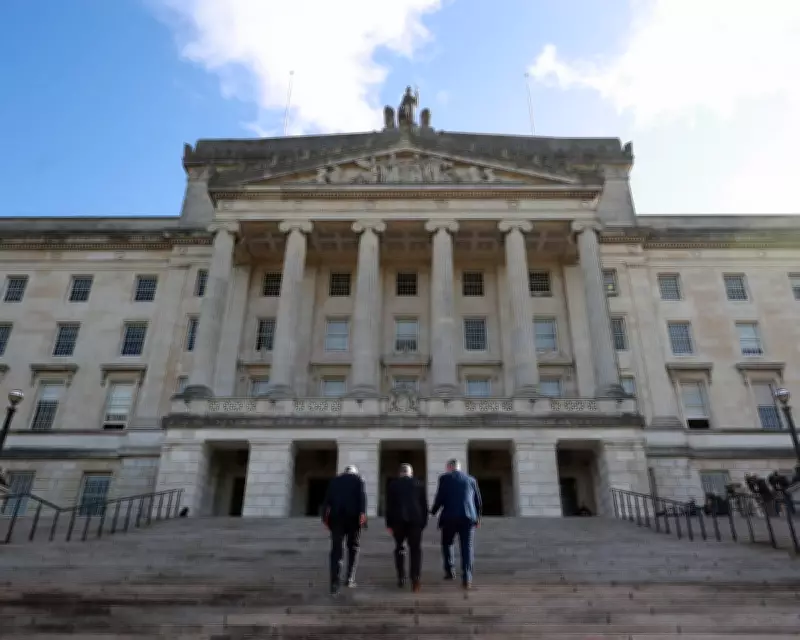
Twenty-eight years after the historic Good Friday Agreement brought peace to Northern Ireland, the Stormont estate outside Belfast has become synonymous with political dysfunction and public disillusionment. While the agreement ended the Troubles and remains a global model for conflict resolution, the devolved government it established is now grappling with chronic feuding, legislative gridlock, and crumbling public services that are eroding public trust.
Chronic Feuding and Governance Gridlock
The power-sharing coalition's principal parties, Sinn Féin and the Democratic Unionist Party (DUP), remain locked in persistent conflict that has severely hindered legislation and governance. This ongoing strife has created a widespread perception of political drift and neglect, with only one in four people believing the devolved government has improved their lives according to a January opinion poll.
Claire Hanna, an MP and leader of the Social Democratic and Labour Party (SDLP), which sits in opposition, expressed the prevailing sentiment: "There is nobody really in charge. There is no strategy. Nobody's taking even a medium-term sense of control or direction."

Public Services in Crisis
The practical consequences of Stormont's dysfunction are evident across Northern Ireland's essential services. The health service faces severe crisis conditions, with emergency services overstretched and patients enduring some of the UK's longest waiting times. Infrastructure is deteriorating, with crumbling roads and water systems nearing collapse, which in turn impedes housing construction.
Environmental concerns have reached critical levels, with Lough Neagh, which supplies 40% of Northern Ireland's drinking water, transformed into a polluted lake plagued by antibiotic-resistant superbugs. Andrew Muir, the environment minister from the centrist Alliance party, acknowledged the historic achievement of the Good Friday Agreement while noting Stormont's struggle to deliver practical benefits nearly three decades later.
"The challenges that I have faced as minister perhaps demonstrate very clearly the need for reform of those institutions," Muir stated, highlighting how the power-sharing framework enables parties to block previously agreed policies, such as establishing an independent Environmental Protection Agency.
Brief Resurgence and Subsequent Decline
Two years ago, Stormont experienced a brief resurgence of goodwill when devolved government was reinstated in February 2024 after repeated collapses. The occasion carried historical significance with Sinn Féin's Michelle O'Neill becoming the first nationalist first minister, while Emma Little-Pengelly of the DUP assumed the deputy first minister position with equal power but less prestige.
Both leaders initially struck conciliatory tones, with O'Neill declaring "The public rightly demands that we cooperate, deliver and work together" and Little-Pengelly advocating for "a new approach of recognising the concerns of each other and finding solutions together."
Political Theater and Public Scorn
However, relations between the governing parties quickly deteriorated. Ministers have feuded over job titles, the Irish language, commemorations, and street signs, while assembly members have focused on trivial matters, passing just twelve bills, most of which were routine housekeeping measures.
Assembly Speaker Edwin Poots lamented that members were delivering pre-scripted remarks designed for social media clips rather than substantive governance. Poots himself drew criticism for taking an all-expenses-paid trip to Barbados while the assembly was in session.
Public scorn intensified when assembly members approved a pay rise increasing their annual salaries from £53,000 to £67,200 beginning this month. Belfast Telegraph columnist Suzanne Breen captured the public mood: "We have a talking shop that fails at basic governance. Political failure is being rewarded, and it's a kick in the teeth to voters of all hues."

Structural Problems and Tribal Politics
Author Malachi O'Doherty, who wrote How to Fix Northern Ireland, identified the core problem as approximately 80% of voters casting ballots along tribal lines. "What we've got is a political system which is constructed around basically a sectarian contest. No political party gets penalised for poor performance," O'Doherty explained.
He argued that the 2006 St Andrews Agreement, which modified Stormont's rules, exacerbated the situation by intensifying competition between Sinn Féin and the DUP while marginalizing more moderate nationalist and unionist alternatives. O'Doherty predicted the 2027 assembly election would again center on the Sinn Féin-DUP battle for first minister, noting "It's all identity politics, everything else is peripheral."
Calls for Reform and Alternative Perspectives
Analysts suggest the DUP has deliberately picked fights with Sinn Féin to rally its base and counter challenges from rival unionists, while such friction can similarly benefit Sinn Féin by mobilizing nationalist voters. O'Doherty proposed that forcing the two parties into a "loveless marriage" was no longer necessary, suggesting a majority system would allow them to alternate in power with support from centrist parties that could exert moderating influence.
Environment Minister Andrew Muir maintained that power-sharing remains necessary but requires reform to prevent single parties from blocking proposals or collapsing institutions, particularly regarding scientific matters. "There should be no place for people to use vetoes around measures that are designed to protect our environment," he emphasized.
The SDLP has proposed three specific reforms: removing the symbolic hierarchy of first and deputy first minister titles by designating them joint first ministers; adjusting voting rules for the assembly speaker; and eliminating the single-party veto on executive formation. Hanna asserted "Power-sharing can work. It's how parties are choosing to operate it."
The Enduring Framework of Peace
Some observers believe the prevailing gloom is overstated. Historian and cross-party peer Paul Bew, who played an advisory role in the Good Friday Agreement, acknowledged Stormont should be performing "a bit better" but emphasized the enduring framework for historic compromise remains the crucial achievement.
"The real point is peace, and community psychotherapy. Psychotherapy in Northern Ireland doesn't mean that you look at your own faults, it means being rude to the other tradition. I never thought that – given the nature of the people, the divisions – it could be any better," Bew reflected.
Despite its evident faults and governance challenges, Bew concluded that Stormont cannot be considered a failure on its most fundamental measure: "It's working, because the peace has held." The question remains whether Northern Ireland's political institutions can evolve beyond maintaining peace to delivering effective governance that meets public needs and expectations.