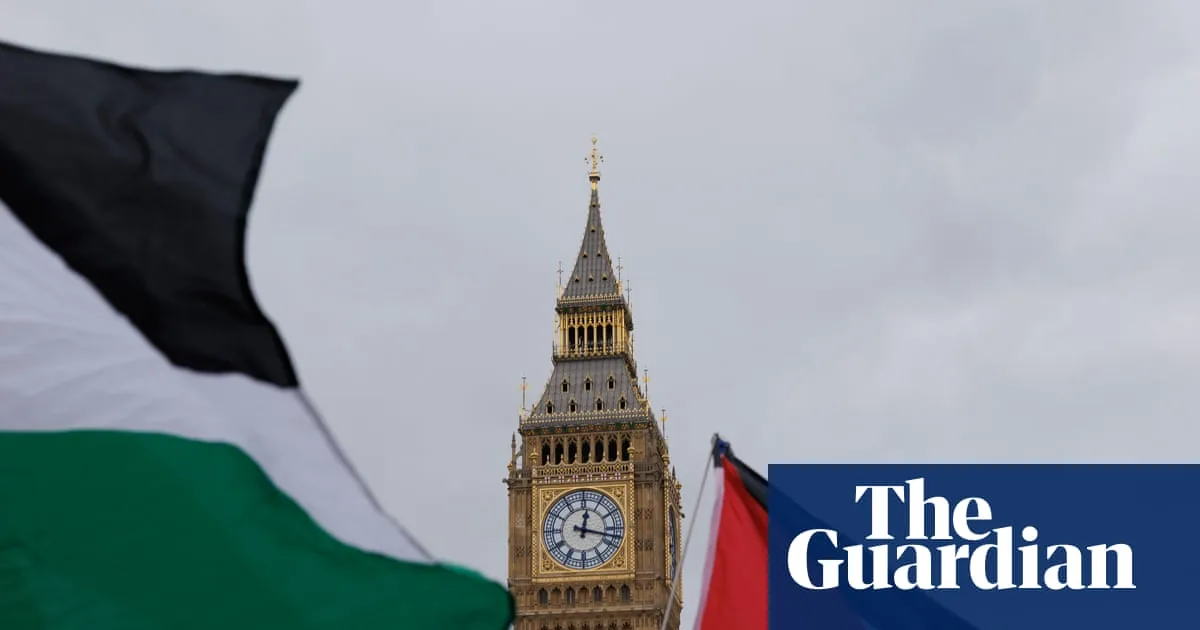
Yesterday, the UK, Canada, Portugal, and Australia joined 147 other countries in formally recognising the state of Palestine. Today, France, Belgium, Malta, and others are expected to follow suit at the UN general assembly. This coordinated action represents a significant rebuke to Israel and the United States over the ongoing assault on Gaza, opposition to West Bank annexation, and support for a two-state solution.
However, experts caution that the recognition is largely symbolic and unlikely to end the war or create a viable Palestinian state. Burcu Ozcelik, a senior research fellow at the Royal United Services Institute, noted: 'It is a recognition of the intrinsic value of the right of a people over sovereign territory. Will it change the course of the war? I’m not so sure about that.' There are fears that Israeli Prime Minister Benjamin Netanyahu may respond by accelerating settlement construction in the West Bank.
The recognition is based on the 1933 Montevideo Convention criteria: a permanent population, defined territory, ability to hold diplomatic relations, and a government. While Palestine meets these criteria in principle, large parts remain occupied, and its government lacks authority in Gaza. Nonetheless, the decision elevates the status of the Palestinian mission in London to a formal diplomatic level.

Ozcelik emphasised that a functioning Palestinian state would bring democratic institutions, border control, free trade, and a UN seat, but these remain distant goals. The UK's move is seen as a step on a long road, with practical impact limited by the ongoing conflict and political realities.